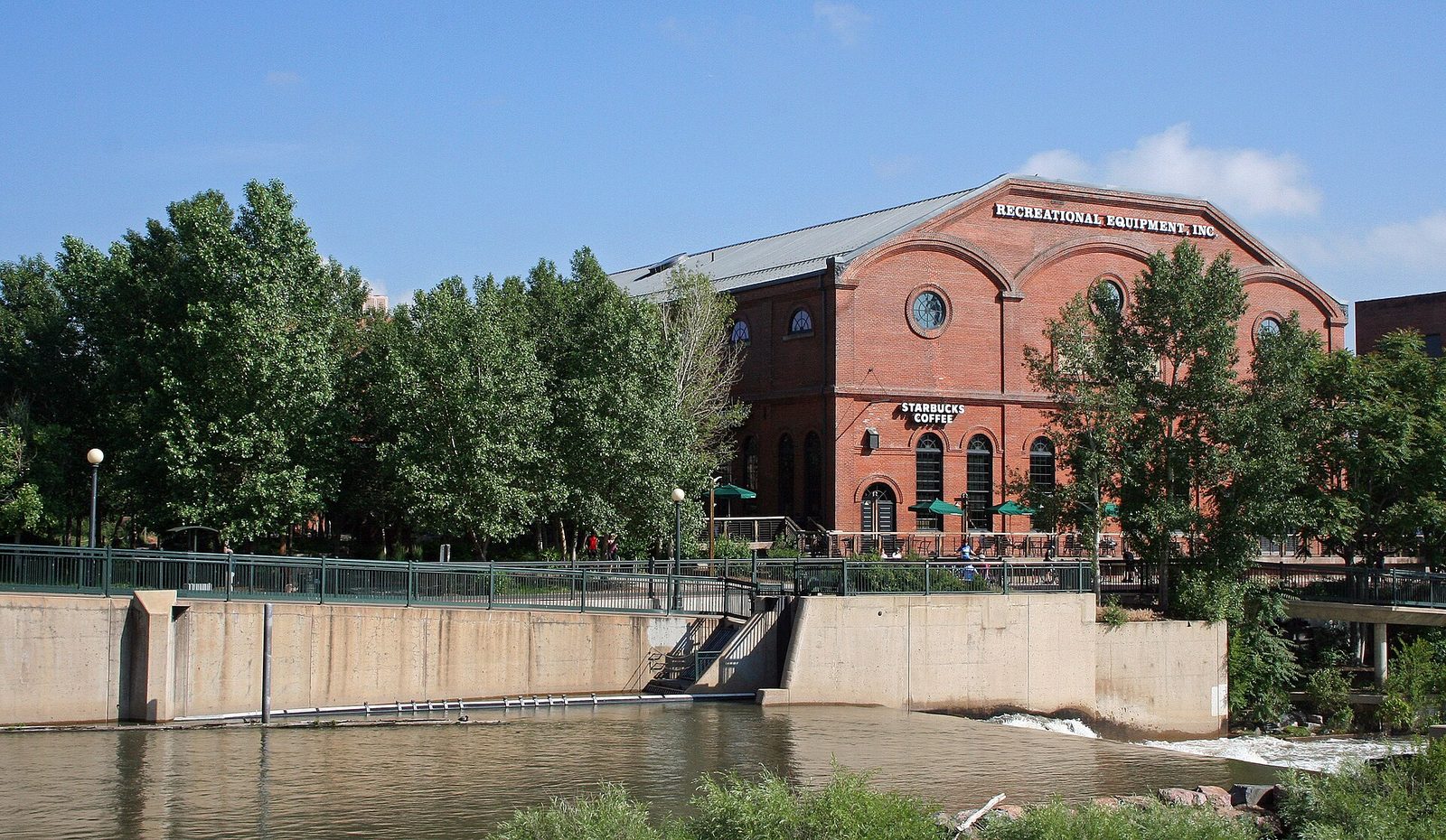
Two of the most characteristically Denver things you can buy are sold within a mile of each other, on either side of the South Platte. One is a snap-button western shirt from Rockmount Ranch Wear, which has been selling them from Wazee Street since 1946. The other is a rain shell from REI’s flagship store, which fills a 1901 tramway power plant on the bank of the South Platte, with a whitewater chute running past the patio. Between them they say most of what is worth knowing about shopping in Denver: the buying that is genuinely local comes out of the West and the outdoors, it is scattered across neighborhoods rather than lined up along one grand street, and the malls are good, ordinary malls that would look much the same in Dallas or Phoenix.
This guide sorts the city by what you are actually shopping for. It covers the districts worth a special trip and the ones you only need if you are passing, the malls and outlets and the honest case for skipping most of them, what to take home that is not a mass-produced T-shirt, and the practical details that catch visitors at the register, starting with a sales tax of just over 9 percent that is never included in the shelf price. Tax rates, parking rules and transit details were checked in September and October 2026. Individual shops open, move and close faster than any guide can track, so confirm a specific store before you build an afternoon around it.
Denver Shopping at a Glance
| Where | Best for | Getting there from downtown | Verdict |
|---|---|---|---|
| Cherry Creek North | Boutiques, galleries, home stores, a long lunch | About 3 miles southeast; bus, ride-hail or the Cherry Creek Trail | The best all-round shopping district in the city |
| Cherry Creek Shopping Center | Department stores and luxury labels under one roof | Across 1st Avenue from Cherry Creek North | A very good mall, and still a mall; pair it with the streets |
| LoDo and Larimer Square | Western wear, books, a historic block | Walkable from any downtown hotel | Short on volume, long on character |
| 16th Street | Chains, pharmacies, souvenir shops | Free FreeRide shuttle along its length | A walk, not a shopping trip |
| Platte Street | Outdoor gear at the REI flagship | 15 minutes on foot from Union Station | Worth it for the building even if you buy nothing |
| RiNo and the Highlands | Design shops, small labels, food halls | Walk, scooter or a short ride-hail | Good browsing woven into a neighborhood day |
| South Broadway | Vintage, thrift, antiques, records | Bus or ride-hail, 10 to 15 minutes | The best street in town if you like digging |
| Art District on Santa Fe | Galleries and working studios | About 1.5 miles south; bus, bike or a short ride-hail | Go on a First Friday evening |
| Park Meadows and the suburban malls | Big-box fashion and department stores | E Line light rail or a 25-minute drive | Only if a mall is what you want |
| Outlet malls | Brand-name discounts | Car only; 20 to 75 minutes | Worth it only on a route you are already driving |
How Shopping Works in Denver
Visitors arriving from Chicago or New York tend to look for the street, the one where everything is, and Denver does not have it. The closest thing, 16th Street downtown, is a pleasant pedestrian corridor full of chain stores and is nobody’s idea of a shopping destination. The city’s retail grew up the way its neighborhoods did: as a string of separate commercial strips, each with its own character, joined by long arterial roads and a light rail network that was built for commuters rather than browsers.
That shapes how you should plan. Pick one or two areas that match what you want, give each a half day, and fold them into the rest of the trip, a gallery walk on Santa Fe Drive before dinner, a morning on South Broadway before a matinee, an hour in Cherry Creek North after the Botanic Gardens. Trying to sweep the whole city in a single shopping day mostly means sitting in traffic on Colorado Boulevard.
Three things set Denver apart. The outdoor gear culture is serious: this is the staging post for the Rockies, and the staff in a gear shop are usually people who were on a trail last weekend. The West is not a costume: boots and hats are worn here by people who are not in fancy dress, and the good shops sell to them first. And the big regional malls sit out in the suburbs along I-25 and US 36, so a mall trip costs transport as well as time.
The neighborhoods themselves are covered in depth in our guide to Denver neighborhoods. This page stays on what you can buy in them.
Cherry Creek: The Mall and the Sixteen Blocks Around It
If you have one afternoon for shopping and want variety, go to Cherry Creek. It is the only part of Denver where serious retail is concentrated enough to wander without a plan, and it splits neatly into two halves on either side of 1st Avenue.
Cherry Creek Shopping Center
South of 1st Avenue sits Cherry Creek Shopping Center, the city’s premier enclosed mall since 1990, with more than 160 stores weighted heavily toward luxury labels and department stores. It is clean, well run and well stocked, and on a snowy day it is exactly where you want to be. It is also, in the end, a mall, and if you have a good one at home there is little here you could not buy there.
Parking in the mall’s garages is paid; the old first-hour-free policy ended in January 2020. Ask whether the store you are buying from validates, and check current rates at the entrance rather than trusting an old guide.
Cherry Creek North
The better half is north of 1st Avenue. Cherry Creek North is a 16-block district of tree-lined streets roughly between 1st and 3rd avenues and University Boulevard and Steele Street, with close to 600 businesses: independent boutiques, jewelers, home and design stores, art galleries, salons and spas, and a dense spread of restaurants and cafés. It is walkable, low-rise and noticeably calmer than downtown, and the blocks are short enough that you can cover the whole district in a couple of hours without trying.
The district skews upscale. Expect boutique prices, not bargains, and expect the galleries to be selling serious work rather than prints. The pleasure of it is the mix: a design store next to a bakery next to a gallery, with a patio lunch in the middle. In early July the Cherry Creek Arts Festival takes over the streets and the district becomes one of the busiest places in the city; check the dates if you want it, or avoid that weekend if you want the shops.
Getting to Cherry Creek
Cherry Creek has no rail station. From downtown it is about three miles southeast, which is a short ride-hail trip or a bus ride; plan the bus with RTD’s trip planner, since routes change. On a fine day the best route is the Cherry Creek Trail itself, a paved path that runs along the creek below Speer Boulevard from Larimer Square almost to the mall’s doorstep. It is about three miles of flat, mostly shaded walking or cycling, below street level and away from traffic for nearly the whole way.
Downtown: LoDo, Larimer Square and the Rebuilt 16th Street
Downtown Denver is where most visitors stay, so it is where most visitors shop by default. The honest summary is that it has a few places worth seeking out and a great deal of filler, and that the best of it is in Lower Downtown, not on 16th Street. Our guide to downtown Denver covers the area as a whole.
16th Street
The 16th Street pedestrian corridor reopened in full in October 2025 after a $175.4 million reconstruction, and it is in better shape than it has been for a generation: wider sidewalks, new paving, new trees, and the free shuttle back in service as the 16th Street FreeRide, running seven days a week at roughly five-minute intervals between Union Station and Civic Center. Anything you read describing it as a construction site is out of date.
As a shopping street, though, it is mostly chains, pharmacies, fast food and souvenir shops selling the same mile-high T-shirts you will see at the airport. The Denver Pavilions complex near the Glenarm end holds a cluster of national brands and restaurants. Walk 16th Street because it is the spine of downtown and the easiest way between Union Station and the Capitol; do not walk it expecting to shop. If you want a pedestrian shopping street with street performers and independent stores, Boulder’s Pearl Street Mall does it far better and is about 55 minutes away on the Flatiron Flyer FF1 bus from Union Station.
Larimer Square
The 1400 block of Larimer Street is the oldest block in Denver and, since 1971, the city’s first designated historic district. It survived only because a preservationist named Dana Crawford bought up the Victorian storefronts in the 1960s when the city was demolishing everything around them. Today it is strung with lights and flags overhead, and it is lovely at dusk.
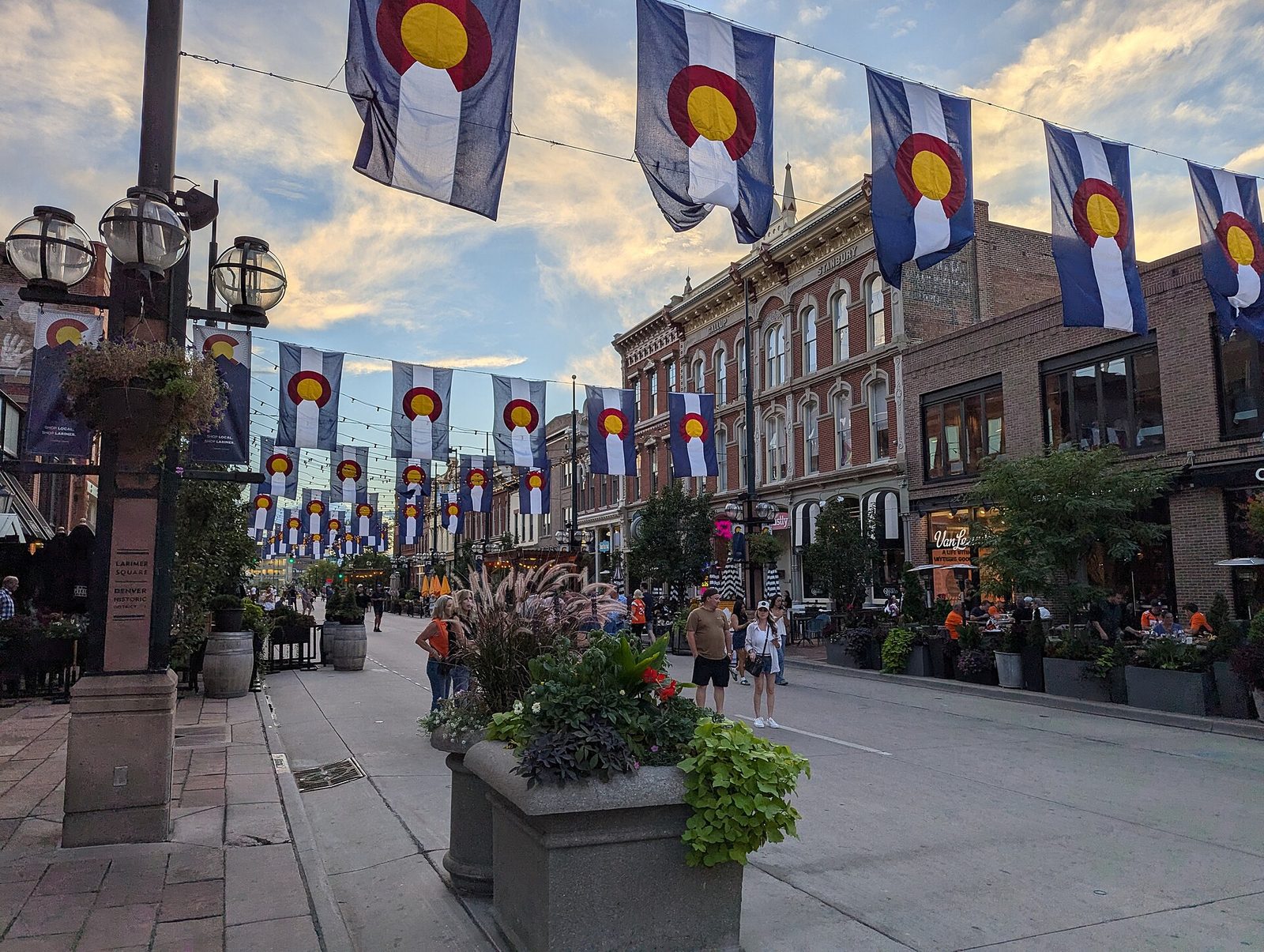
It is also now at least as much a dining street as a shopping one. You will find a handful of boutiques among the restaurants, and they are worth a look, but treat Larimer Square as a place for an early evening stroll that turns into dinner rather than a retail destination in its own right. Our Denver food guide covers what to eat while you are there.
Rockmount Ranch Wear and the LoDo Warehouses
Four blocks north, on Wazee Street, is the one shop in downtown Denver that is genuinely worth crossing town for. Rockmount Ranch Wear was founded in 1946 by Jack A. Weil, known to everyone as Papa Jack, who kept coming to work there until he was well past 100. The company credits itself with the first commercially produced snap-button western shirt, and enough musicians and film stars have worn them that the walls double as a small museum. The shirts are still the reason to go: well made, not cheap, and of this place in a way little else downtown is.
Around it, the old warehouses of Lower Downtown hold a scattering of independent shops, and the Dairy Block, between 18th and 19th streets, has turned its service alley into a small pedestrian lane of shops and bars. Next to Coors Field, McGregor Square has a two-floor Tattered Cover bookstore, opened in 2021 when the chain moved its long-running LoDo store a few blocks to the new development. It is a good place to buy a Colorado trail guide or a regional history before you head west.
Union Station
Union Station’s Great Hall is free to sit in, and the few small shops around it lean toward gifts and sweets. In summer and early fall the Saturday farmers market outside is a better place to buy Colorado honey, chiles or peaches than any souvenir shop on 16th Street.
Platte Street and the REI Flagship
Cross the Millennium Bridge from Union Station, keep going over the river, and you reach Platte Street and the REI flagship store, pictured at the top of this page. The building was the Denver Tramway Company’s power plant, built in 1901 to run the city’s streetcars, and REI has filled it since 2000 with several levels of outdoor gear, an indoor climbing pinnacle and a café terrace looking over the South Platte. In summer, kayakers and tubers run the whitewater chute below the patio and Confluence Park fills with people sitting on the steps by the water.
Even if you need nothing, it is worth a visit for the building and the setting, and if you do need something the staff tend to know the local trails and conditions. Resist the complete kit for a single day out: decent trail shoes, a warm layer and a rain shell cover almost every foothills day hike, and nobody needs trekking poles for the loop at Red Rocks. Our guide to the best hikes near Denver says which trails need more than that.
Platte Street itself has a short run of cafés and small shops, and the riverside paths connect it on foot to Confluence Park, the Children’s Museum and the Downtown Aquarium. Our guide to Denver with kids covers those two if you are shopping with children in tow.
RiNo and the Highlands
The neighborhoods immediately north and northwest of downtown are where Denver’s newer, smaller labels and design shops have settled, and they suit a browsing day that mixes shops with coffee, murals and lunch rather than a dedicated shopping trip.
River North (RiNo)
RiNo grew out of old rail yards and warehouses along Brighton Boulevard and Larimer Street, and its retail follows its art: design stores, printmakers, small clothing labels and ceramicists, some selling things made in the same building. The Source, a food hall in a converted 1880s foundry on Brighton Boulevard, makes a natural anchor. Studios keep shorter hours than the bars around them, so come on a weekend afternoon rather than a weeknight. The murals are the main free attraction, and our guide to Denver breweries covers the taprooms that cluster between them.
LoHi, Highlands Square and Tennyson Street
Lower Highlands, across the pedestrian bridges from downtown, has a cluster of small boutiques around its restaurants. Farther northwest, two older commercial strips are worth knowing. Highlands Square, around West 32nd Avenue and Lowell Boulevard, is a few blocks of independent shops in early twentieth-century storefronts. Tennyson Street, in Berkeley, runs a longer strip of boutiques, galleries and bars roughly between 38th and 44th avenues. Neither is a day out on its own, but both feel more like the city’s everyday life than anything downtown.
South Broadway, Antique Row and Vintage Shopping
South Broadway is where Denver keeps its secondhand stores, and for anyone who enjoys the hunt it is the best shopping street in the city. The stretch through Baker, just south of downtown, mixes vintage clothing, thrift and consignment shops, record stores, tattoo parlors, music venues and bars. Farther south, beyond I-25, the antique dealers that cluster along Broadway have long been known together as Antique Row.
Prices vary as much as the stock. Curated vintage shops price like boutiques; thrift stores, including the Colorado chain Arc Thrift Stores, which funds services for people with intellectual and developmental disabilities, price like thrift stores. Antique Row rewards patience and a car. Ask about shipping before you fall for the oak dresser.
The vintage clothing that turns up here has a regional accent: western shirts, workwear, old ski sweaters and outdoor gear from decades of Coloradans who bought good kit and eventually gave it away. That makes South Broadway a better place than most to find a pearl-snap shirt for a fraction of a new one’s price. It also pairs neatly with the street’s evening life; our guide to Denver nightlife covers the bars and venues along it.
South Pearl Street and Old South Gaylord
Two smaller strips sit near Washington Park. South Pearl Street, in Platt Park, is a few blocks of shops, cafés and restaurants with a long-running Sunday farmers market in season. Old South Gaylord is a single block of small shops and restaurants that feels like a village main street. Neither needs a special journey, but both make a pleasant end to a walk around Washington Park.
The Art District on Santa Fe
Santa Fe Drive, running south from near Colfax through the La Alma/Lincoln Park neighborhood, holds the densest concentration of galleries in Denver: dozens of commercial galleries, cooperatives and working studios within a few blocks, alongside some of the city’s oldest Mexican restaurants. It is the best place in town to buy original art from Colorado artists, and the range runs from affordable prints and small ceramics to serious contemporary work.
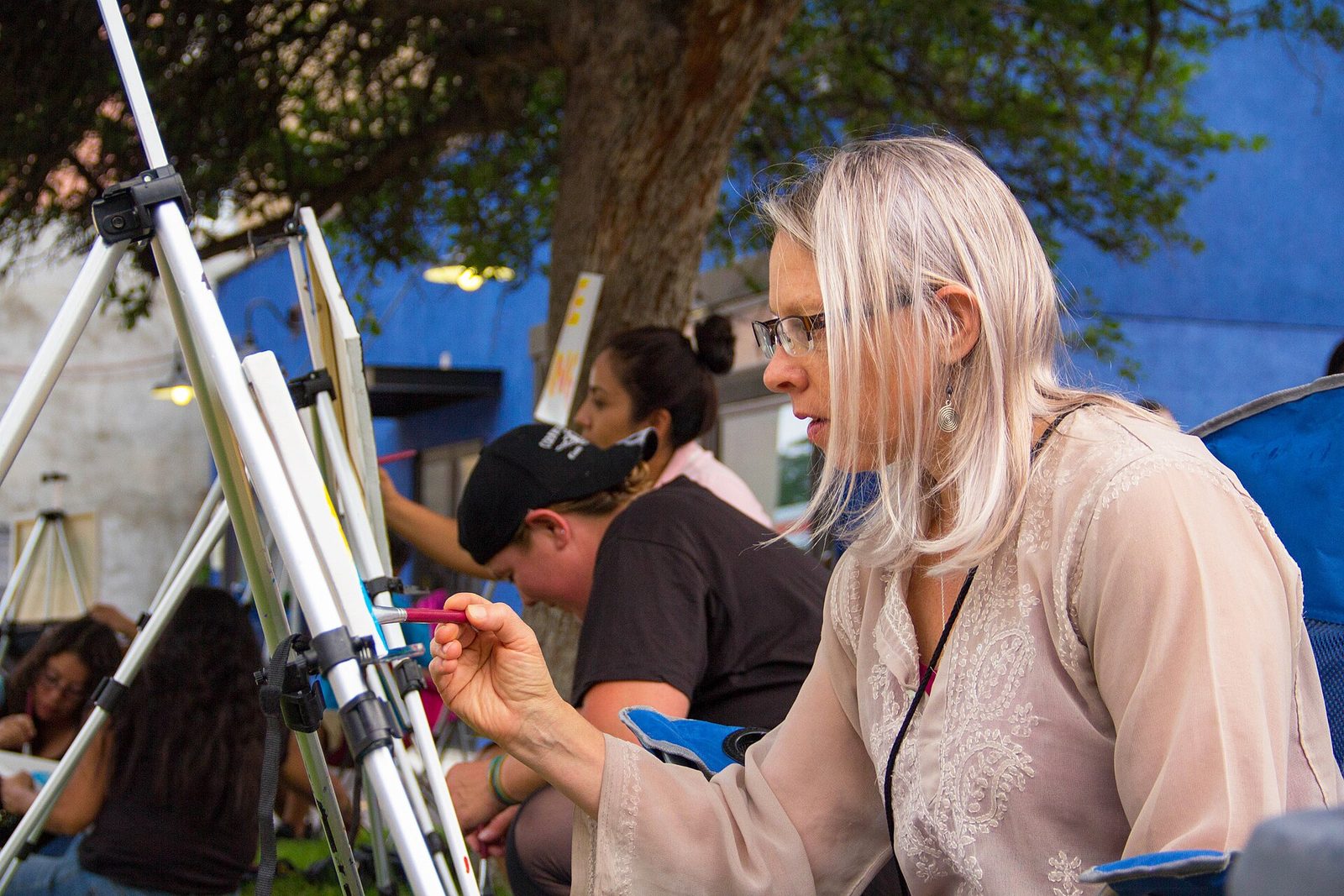
Go on First Friday, when the galleries open into the evening on the first Friday of each month and the street turns into a walking party. On any other weekday many studios keep short or appointment-only hours, so check before you go. The district is about a mile and a half south of downtown, an easy bike ride or a short ride-hail, and the Museo de las Americas, a museum of Latino art, sits in the middle of it. Our guide to Denver museums covers it alongside the bigger institutions.
Malls Beyond the City Limits
The large regional malls sit in the suburbs, where the land and the highways are. None is a reason to visit Denver, and if you have a comparable mall at home, skip them. If you are here in deep winter or traveling with teenagers, here is how they compare.
| Mall | Where | Without a car? | What it is like |
|---|---|---|---|
| Cherry Creek Shopping Center | Cherry Creek, about 3 miles southeast | Bus or ride-hail | Luxury-leaning, department stores, the city’s best mall |
| Park Meadows | Lone Tree, I-25 and C-470, about 16 miles south | Yes: E Line to County Line station | Huge, with a mountain-lodge interior of timber, stone and chandeliers |
| FlatIron Crossing | Broomfield, on US 36 toward Boulder | Awkward; drive | A big conventional mall, handy on the way to or from Boulder |
| Belmar | Lakewood, about 7 miles west | Awkward; drive | An open-air “downtown” of shops built on the site of an old mall |
| Colorado Mills | Lakewood, near I-70 and Colfax | Awkward; drive | Outlet-style stores and regular retail, on the way to the mountains |
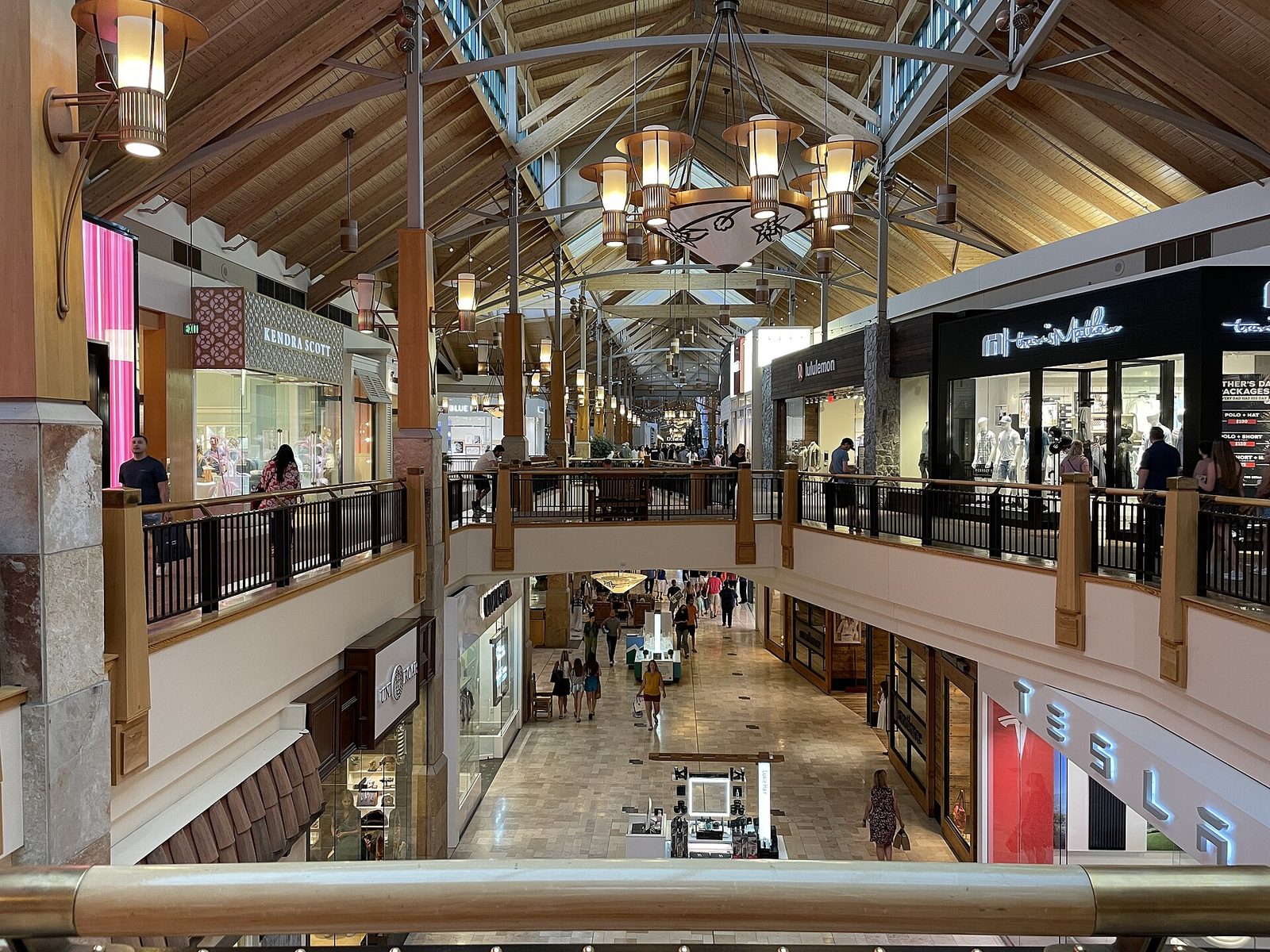
Park Meadows is the one with a gimmick, and it is a decent one: the whole interior is styled like a grand mountain lodge, with exposed timber trusses, stone, and lantern chandeliers. It is also the easiest suburban mall to reach without a car, since the E Line light rail stops at County Line station beside it, with a pedestrian bridge to the mall. Allow 40 minutes to an hour each way from Union Station, including the walk.
Outlet Malls Near Denver
The outlets ring the edges of the metro area, and the rule for all of them is the same: worth a stop on a drive you are already making, rarely worth a special trip once you count an hour of driving each way.
- Outlets at Castle Rock, beside I-25 about 30 miles south of downtown. The natural stop on a day trip to Colorado Springs, Garden of the Gods or Pikes Peak; our day trips from Denver guide covers that drive.
- Denver Premium Outlets, in Thornton beside I-25 north of the city, opened in 2018. Useful if you are heading north toward Fort Collins, or staying near the airport.
- Colorado Mills, in Lakewood near I-70, a mix of outlet stores and regular retail. On the way to Golden and the mountains.
- Silverthorne Outlets, in Summit County at I-70 exit 205, about 70 miles west. The one most visitors actually stop at, because it sits on the main road to the ski resorts.
A note on Silverthorne: on a winter Sunday afternoon, eastbound I-70 back to Denver is one of the most congested roads in the state, and a two-hour outlet stop can either let the worst of the queue pass or drop you into the middle of it. Check the Colorado Department of Transportation’s live travel times before you decide.
What to Buy in Denver
The best souvenirs here are useful, local and still in use years later. The worst are the T-shirts and shot glasses sold in identical shops along 16th Street and at the airport. Here is where the good stuff is.
| What | Where to look | Price level | Notes |
|---|---|---|---|
| Western shirts, hats, boots | Rockmount Ranch Wear (LoDo); vintage shops on South Broadway | $$ to $$$ new, $ secondhand | The most Denver purchase there is |
| Outdoor gear | REI flagship (Platte Street); consignment gear shops | $$ to $$$ | Buy what you will use again, not a one-trip kit |
| Books, maps, trail guides | Tattered Cover (East Colfax and McGregor Square) | $ | Regional history and guides are a strength |
| Original art | Art District on Santa Fe; Cherry Creek North galleries; RiNo studios | $ to $$$$ | First Friday is the best night to buy |
| Candy | Hammond’s Candies, north of downtown | $ | A Denver candy maker since 1920; ribbon candy and candy canes |
| Colorado food | Farmers markets; grocery stores | $ | Green chile, honey, and Palisade peaches in late summer |
| Museum pieces | The shops at the Denver Art Museum, the nature museum and History Colorado | $ to $$ | Better design than the souvenir shops, often local makers |
| Concert keepsakes | The Trading Post at Red Rocks | $ to $$ | Free to visit on non-show days |
Western wear
This is the category where Denver genuinely beats most cities. Beyond Rockmount, the secondhand shops on South Broadway turn up pearl-snap shirts and old boots, and if you are in town in January, the trade show halls at the National Western Stock Show sell everything from hats to saddles to horse trailers. The 2027 show runs from 9 to 24 January at the National Western Complex. Buy boots in the afternoon, when your feet are at their largest, and walk on a hard floor before you pay.
Outdoor gear and Colorado brands
Colorado has produced a long line of outdoor companies, and local labels turn up throughout the gear stores; Topo Designs, a bag and clothing brand founded in Denver in 2008, is one. If you are heading to the mountains without a warm layer, buy it here, where the selection is wider and the prices are not resort prices. Ski and snowboard rentals in the city the evening before can be cheaper than at the base area; compare before you book.
Books and records
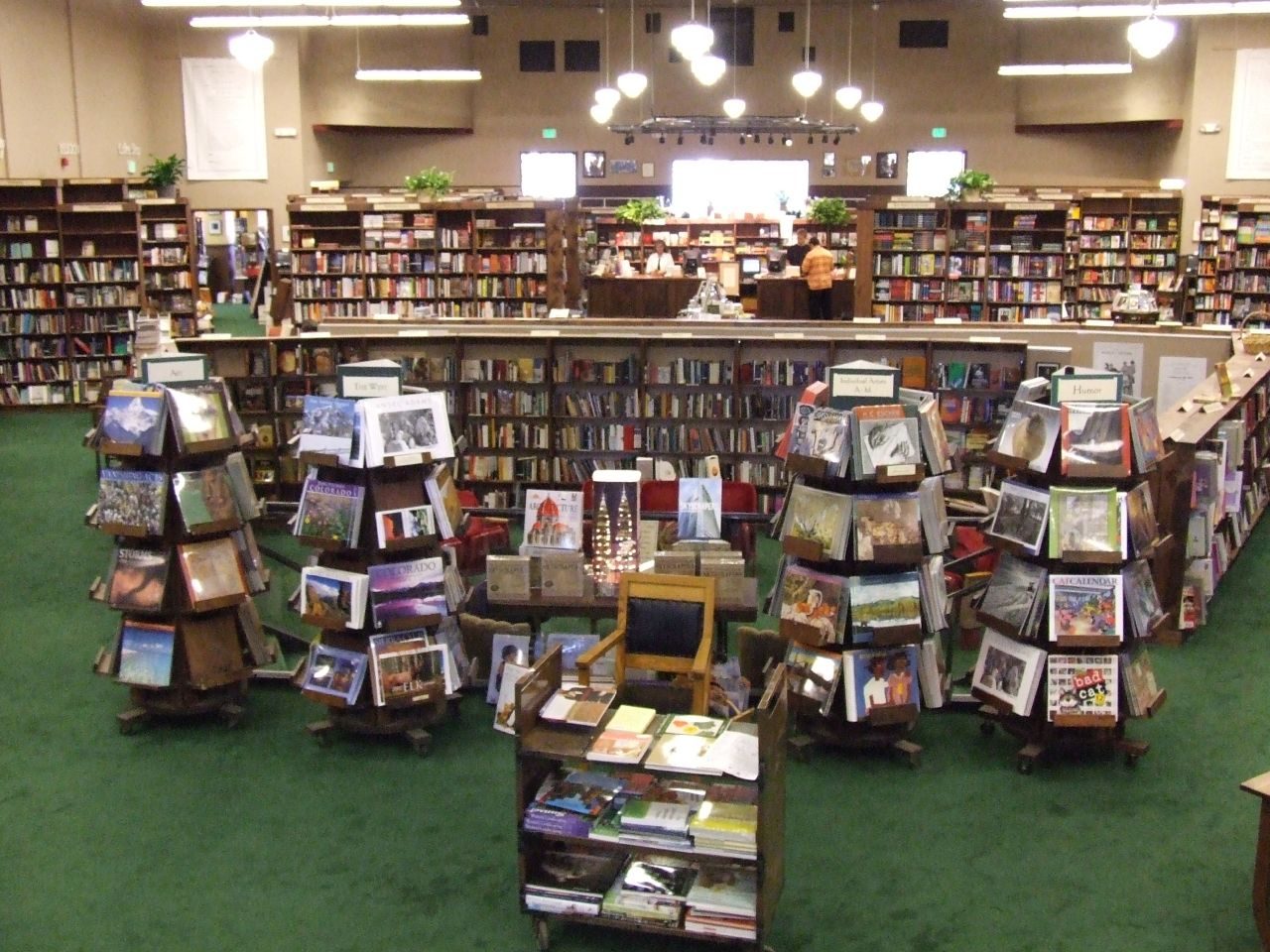
Tattered Cover has been Denver’s best-known bookstore since 1971. It went through bankruptcy in 2023 and was bought by Barnes & Noble, but still trades under its own name. Its flagship fills a converted mid-century theater on East Colfax Avenue, across from East High School, with tall shelves, deep chairs and an excellent regional section, and Twist & Shout, one of the city’s long-standing independent record stores, is next door. The two together make a fine rainy hour.
Food and drink to take home
Colorado’s edible souvenirs are seasonal. In late summer, Palisade peaches from the Western Slope and roasted Pueblo green chile show up everywhere, and chile roasters turning in grocery store parking lots are one of the signs of September. Year round, look for Colorado honey, local coffee and bottles from the state’s distilleries. Hammond’s Candies, which has made candy in Denver since 1920, sells its hand-pulled ribbon candy and candy canes from its factory store north of downtown and in shops around the city.
If you are flying, bottles and jars go in checked luggage: anything liquid or spreadable over 3.4 ounces will not pass carry-on screening, and that includes jam, honey and salsa. Beer from a brewery taproom travels better in a can than a growler.
What you cannot take home
Recreational cannabis is legal to buy in Colorado for adults 21 and over with a valid ID, from licensed dispensaries, and Denver has many of them. You cannot use it in public, and you cannot take it home: carrying cannabis across a state line is a federal offense whatever the law at either end, and Denver International Airport prohibits it on airport property. Our Denver travel tips cover the rules in more detail.
Markets, Festivals and Seasonal Shopping
Some of the most enjoyable shopping in Denver happens outdoors and only for part of the year.
- Farmers markets. From late spring into fall, the Union Station Farmers Market runs on Saturday mornings outside the station, the Cherry Creek Fresh Market sets up in the Cherry Creek Shopping Center lot on Saturdays, and the South Pearl Street Farmers Market runs on Sundays. Each publishes its own season dates.
- The Cherry Creek Arts Festival, in early July, fills Cherry Creek North with juried artists’ booths and draws very large crowds.
- First Friday on Santa Fe Drive, every month, all year.
- The National Western Stock Show in January, with its western trade show.
- Holiday markets. The German-style Denver Christkindlmarket runs downtown from late November to just before Christmas, and Cherry Creek North and Larimer Square both dress up for the season. Locations and dates move from year to year, so check before you plan around them.
Our Denver events calendar covers the full year, and the best time to visit Denver guide covers how the seasons change what a trip costs.
Shopping in bad weather
Snow days are often the best shopping days. A spring storm that closes the mountain passes empties the trails and fills Cherry Creek Shopping Center and Park Meadows. In July and August, when thunderstorms roll off the Front Range most afternoons, put the indoor shopping after a morning outdoors rather than the other way round.
The Practical Bits: Tax, Bags, Hours and Getting It Home
Sales tax
The price on the shelf is not the price you pay. Sales tax in the City and County of Denver is 9.15 percent on most purchases at the time of checking: 2.9 percent to the state, 5.15 percent to the city, 1 percent for RTD and 0.1 percent for the Scientific and Cultural Facilities District, the tax that funds free museum days. It is added at the register. The suburbs have their own rates, so the same item in Lone Tree, Lakewood or Castle Rock will carry a different total.
International visitors should know that, unlike VAT in Europe, American sales tax is not refundable at the airport, and Colorado has no sales tax holiday.
Bags
Colorado banned single-use plastic carryout bags at most stores in 2024, and paper bags in Denver cost at least 10 cents each. Carry a tote; it saves money and juggling.
Opening hours
Malls typically open around 10am and close around 8pm or 9pm, with shorter Sunday hours. Independent shops often close by 6pm, and some close on Mondays or Tuesdays. Holiday hours run longer in late November and December. Check a specific shop’s website rather than assuming.
Getting purchases home
If you buy something big, ship it. Most furniture, antique and gallery shops ship routinely, and a framed painting is far easier to send from the shop than to fight onto a plane. Denver International Airport is enormous, so allow extra time at bag drop on a heavy return; our Denver airport guide covers the airport’s layout and the A Line train from Union Station.
The altitude shopping list
One category of purchase every visitor should make: things that deal with the climate. At 5,280 feet the air is thin and very dry, and the sun is stronger than you are used to. Sunscreen, lip balm with SPF, a good moisturizer and a refillable water bottle are the most useful things you will buy in Denver, and any pharmacy downtown sells them.
Three Shopping Days That Work
The downtown loop, on foot
Start at Union Station with coffee in the Great Hall, then cross the Millennium Bridge to Platte Street and the REI flagship. Walk back over the river to LoDo and Rockmount Ranch Wear on Wazee Street, browse the Dairy Block, and stop at Tattered Cover in McGregor Square. Finish at Larimer Square in time for an early dinner under the lights. Total walking is about three miles, all flat, with no transit needed.
Cherry Creek for a half day
Walk or cycle the Cherry Creek Trail from Larimer Square in the morning, spend a couple of hours wandering Cherry Creek North, have lunch on a patio, and finish in the mall if the weather turns or you want the department stores. Pair it with the Denver Botanic Gardens, a short ride north, on the same day. Our Denver itinerary guide shows how to fit a half day like this into a longer trip.
What to Skip
- The souvenir shops on 16th Street. The same goods as the airport, at the same prices. Buy at a museum shop, at Red Rocks or at Rockmount instead.
- A special trip to the outlets. Unless you are already driving that way, the time and transport cost outweigh the savings.
- A suburban mall if you have one at home. Cherry Creek is the only mall worth fitting into a short trip, and mostly for the streets around it.
- A full technical kit for one easy hike. Trail shoes, a warm layer and a rain shell are enough for the foothills.
- Buying on impulse in a mountain gift shop. If you see it in Denver at city prices first, buy it there.
For more on stretching a Denver budget, including what is free and what is worth paying for, see our guide to Denver on a budget.
Frequently Asked Questions
What is the best area for shopping in Denver?
Cherry Creek, for most visitors: around 600 businesses across the 16 walkable blocks of Cherry Creek North, with the city’s best mall across 1st Avenue. For vintage, thrift and antiques, South Broadway; for western wear and outdoor gear, LoDo and Platte Street.
Is Cherry Creek Shopping Center worth visiting?
It is a very good mall with more than 160 stores, ideal on a snowy day. If you have a comparable mall at home, though, the reason to go to Cherry Creek is the district north of it. Garage parking is paid.
What is the sales tax in Denver?
9.15 percent on most purchases in the City and County of Denver at the time of checking: 2.9 percent state, 5.15 percent city, 1 percent RTD and 0.1 percent for the cultural facilities district. It is added at the register, it is not refundable for international visitors, and suburban rates differ.
Are there outlet malls near Denver?
Yes: the Outlets at Castle Rock beside I-25 to the south, Denver Premium Outlets in Thornton to the north, Colorado Mills in Lakewood to the west, and the Silverthorne Outlets on I-70 in Summit County. All need a car, and all are worth it mainly when they sit on a route you are already driving.
What should I buy as a souvenir from Denver?
Something you will actually use: a western shirt from Rockmount Ranch Wear or a secondhand one from South Broadway, a warm layer from the REI flagship, a Colorado trail guide from Tattered Cover, original art from Santa Fe Drive, or candy from Hammond’s. Skip the T-shirt shops on 16th Street.
Is the 16th Street Mall good for shopping?
Not really. The rebuilt corridor reopened in October 2025 and is a much nicer walk, with the free FreeRide shuttle along its length, but the shops are mostly chains, pharmacies and souvenir stores. Walk it as a route through downtown rather than a shopping destination.
Can I take cannabis home from Denver?
No. Adults 21 and over can buy it legally in Colorado, but taking it across a state line is a federal offense, and Denver International Airport prohibits it on airport property. Public use is also illegal.
Where can I shop in Denver without a car?
Most of it. LoDo, Larimer Square, Union Station and the REI flagship are walkable from downtown hotels, the free FreeRide runs the length of 16th Street, and Park Meadows is on the E Line. Cherry Creek is a short bus or ride-hail trip, or a three-mile walk along the Cherry Creek Trail. RTD fares were $2.75 for a three-hour pass and $5.50 for a day pass when last checked, and riders 19 and under travel free. Only the outlets genuinely need a car; our guide to getting around Denver has the full network.
Related Denver Guides
- Things to Do in Denver: the full attractions guide, with prices and honest verdicts.
- Denver Neighborhoods: the areas behind the shopping streets on this page.
- Downtown Denver: LoDo, 16th Street, Union Station and Larimer Square.
- Where to Stay in Denver: which base puts you closest to the shops you want.
- Denver Food: where to eat between shops.
- Denver on a Budget: the free list and what is worth paying for.
- Red Rocks Amphitheatre: the park, the shows and the Trading Post.
- Getting Around Denver: RTD fares, rail lines and the car question.
Photo Credits
REI flagship store in the former Denver Tramway Powerhouse on the South Platte River: photo by Jeffrey Beall / Wikimedia Commons (CC BY-SA 3.0)
Larimer Square at dusk, Denver: photo by Sdkb / Wikimedia Commons (CC BY-SA 4.0)
Painters at work in Denver’s Art District on Santa Fe: photo by Artdistrictonsantafe / Wikimedia Commons (CC BY-SA 4.0)
Interior of Park Meadows, Lone Tree, Colorado: photo by Dough4872 / Wikimedia Commons (CC BY-SA 4.0)
Tattered Cover Book Store on East Colfax Avenue, Denver: photo by Sheila McClune from USA / Wikimedia Commons (CC BY 2.0)
Tax rates, parking rules, transit fares and event dates were checked against published sources in September and October 2026 and change without notice. Store line-ups change constantly; confirm a specific shop before you travel to it.
Denver Tourism Guide is an independent publication. We are not affiliated with VISIT DENVER, the City and County of Denver or any store, mall or attraction listed here.