Denver’s greatest asset is that it is not the point. The Front Range rises fifteen miles west of downtown and the mountains behind it run for hundreds, which means the best day trips from Denver start with a highway ramp and end with you standing somewhere that looks nothing like the city you left after breakfast. Golden is twenty-five minutes. Boulder is under an hour. A Victorian silver town in a canyon is forty-five minutes. A paved road above 14,000 feet is ninety, in the months it is open. Prices and seasons checked September 2026.
The other thing to understand is that Denver is a poor base for some of Colorado’s most famous places, and guides that pretend otherwise cost people entire days. Rocky Mountain National Park, Glenwood Springs, Aspen and the Great Sand Dunes are all technically reachable and all bad trades as day trips. This guide covers what genuinely works, ranked by how far you have to go, and is equally clear about what does not.
The Day Trips, Compared
| Destination | Drive | Best for | Season |
|---|---|---|---|
| Golden | 25 min | A creek, a main street, a brewery tour | Year-round |
| Morrison & Red Rocks | 30 min | The free amphitheatre and the loop trail | Year-round |
| Evergreen | 40 min | A mountain lake with no highway noise | Year-round |
| Idaho Springs | 35 min | Hot springs, mountain pizza, old mine tours | Year-round |
| Boulder | 45 min drive / 55 min bus | Pearl Street, the Flatirons, a genuinely different city | Year-round |
| Georgetown | 50 min | An intact Victorian silver town and a narrow-gauge railroad | Year-round; railroad seasonal |
| Mount Blue Sky | 1 hr 45 to the summit | A paved road above 14,000 feet | Summer only, with a permit |
| Colorado Springs | 1 hr 15 | Garden of the Gods, Pikes Peak, Manitou | Year-round |
| Fort Collins | 1 hr 10 | Old Town and the breweries that built it | Year-round |
| Central City & Black Hawk | 50 min | Casinos in a preserved mining gulch | Year-round |
How the Geography Works
Three roads leave Denver for the mountains, and knowing which one your destination sits on saves a great deal of confusion.
I-70 west is the main artery, climbing Clear Creek Canyon past Idaho Springs and Georgetown, over the Continental Divide at the Eisenhower Tunnel, and on to the ski valleys. Golden, Red Rocks, Idaho Springs, Georgetown, Mount Blue Sky, Central City and every major ski resort hang off this one highway, which is why its traffic matters so much.
US 285 southwest is the quieter alternative, running through Conifer and Bailey toward South Park and eventually the San Luis Valley. It carries a fraction of I-70’s traffic and is the return leg of the best fall loop from Georgetown.
US 36 and I-25 north take you to Boulder, Estes Park and Fort Collins, up the plains rather than into the mountains, with the Front Range rising on your left the whole way.
Everything else is a variation. The Front Range itself is a wall roughly fifteen miles west of downtown, with only a handful of canyons cutting through it — which is why the foothill towns of Golden, Morrison and Evergreen sit exactly where they do, at the mouths of those canyons, and why every mountain trip from Denver begins by passing through one of them.
Five Rules for a Denver Day Trip
Leave early. Not for the sake of the destination but for the road. I-70 west is the only route into the central mountains, and on summer weekends and ski-season mornings it backs up badly from about 8am. A 7:30 departure and a 9:30 departure can be an hour apart by Idaho Springs.
Come back before the storms or the dark. Summer afternoon thunderstorms build over the Front Range and arrive around 3pm with real lightning, which matters if your plan involves exposed rock or a summit. In winter, mountain roads are worse after sunset and I-70 closures are routine rather than exceptional.
Check the season, not the map. Half the best destinations here — the summit road, the high passes, the narrow-gauge railroads — run on a season, and several of them close earlier than visitors expect. Trail Ridge Road and Mount Blue Sky in particular are closed for most of the year.
Respect the altitude gain. Denver is 5,280 feet. Georgetown is 8,500. The Mount Blue Sky summit is over 14,000. Climbing 9,000 feet in ninety minutes affects people, especially on their first or second day in Colorado. Water, slow movement, and no hard exertion up high on day one.
Fill the tank and download the map. Cell coverage fails in the canyons, gas stations thin out past Idaho Springs, and a paper or downloaded map is a genuinely useful thing to have west of the Continental Divide.
Under an Hour: The Foothills
Golden
Twenty-five minutes west, at the mouth of Clear Creek Canyon, Golden is a real town rather than a suburb: a main street with an arch over it, a creek running through the middle with people tubing down it in summer, the Colorado School of Mines, and the vast Coors brewery filling the valley at the north end. It was briefly the territorial capital before Denver won that argument.
Give it half a day and pair it with Red Rocks, ten minutes south. The Colorado Railroad Museum, the Geology Museum at the School of Mines and Buffalo Bill’s grave on Lookout Mountain above the town fill the rest easily.
Morrison and Red Rocks
Thirty minutes, off I-70 at exit 259. The amphitheatre and the park are free on any day without a concert, the Trading Post Trail is a 1.4-mile loop through the formations, and Morrison itself is two streets of restaurants at the southern gate. Dinosaur Ridge, two miles away, has fossil tracks exposed in a road cut. Our Red Rocks guide covers the timings and the show-day access rules that catch people out.
Evergreen
Forty minutes southwest, up into the pines at 7,200 feet: a lake with a path around it, a boathouse, elk that wander through town and no highway noise at all. There is very little to do, which is the appeal. It is the closest place to Denver that feels unambiguously like the mountains.
Idaho Springs
Thirty-five minutes up I-70, a former gold-rush town wedged into a canyon. Hot springs, working mine tours, and Colorado’s mountain-pizza tradition at Beau Jo’s, where the thick crust is finished with honey. It is also the gateway to the Mount Blue Sky road and to Guanella Pass, which makes it a useful staging point rather than only a destination.
Boulder
Forty-five minutes northwest by car, or about 55 minutes on the Flatiron Flyer bus from Union Station to Downtown Boulder Station — which makes this the one significant day trip that works without a car.
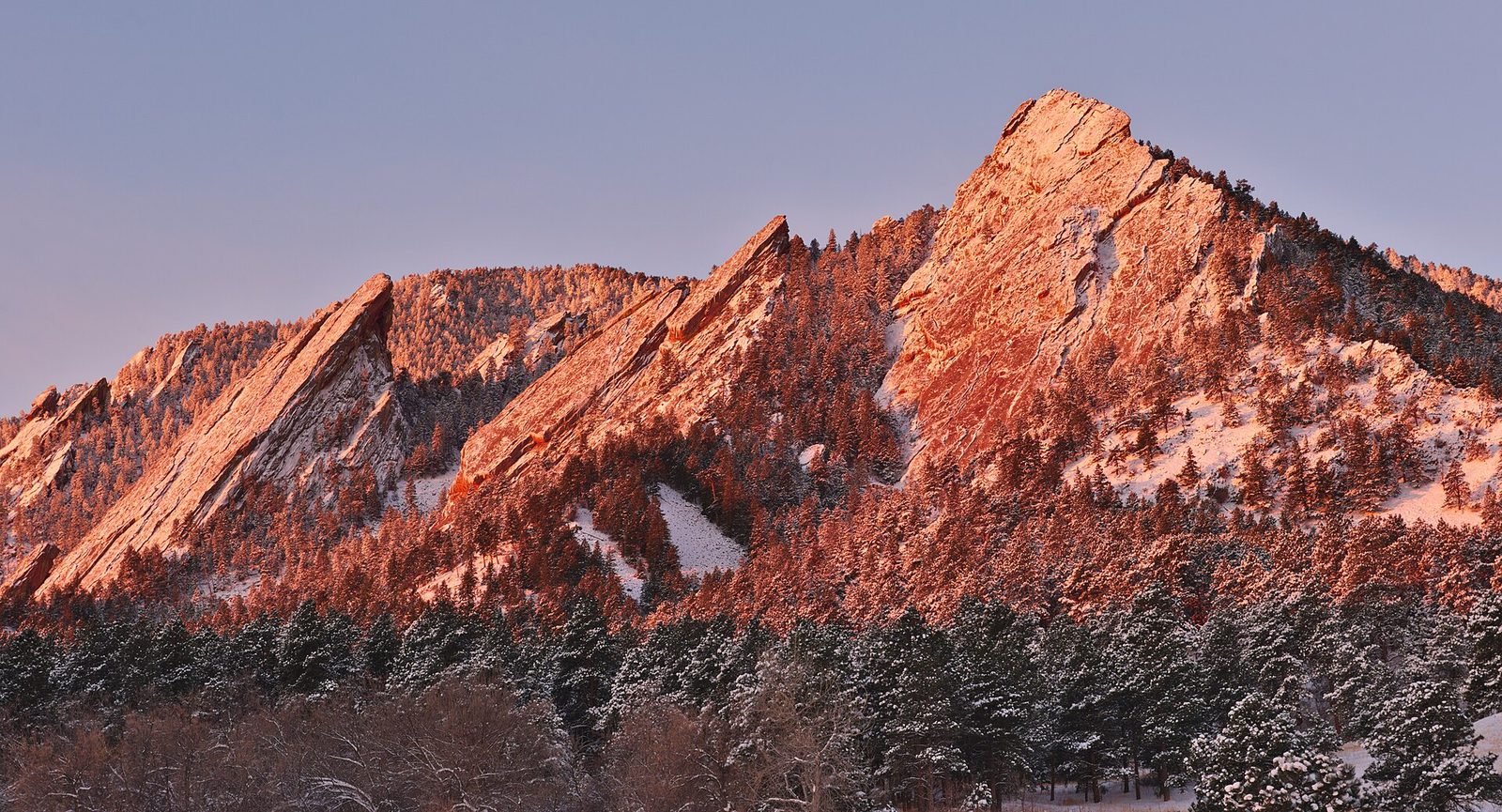
Boulder is a different animal from Denver: a university town of 100,000 with an extraordinary setting, a pedestrianized main street, and a self-image that Denver finds slightly exhausting and slightly enviable. The two things to do are Pearl Street Mall, four blocks of independent shops, buskers and restaurants, and Chautauqua Park, where the Flatirons — five tilted sandstone slabs, the same formation as Red Rocks — rise directly above a meadow with trailheads running into them.
The Chautauqua trails range from an easy meadow loop to serious scrambles; the parking fills by 8am on summer weekends and a free seasonal shuttle runs from town. Give Boulder a full day if you want both the town and a hike, or a half day for Pearl Street alone.
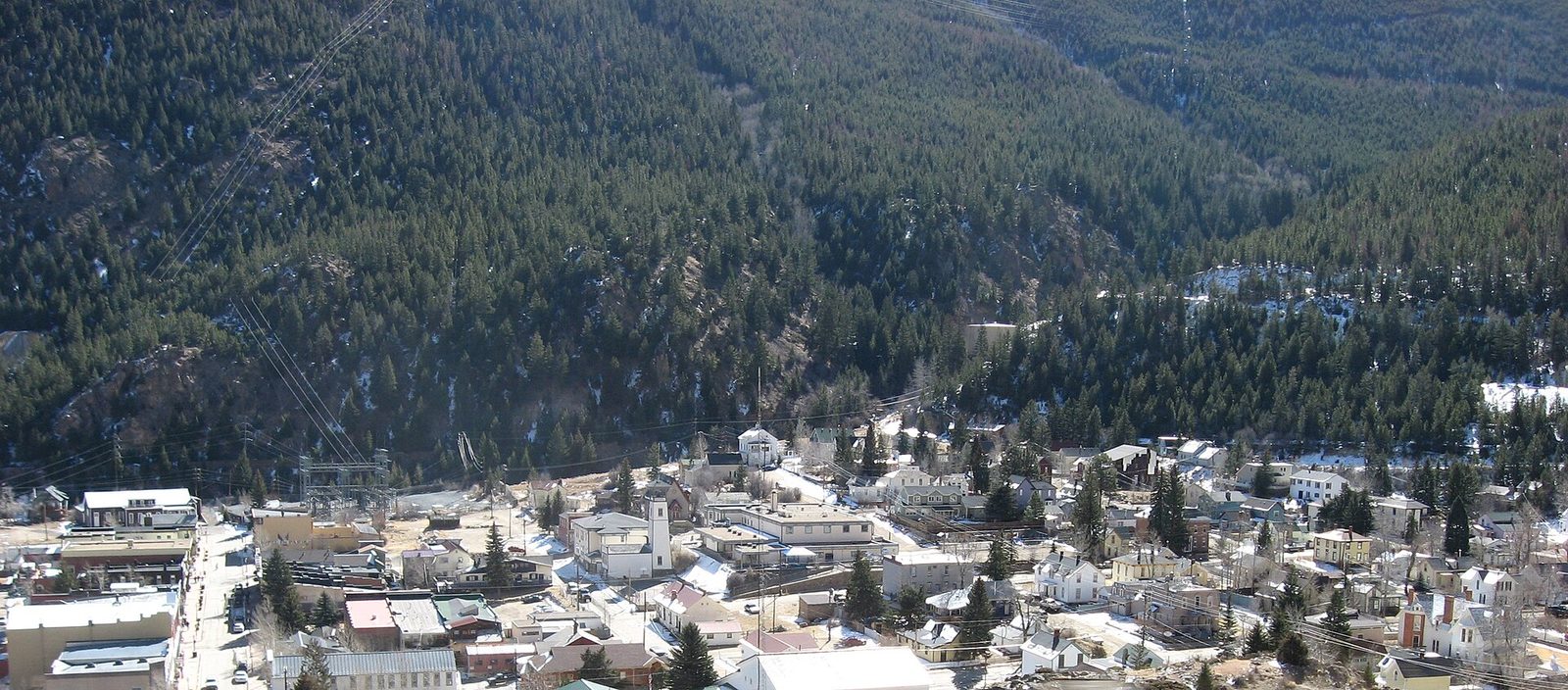
Georgetown and the Silver Towns
Fifty minutes up I-70 at 8,500 feet, Georgetown is the best-preserved Victorian town within reach of Denver — a silver camp that never burned down and was never modernized into blandness, tucked into a valley so tight that the interstate has to climb around it. Walk the grid, look at the ironwork, and notice how many buildings still carry their 1880s dates.
The Georgetown Loop Railroad runs a restored narrow-gauge line between Georgetown and Silver Plume, two miles away, on a spiral of trestles built to gain height in a confined valley. It operates on a season — check dates before planning a day around it — and the engineering is the point as much as the ride.
From Georgetown, the Guanella Pass Scenic Byway climbs south over 11,600 feet with aspen stands that turn gold in late September, reconnecting to US 285. It is a superb loop back to Denver in fall and closed or difficult in winter.
Mount Blue Sky, in Season
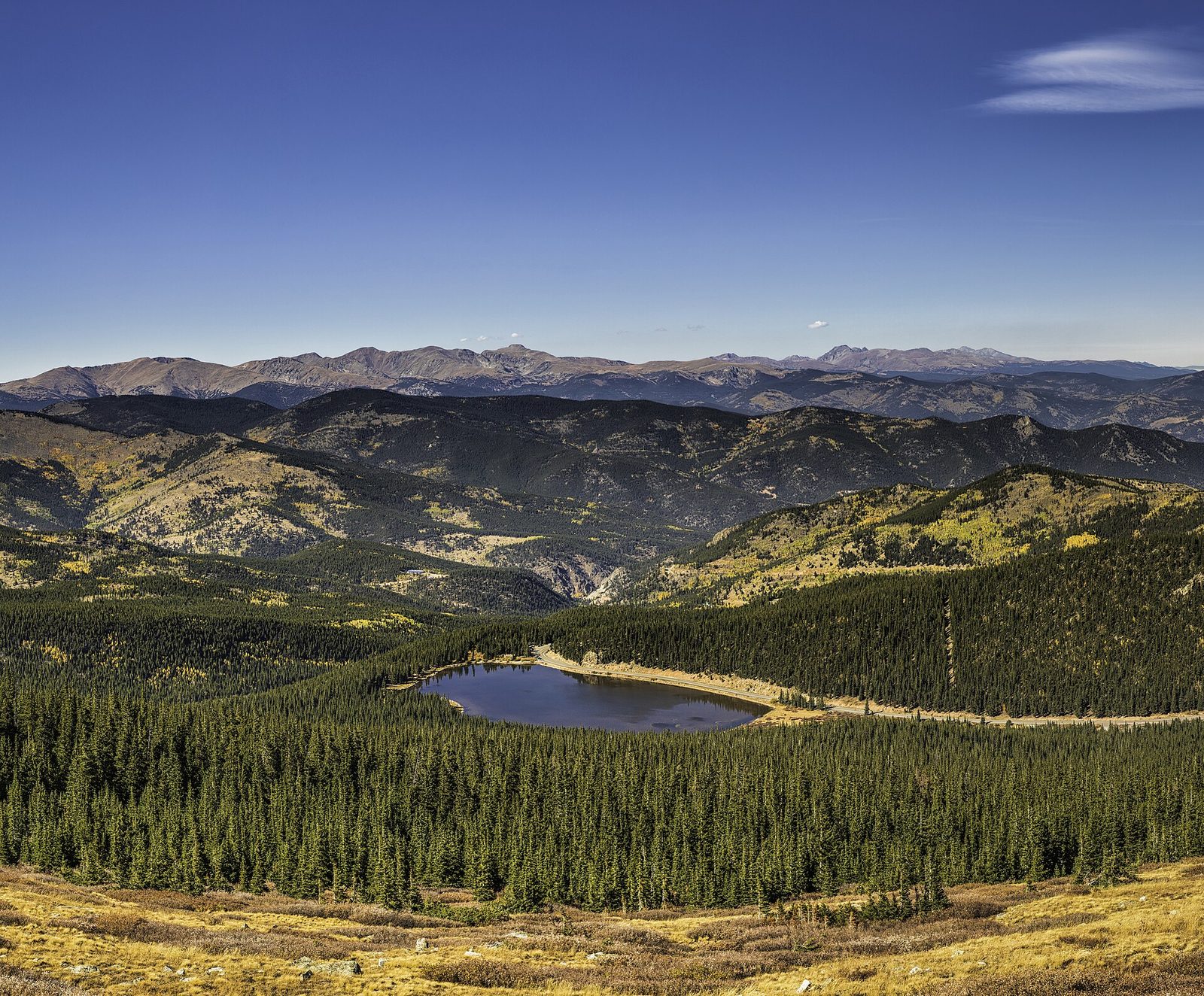
The highest paved road in North America climbs from Idaho Springs past Echo Lake to just below the summit of Mount Blue Sky — renamed from Mount Evans in 2023 — at over 14,000 feet. On a clear day you drive from city breakfast to alpine tundra, bristlecone pines and mountain goats in under two hours.
The season is short and strictly enforced. The road opens for Memorial Day weekend, weather permitting, and in 2026 the stretch above Summit Lake closed on 8 September, with the lower road open to Mt. Goliath and Summit Lake until 4 October. A timed-entry reservation through recreation.gov is required in season, released two days ahead, with a $2 reservation fee on top of entry. Outside the window the road is simply gated, and no amount of planning changes that.
Two practical warnings. The altitude gain is extreme — 9,000 feet in ninety minutes — and people who felt fine in Denver feel unwell at the top; do not attempt this on your first day in Colorado. And weather at 14,000 feet turns fast in any month, so bring layers regardless of what the city forecast says.
Even without a summit permit, the drive as far as Echo Lake at 10,600 feet is free, open longer in the season and worth the trip on its own.
Colorado Springs and Pikes Peak
Seventy miles south on I-25, about an hour and fifteen minutes, and the biggest single-day itinerary on this page. Three things justify the drive.
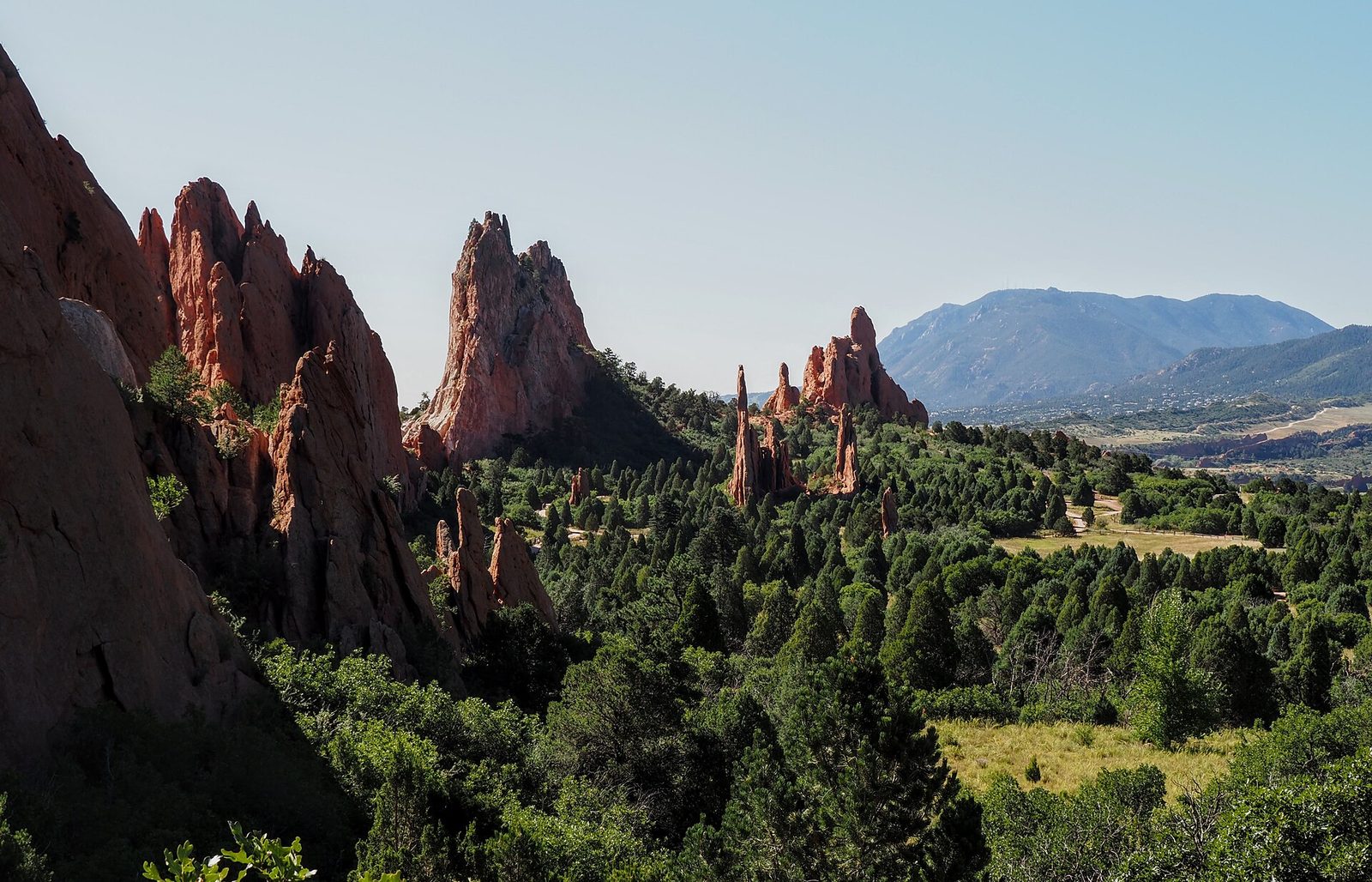
Garden of the Gods is a public park of red sandstone fins rising out of juniper scrub with Pikes Peak behind them, and entry, parking and the trails are all free, permanently — the land was donated to the city on that condition. The Visitor and Nature Center museum charges $14 for adults; the park itself never will. Go early, because the central loop road and its parking fill by mid-morning.
Pikes Peak can be reached two ways. The Broadmoor Manitou & Pikes Peak Cog Railway climbs from Manitou Springs to the 14,115-foot summit, with adult reserved tickets from $67 booked online and children from $57, or from $96 and $86 for the Engineer’s View seats. Or you drive the Pikes Peak Highway, which requires a timed-entry reservation from late May through the end of September, a $2 timed-entry permit to pass Mile 7, and an entry fee in the region of $18 per adult and $8 per child — check the current rate, which has moved in recent years.
Manitou Springs, at the foot of the mountain, is a small spa town with mineral springs you can drink from, an arcade museum and a main street built for tourists since the 1870s. It is either charming or kitsch, and mostly both.
The honest verdict: Colorado Springs is a full, long day from Denver, and trying to add Pikes Peak to Garden of the Gods and Manitou in one trip means rushing all three. Pick the mountain or the park, not both, unless you leave at seven.
Central City, Black Hawk and Fort Collins
Central City and Black Hawk sit fifty minutes west in a mining gulch, and they are Colorado’s legal gambling towns — casinos built into and around preserved 19th-century buildings, reached by a dedicated parkway off I-70. The Central City Opera House, built in 1878, still runs a summer festival and is genuinely worth seeing. The rest depends entirely on whether casinos are your idea of a day out; the two towns have quite different characters, with Black Hawk the more developed and Central City the more historic.
Fort Collins, an hour and ten minutes north on I-25, is a university town with an Old Town square that is widely believed to have inspired parts of Disneyland’s Main Street. Its real draw is beer — this is where Colorado’s craft industry has its densest concentration outside Denver, including some of the largest independent breweries in the country. A good, low-effort day for anyone who enjoyed the Denver brewery scene and wants more of it.
Three Loops That Beat an Out-and-Back
The best mountain days do not retrace their own steps. Three circuits within reach of Denver turn the drive itself into the destination.
The Lariat Loop. A short circuit in the foothills directly west of the city: up Lookout Mountain Road above Golden — a serpentine climb built in the 1910s, still used by cyclists who make the rest of us look bad — past Buffalo Bill’s grave, down through Evergreen, and back via Morrison and Red Rocks. Around 40 miles, half a day with stops, and open all year. This is the single best introduction to the Front Range if you only have one morning.
The Peak to Peak Highway. Colorado’s oldest scenic byway runs north from the Central City area through Nederland to Estes Park, along the eastern edge of the Continental Divide with the high peaks on your left the whole way. Done as a loop out via I-70 and back through Boulder, it is a long full day — six to seven hours of driving and stopping — and in the last week of September it is the best aspen drive within reach of the city.
The Guanella Pass loop. West on I-70 to Georgetown, south over Guanella Pass at 11,600 feet, then back to Denver on US 285 through Bailey and Conifer. Roughly five hours with stops, spectacular in fall, and closed or difficult in winter. It has the advantage of crossing a genuine high pass without the permit system or the crowds of the 14,000-foot roads.
Wildlife, Weather and Mountain Manners
A Denver day trip puts most visitors into serious mountain terrain for the first time, and a few things are worth knowing before you are standing in it.
Wildlife is genuinely wild here. Elk are common in Evergreen, Estes Park and along the high roads; bighorn sheep and mountain goats graze beside the Mount Blue Sky road and will walk right up to cars. They are not tame. Stay in or beside your vehicle, keep well back — the usual guidance is at least 25 yards from most animals and considerably more from elk in the autumn rut, when bulls are genuinely dangerous — and never, under any circumstances, feed anything. A fed animal usually ends up a dead animal.
Weather changes faster than you will believe. A 75-degree morning in Denver can be 45 degrees and hailing at 12,000 feet by two in the afternoon. Carry a warm layer and a waterproof on every mountain day, in every month, regardless of the forecast you checked at the hotel.
Lightning is the real summer hazard. Afternoon storms build over the peaks almost daily in July and August. The rule mountain people follow is simple: be off exposed ridges and summits by noon, and if your hair stands up, get down immediately.
Fire restrictions are common and enforced through the dry months. Check current restrictions before any plan involving a fire or a grill, and never throw a cigarette from a car window.
On the trails, uphill hikers have right of way, pack out everything you carry in including fruit peel, and stay on the path — the alpine tundra above treeline takes decades to recover from a single boot print off-trail.
What to Take
- More water than you think. The combination of altitude and roughly 20% humidity dehydrates people fast. Two liters per person on a mountain day is not excessive.
- Layers and a waterproof, even in July. Temperatures fall roughly 3 to 5 degrees Fahrenheit per thousand feet of climb.
- Sunscreen, sunglasses and lip balm year-round. There is about 25% less atmosphere overhead here than at sea level, and snow reflects the rest back at you.
- Food. Mountain-town kitchens keep short hours, especially in shoulder season, and there is very little between towns.
- A downloaded map. Cell coverage fails in the canyons and on the passes.
- A full tank. Gas thins out west of Idaho Springs and is expensive where it exists.
- In winter, Colorado’s traction law can require snow tires or chains on I-70; rental cars are not always compliant, so check what you have been given before a snowy day.
Winter Day Trips
The mountains do not close in winter; they change price and difficulty.
Hot springs are the best cold-weather trip — Idaho Springs has them within 35 minutes of the city, and the contrast of sitting in hot mineral water in the snow is worth the drive on its own.
Ski areas along I-70 are day-trippable from Denver, with the nearest reaching Loveland and Georgetown within an hour and the big-name resorts at 70 to 100 miles. Snow days on the interstate are the constraint, not the distance; leave before six or take a bus service rather than driving yourself on a Saturday.
Georgetown, Golden and Evergreen all work perfectly well in winter and are at their quietest, with the caveat that mountain-town kitchens close earlier in the off-season.
Guanella Pass, Trail Ridge Road and the Mount Blue Sky summit road are closed, and no amount of four-wheel drive changes that.
The Ones That Do Not Work as Day Trips
This is the part of the page most likely to save you a day.
- Rocky Mountain National Park. Two hours each way on a good day, a timed entry permit required in season, and no guarantee that Trail Ridge Road is open. A day trip gets you nine hours of driving and queueing for three hours in a park that deserves two days and a base in Estes Park. If the park is the reason you are coming to Colorado, restructure the trip around it rather than bolting it onto Denver.
- Glenwood Springs. Two and a half to three hours each way through Glenwood Canyon, which is spectacular and is also the problem — this is an overnight, not a day.
- Aspen and Vail. Four hours and two and a half hours respectively. Vail is just about possible as a ski day; Aspen is not a day trip from Denver in any season.
- Great Sand Dunes National Park. Four hours each way into the San Luis Valley. Extraordinary, and an overnight at minimum.
- Mesa Verde, Black Canyon, Durango. These are the other side of Colorado. Six to seven hours. Fly or plan a road trip.
- Breckenridge in summer, “just for a look.” Ninety minutes each way for a town that is essentially a pretty main street in July. Fine if you want the drive; a poor trade if you were hoping for an event.
Day Trips Without a Car
Most of this page assumes a rental, and honestly most of it requires one. Three exceptions.
Boulder is the good one: the Flatiron Flyer from Union Station takes about 55 minutes and drops you at Downtown Boulder Station, a short walk from Pearl Street, with a local bus onward to Chautauqua in season. A complete car-free day.
Golden is reachable by a combination of light rail and bus, slowly. Doable, not elegant.
Red Rocks and the mountain towns have no scheduled transit at all. For Red Rocks, rideshare out and pre-arrange the return; for the I-70 towns, use a commercial tour or shuttle, or accept that this is the day you rent a car. Our Denver itinerary guide sets out how to slot a single rental day into a trip that otherwise does not need one.
Frequently Asked Questions
What is the best day trip from Denver?
Golden plus Red Rocks for a half day with minimal driving. Boulder for the best full day that works without a car. Georgetown for the best mountain-town day. In high summer, with a permit booked two days ahead, the Mount Blue Sky road beats all of them for sheer contrast — city breakfast to alpine tundra in under two hours.
Can you visit Rocky Mountain National Park as a day trip from Denver?
You can, and you probably should not. It is roughly two hours each way, a timed entry permit is required in season, and Trail Ridge Road is closed for much of the year. The result is nine hours spent to get three in the park. It deserves its own trip with a night in Estes Park.
How far is Boulder from Denver?
About 30 miles, which is 45 minutes by car outside rush hour and roughly 55 minutes on the Flatiron Flyer bus from Union Station to Downtown Boulder Station. It is the only major day trip from Denver that is genuinely easy without a car.
Is Garden of the Gods free?
Yes — entry, parking and all the trails are free, permanently, because the land was donated to Colorado Springs on that condition. Only the Visitor and Nature Center museum charges, at $14 for adults. Arrive early; the central loop parking fills by mid-morning in summer.
Do I need a reservation to drive up Pikes Peak or Mount Blue Sky?
Yes, for both, in season. Pikes Peak Highway requires a timed-entry reservation from late May through the end of September, with a $2 permit to pass Mile 7 plus the entry fee. Mount Blue Sky requires a timed-entry reservation through recreation.gov, released two days ahead, with a $2 reservation fee — and the road is only open from around Memorial Day until early autumn.
When do the aspens turn near Denver?
Late September into early October in the high country, with the exact timing varying by elevation and year. Guanella Pass above Georgetown, the Mount Blue Sky road and the Peak to Peak Highway are the classic drives. Go midweek if you can; the roads are genuinely busy on a good fall weekend.
What is there to do in Golden, Colorado?
Walk Washington Avenue under the arch, follow Clear Creek through the middle of town — people tube down it all summer — and pick from the Coors brewery, the Colorado Railroad Museum, the Geology Museum at the School of Mines and Buffalo Bill’s grave on Lookout Mountain above the town. It is twenty-five minutes from downtown Denver and pairs naturally with Red Rocks ten minutes to the south, which together make the easiest full day on this page.
Can I do a mountain day trip with children?
Yes, with two adjustments. Keep the altitude modest on the first day — Golden, Morrison, Evergreen and Idaho Springs all sit below 8,000 feet and are far gentler than a 14,000-foot summit road — and build in more stops than you would alone, because the driving is winding and small children feel it. The Georgetown Loop Railroad, the tubing on Clear Creek in Golden, the lake path at Evergreen and the mine tours at Idaho Springs are all good with kids. Save Mount Blue Sky for a later day in the trip, if at all.
How bad is I-70 traffic?
Bad enough to plan around. Westbound on weekend and ski-season mornings from about 8am, and eastbound on Sunday afternoons, the corridor can add an hour or more. The fix is simple and it works: leave before 7:30 going out, and come back before three or after seven.
Several of these drives are really approaches to trailheads, and which trail you pick matters more than which town you park in. Our best hikes near Denver guide runs from flat city loops for your first day at altitude through the free Jefferson County foothills parks to the closest 14,000-foot summit, with the elevation and timing advice that keeps a mountain morning enjoyable.
Rocky Mountain National Park is the day trip everyone asks about and the one we most often talk people out of, at least as a there-and-back from Denver. It can be done, with an early start, a timed entry permit booked on release day and one area of the park chosen in advance, but it is far better with a night in Estes Park. Our guide to Rocky Mountain National Park from Denver covers the permit system, the routes, the park shuttles and the summer weekend bus that gets you there without a car.
In winter the mountain day trip usually means skiing, and the same rule applies as for every trip on this page: the drive decides the day. Leave Denver by 6am, come home before about 2pm or after dinner, and choose a weekday over a weekend whenever you can. Our guide to ski resorts near Denver compares Loveland, Arapahoe Basin, Copper, Winter Park and the rest by distance and price, with the 2026–27 pass arithmetic and the buses and train that get you there without a car.
Heading west on I-70, the first stop worth making comes after only about 20 miles: the Genesee Park overlooks at exit 254, where the city of Denver’s own bison herd has grazed since 1914. It is one of the experiences in our guide to unique things to do in Denver, along with Buffalo Bill’s grave on Lookout Mountain above Golden.
Related Denver Guides
- Red Rocks Amphitheatre: The Free Visit and the Concert Night — the closest and cheapest trip west.
- Denver Itinerary: How to Plan One to Five Days in the City — which day of your trip should be the mountain day, and when to rent the car.
- Denver Airport Guide: Getting In, Out and Through DEN — including the mountain shuttles that run from the terminal in ski season.
- Denver Museums: Which Ones Are Worth Your Day and Your Money — the Golden museums that pair with a Red Rocks morning.
Photo Credits
The Flatirons at sunrise from Chautauqua, Boulder: photo by Tyler Cipriani / Wikimedia Commons (CC BY-SA 4.0)
Garden of the Gods central gardens: photo by Dicklyon / Wikimedia Commons (CC BY-SA 4.0)
Echo Lake from the Mount Blue Sky road: photo by David Zhang / Wikimedia Commons (CC BY-SA 2.0) — filed under the mountain’s former name.
Prices, seasons and permit rules were checked against operator and agency sources in September 2026, including recreation.gov, the Pikes Peak Cog Railway and the City of Colorado Springs. Mountain road seasons shift with the weather every year; confirm openings before you drive.
Denver Tourism Guide is an independent publication. We are not affiliated with VISIT DENVER, the City and County of Denver or any attraction listed here.