Last call in Colorado is 2am, and the state legislature has spent a decade declining to change it. That single fact shapes Denver nightlife more than any venue list, because it means the city runs on a compressed timetable: taprooms wind down around nine or ten, the bars fill from about that point, the music venues turn out somewhere between eleven and one, and everything stops at two. If you are used to a city where the night begins at midnight, Denver will feel like it ended early. If you start at six, it will feel like exactly the right length.
This page covers where to go and when, district by district and venue by venue, with the practical details that actually matter — the altitude and what it does to your tolerance, the last call, the rideshare surge, and which parts of the city are genuinely worth crossing town for. Hours, capacities and rules below were checked in September 2026; venues change hands constantly, so confirm anything specific before you build an evening around it.
Denver Nightlife at a Glance
| District | What it is | Peak hours | Best for |
|---|---|---|---|
| LoDo and Larimer Square | The busiest and most visited. Bars, restaurants, rooftops, game-night crowds | 7pm–1am | A first night out; easy from Union Station |
| RiNo | Taprooms, distilleries, patios and a handful of late venues in old industrial buildings | 4pm–11pm | Early evening; it winds down sooner than you expect |
| Colfax Avenue | The music corridor. Historic theaters, dive bars, late food | 8pm–2am | Live music and a scruffier, more local night |
| South Broadway and Baker | Record shops, dive bars, small venues, cheaper drinks | 8pm–2am | The night locals would actually pick |
| Highland and LoHi | Neighborhood bars and good restaurants with a view back at the skyline | 6pm–midnight | Dinner that turns into drinks |
| Golden Triangle and Capitol Hill | Quieter, mixed, with some of the city’s long-running institutions | 7pm–1am | A night that does not involve a crowd |
The short version: if you want one good night, put it on Colfax. The Fillmore and the Ogden are within a block of each other, the bars around them are unpretentious, and the street is the closest thing Denver has to a genuine late-night corridor. If you want the easy version, LoDo is a ten-minute walk from Union Station and needs no planning at all.
The Rules That Shape the Night
Four things are worth knowing before you go out here.
Last call is 2am. Colorado law restricts liquor sales to between 7am and 2am, statewide, and it is not a local decision. Bills to extend it — most recently a 2025 proposal for 2:30am sales and 3am consumption — have repeatedly failed. Denver officials have drafted a licensing overhaul that would let nightclubs stay open until 4am with last call still at 2am, but at the time of writing that had not gone to City Council. Plan for two.
The altitude is not a joke. At 5,280 feet the air is thin and dry, and official visitor guidance is to drink roughly twice your usual water and go easy on alcohol until acclimatized. The practical effect is that people who handle four drinks comfortably at home have a noticeably worse evening here on three, and a considerably worse morning. Alternate with water from the start, not from the fourth round.
Evenings are cold. Thin dry air holds almost no heat, so a 90-degree July afternoon becomes a 58-degree evening. Denver patios keep blankets for a reason. Take a layer even in high summer, and take a proper coat any time between October and April.
Taprooms are not bars. A large share of Denver’s social life happens in breweries, and most of them stop serving around nine or ten. A brewery evening is an early evening. Our guide to Denver breweries covers how that side of the city works.
Colfax Avenue: The Music Corridor
East Colfax is the longest continuous commercial street in the country and the spine of Denver’s live music. It is also wide, loud, lined with gas stations and pawn shops as well as historic theaters, and not remotely glamorous — which is the point. This is the part of Denver that has not been renovated into something smoother.
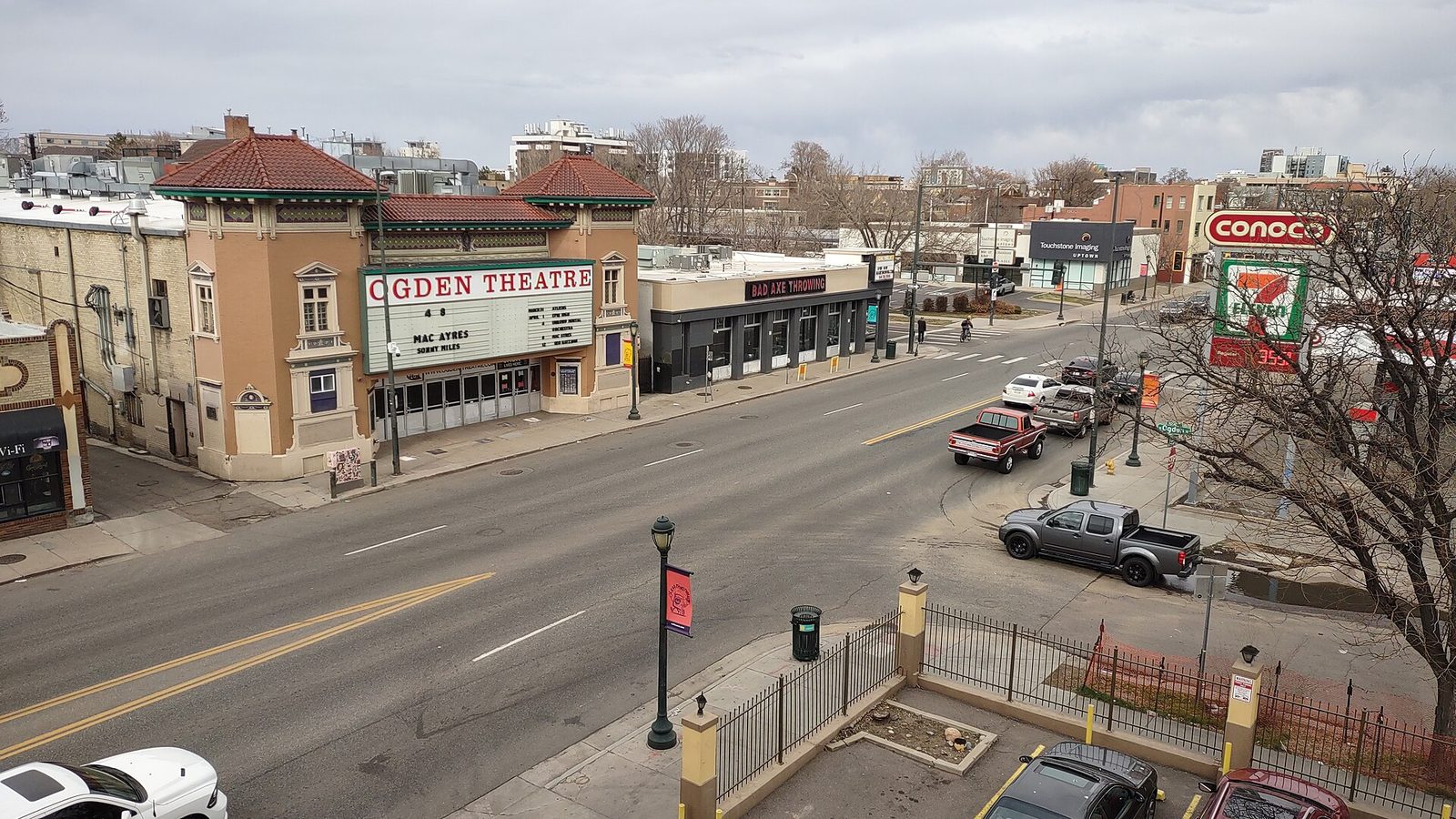
Four venues carry most of the weight, and the concentration is remarkable for a city this size.
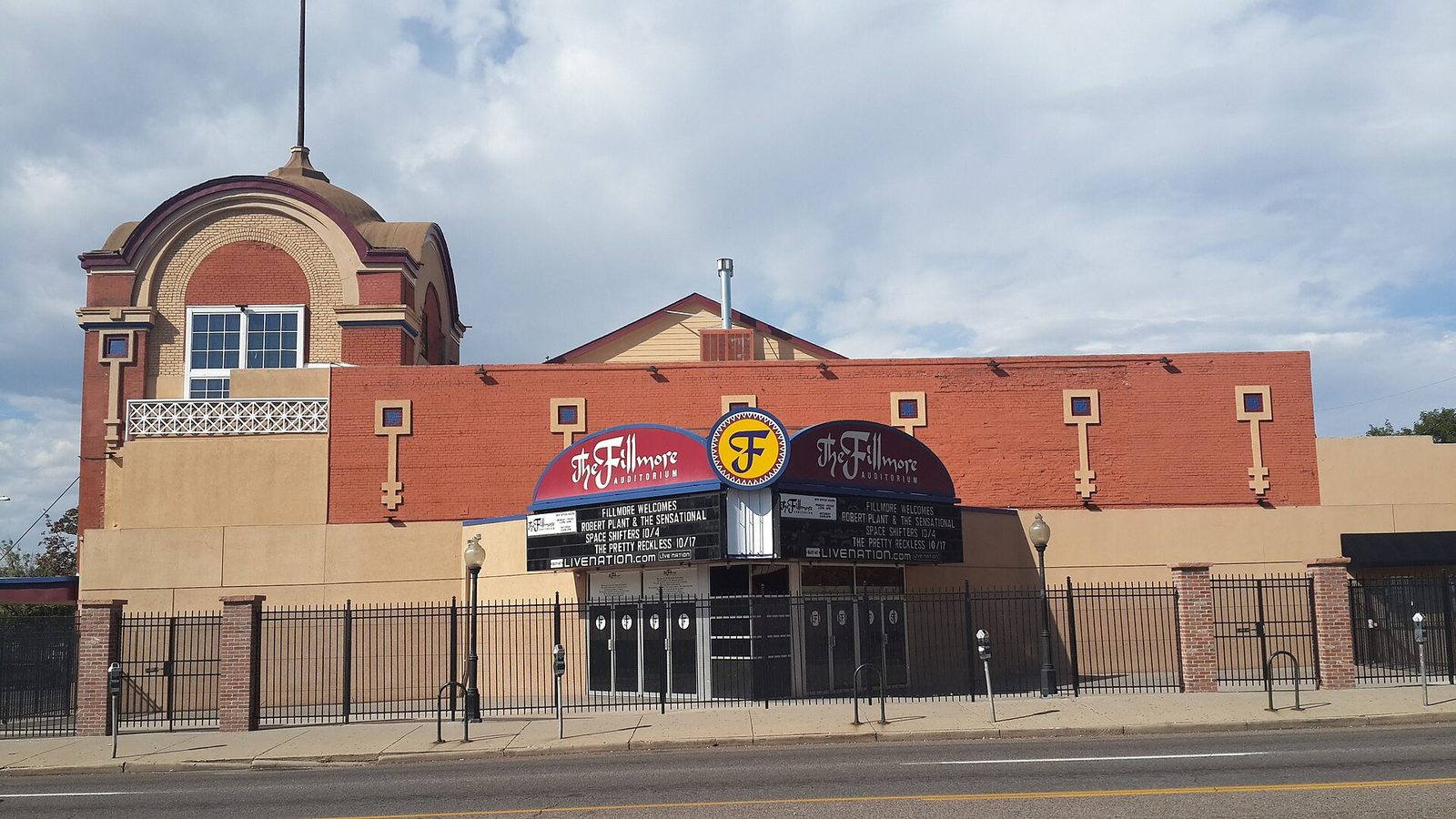
- The Fillmore Auditorium — Colorado’s largest indoor general-admission venue, holding around 3,700 and up to nearly 4,000. It began life as a roller skating rink. Standing room, big touring acts, and a genuinely good room for volume.
- The Ogden Theatre — 935 East Colfax, capacity 1,600, opened on 6 September 1917 to a design by Harry W. J. Edbrooke and listed on the National Register of Historic Places. Houdini played here. It reopened as a music venue in 1993 and now runs around 150 concerts a year, one block from the Fillmore.
- The Bluebird Theater — built in 1913 as a movie house, reopened as a music venue in 1994, holding about 500 people general admission. Rolling Stone once named it one of the best clubs in America, and at that size it is the one where you stand close enough to see the band properly.
- The Gothic Theatre — about 1,100 capacity, art deco, and technically not in Denver at all: it is in Englewood, just south of the city, and was the first theater in the area to show talkies in the 1920s. Renovated at the end of the 1990s with the historic interior kept intact.
The practical advantage of the Colfax cluster is that a night can be assembled rather than planned: check what is on at all four, pick one, and the bars either side of the venue will handle the rest of the evening. It is also a bus corridor with the highest ridership in the RTD system, which matters at one in the morning.
LoDo and Larimer Square
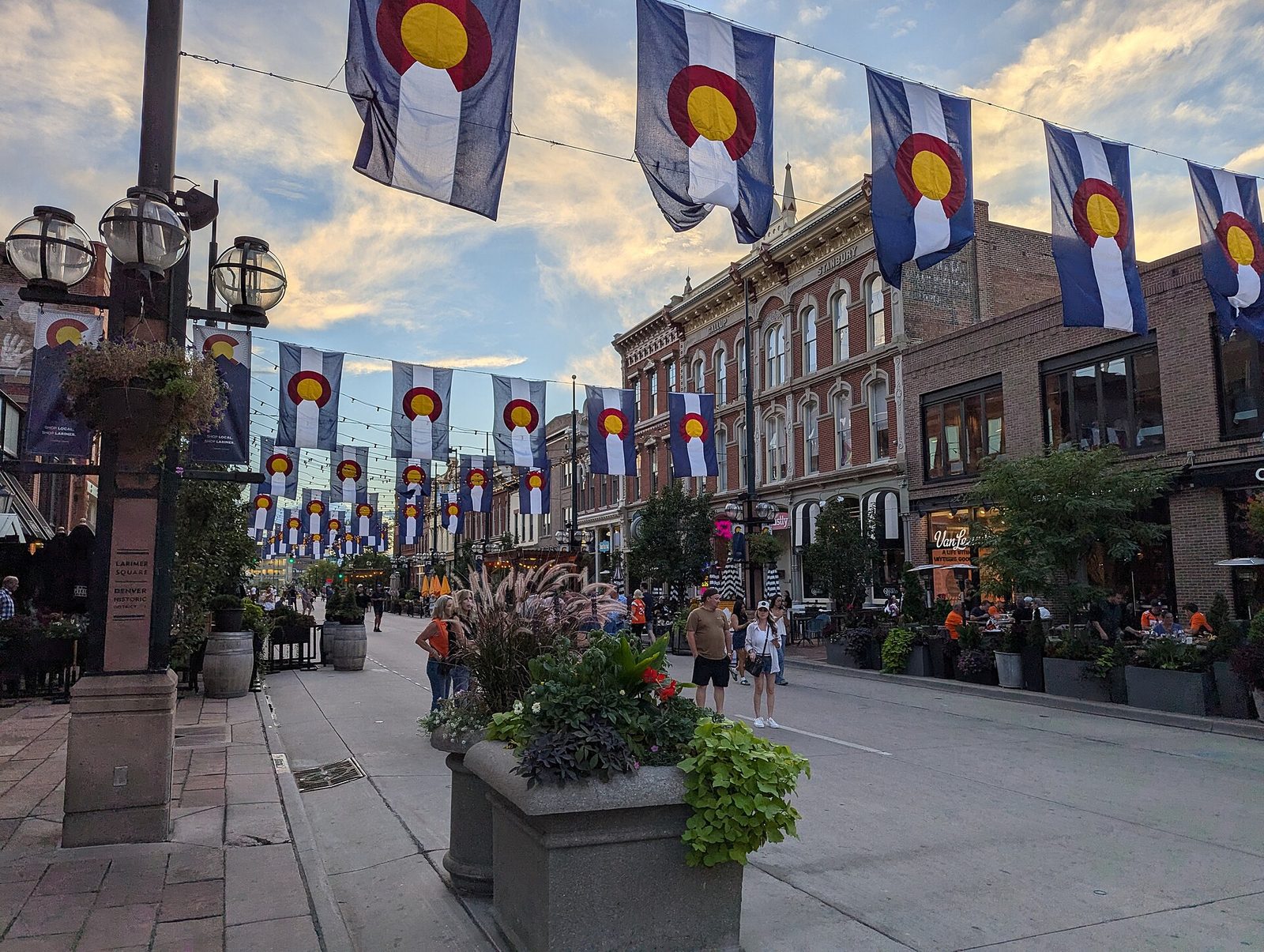
Lower Downtown is where most visitors end up, and there is nothing wrong with that. It is a ten-minute walk from Union Station, it is dense with bars and restaurants, the 1400 block of Larimer Street is the oldest and prettiest in the city with flags and string lights strung across it, and on a summer evening the patios are full.
The honest caveats. LoDo is the most expensive nightlife in the city and it knows it. On Rockies game nights the whole district fills ninety minutes before first pitch and empties into the bars afterward, which is either the atmosphere you wanted or exactly the thing you were trying to avoid — check the fixture list in our Denver sports guide before booking a table. And the stretch of Market Street that operates as a late-night strip gets rowdy at closing time in a way the rest of downtown does not.
What LoDo does genuinely well: rooftops. A handful of bars here have upper terraces looking west at the Front Range, and a clear evening from one of them at sunset is among the better things Denver offers.
RiNo After Dark
River North is the district people are sent to, and it deserves the reputation — but it is an early-evening place rather than a late-night one. The taprooms that define it close around nine or ten, and while a handful of larger venues, distilleries and restaurants run later, the character of the district changes at about that hour from busy to quiet.
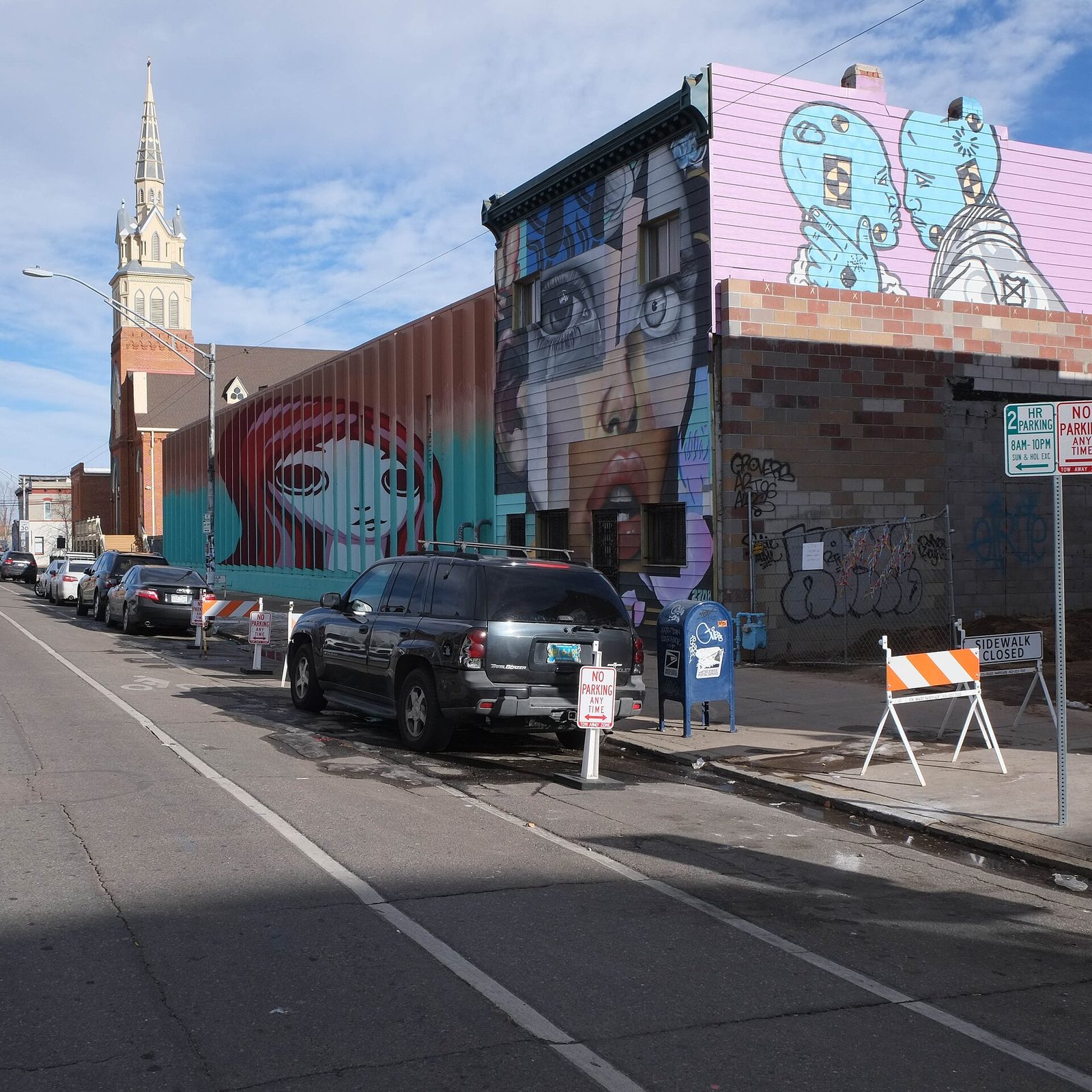
Use it accordingly. Start at four or five in the afternoon, walk between two or three places, eat, and then decide whether you are heading back to LoDo or out to Colfax for something later. Treating RiNo as the whole night is the most common mistake visitors make here, and it ends with you standing outside a closed roll-up door at half past ten.
South Broadway and Baker
South Broadway below about 1st Avenue is where Denver goes when it does not want to be somewhere that was recommended to it. Record shops, vintage stores, dive bars, small music venues and cheaper drinks, with a crowd that skews local and young. The Underground Music Showcase takes over these blocks in late July with 200-plus performances across outdoor stages and more than a dozen indoor venues, which tells you how many rooms there are within walking distance.
It is roughly two miles from Union Station — walkable in theory, a bus down Broadway or a short rideshare in practice. If you have two nights in Denver and want one of them to be the real thing, this is where to spend it.
Highland, LoHi and the Northwest
Over the Millennium Bridge and across I-25, the Highland neighborhoods do something the rest of the city does not: they look back at it. Several bars and restaurants here have terraces facing southeast at the downtown skyline, which on a clear evening is worth the walk on its own. The character is neighborhood rather than nightlife — good restaurants that turn into good bars, rather than places built for a late night.
Tennyson Street further northwest, in Berkeley, is the quietest version of the same idea: neighborhood taprooms and small restaurants with regulars in them. Our guide to Denver neighborhoods sets out how these fit together geographically.
Live Music Beyond Colfax
Red Rocks Amphitheatre is the headline act of the whole region — a natural amphitheatre between two sandstone monoliths at about 6,400 feet, seating close to 10,000, with a season running roughly April to October. A show there is not a night out in Denver so much as an expedition from it, and it needs planning: parking lots open two hours before doors, bags must fit under the seat at 18 by 12 inches, and after the show only a limited shuttle runs, from the Top Circle Lot and Trading Post to the Jurassic Lot a mile from the South Gate. Rideshare after a concert means several thousand people requesting cars at once in a canyon with patchy signal. Our Red Rocks guide covers it properly.
Ball Arena handles the largest indoor shows between hockey and basketball fixtures. Levitt Pavilion, an outdoor amphitheatre in Ruby Hill Park, runs its own season. And the Denver Performing Arts Complex — ten performance spaces on a four-block, 12-acre site, up to the 2,839-seat Buell Theatre — carries the touring Broadway, opera and symphony end of an evening, which is a different kind of night but still a night.
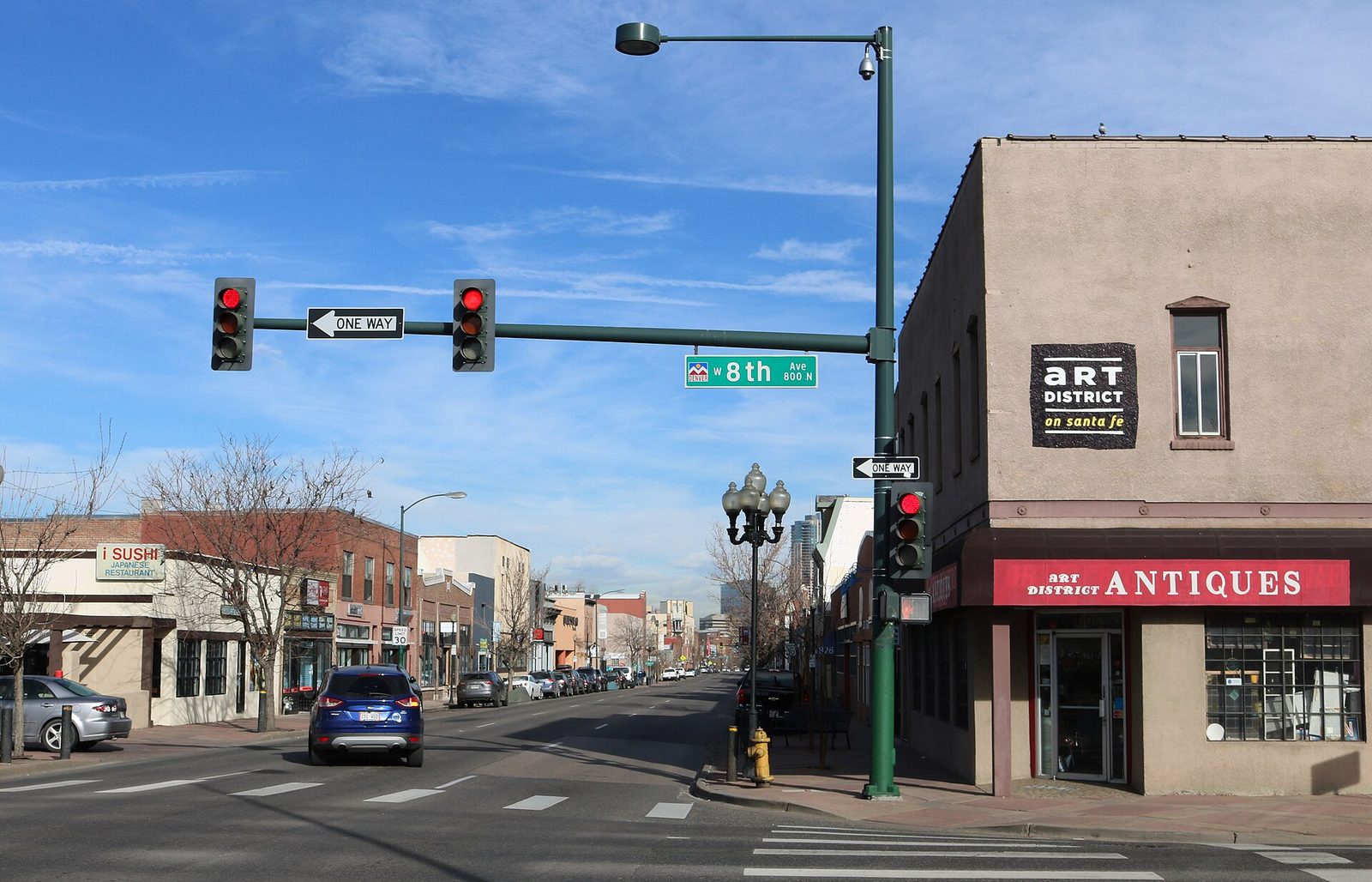
Beyond the named rooms, Denver’s smaller venues are spread through RiNo, Five Points, Baker and the Santa Fe arts district. Five Points, northeast of downtown, was once known as the Harlem of the West and has a jazz history that the neighborhood still marks with an annual festival.
The Kinds of Bar You Will Find
Denver’s bar market divides into recognizable types, and knowing which is which saves you a wasted walk.
- Taprooms. A brewery’s own bar, often with no kitchen, a food truck outside and a roll-up door. Afternoon and early evening, frequently dog- and child-friendly, closing around nine or ten. These are the most characteristic drinking rooms in the city.
- Dive bars. Colfax and South Broadway are full of them, and Denver’s are better than most — cheap, unpretentious, often with a jukebox and a pool table. They keep the latest hours of anything in the city.
- Rooftops. Concentrated in LoDo and RiNo, and the one format where Denver’s geography pays off: a west-facing terrace at sunset with the Front Range on the horizon is genuinely hard to beat. Expect to pay for it, and expect to need a layer.
- Cocktail bars. A serious scene, much of it in LoDo, the Golden Triangle and RiNo, with several rooms doing careful drinks at prices to match. This is where Denver looks most like any other good American city.
- Sports bars. Unavoidable near Coors Field, Ball Arena and Empower Field, and packed on any game night. Fine if that is the plan, hopeless if it is not.
- Activity bars. Axe throwing, arcades, pinball, shuffleboard and duckpin bowling have all colonized old industrial buildings here. Better for groups than for a quiet drink.
- Distillery tasting rooms. The same RiNo blocks as the breweries, smaller, and a more interesting process to have explained to you.
What Denver has comparatively little of is a big-club scene. There are dance venues, but this is not a city whose nightlife is organized around them — the center of gravity sits with live music and with drinking rooms, which is part of why 2am does not feel as early as it sounds.
Planning an Evening
Three evenings that work, depending on what you want.
| The night | Start | Middle | End |
|---|---|---|---|
| Easy first night | Union Station Great Hall, 6pm | Dinner in LoDo or Larimer Square | A LoDo rooftop or a cocktail bar; walk home |
| Live music | RiNo taproom, 5pm | Early dinner, then a bus or ride to Colfax | A show at the Fillmore, Ogden or Bluebird; bars either side |
| The local one | Baker, 7pm — dive bar and a record shop | Small venue on South Broadway | Late food, then a rideshare back |
Two structural notes. Denver starts earlier than you expect and ends at two regardless, so a 6pm start gives you eight hours and a 10pm start gives you four. And do not stack a heavy night onto your arrival day — the altitude compounds with everything else, and day two is when visitors regret day one. Our Denver itinerary guide paces a trip around exactly that.
Going Out Solo, or Without Drinking
Both are easier here than in a lot of American cities. Denver’s bar culture is conversational rather than exclusive, taprooms in particular are full of people talking to strangers at communal tables, and sitting at the bar alone attracts no attention at all. A live music night is the simplest solo evening in the city — you have somewhere to be, and the crowd does the rest.
If you are not drinking, the taproom culture works in your favor: most Denver breweries now keep a proper non-alcoholic beer on the board rather than just a soda gun, and several pour house-made root beer or kombucha. Cocktail bars here generally take a non-alcoholic menu seriously. And the city’s late museum hours — the art museum to 8pm on Tuesdays, the nature museum to 9pm most Fridays, the Clyfford Still to 8pm on Fridays — make a genuinely good evening that has nothing to do with a bar.
Worth adding: a Denver evening outdoors is one of the city’s better free experiences at any age or inclination. The light on the Front Range after a summer storm, the Larimer Square lights, the walk along the South Platte from Confluence Park — none of it requires a drink or a ticket.
Getting Home
The transport question is the one most likely to spoil a Denver night, and it has straightforward answers.
RTD thins out after about nine, substantially so on secondary routes and on Sundays. The main corridors — Colfax especially, which carries the highest ridership in the system — keep running later, but do not assume a last bus exists on a route you have not checked. Fares are $2.75 for three hours and $5.50 for a day pass, with anyone 19 and under riding free.
Rideshare is the default late option and prices spike at three predictable moments: turn-out at Ball Arena or Coors Field, closing time at two, and after a Red Rocks show. If you are in a group, agreeing a meeting point before you go out saves twenty minutes of standing on a corner at 2:05.
Walking works in the core. LoDo, Larimer Square, RiNo and Union Station are all within about fifteen minutes of each other on a flat grid, and the 16th Street FreeRide runs free along the downtown spine every five minutes or so, seven days a week. Our guide to getting around Denver covers the network in full.
Do not drive. Downtown parking is expensive at night, the police enforce drink-driving seriously, and every district worth visiting is either walkable from a hotel or a short ride.
What About Cannabis?
Recreational cannabis is legal for adults in Colorado, and it is a thing visitors ask about, so: public consumption is not legal, and hotels overwhelmingly prohibit smoking on the premises. That gap is why a small industry of tour vehicles and licensed private venues exists here. If this is part of why you are visiting, research the current rules and any operator carefully — the law is specific about where consumption is permitted, it has changed several times since legalization, and a travel guide is not the right source for it. Do not take any product across a state line.
Nightlife by Season
Denver’s evenings change more with the calendar than most cities’ do, because so much of the social life is on patios.
Summer is the patio city at full volume — RiNo, LoDo and Highland all spill outside, rooftops open, and the evening light on the mountains after an afternoon thunderstorm is the best hour of the day. It is also the most expensive and busiest season.
Autumn is the sweet spot: September and early October are the most stable weather of the year, the patios are still open, and the summer crowds have thinned. If you are choosing dates specifically for evenings outside, this is the window.
Winter moves everything indoors, which makes the music venues and the dive bars the point rather than the backup. Rooms are louder, the walk between them is brisker, and the city is cheaper. Colfax in February is arguably the truest version of Denver nightlife there is.
Spring is unpredictable — March is the snowiest month of the year here — but the first warm evening after a storm empties every apartment in the city onto a patio, and there is nothing quite like it. See our guide to the best time to visit Denver for the month-by-month picture.
Where to Stay for a Night Out
Nightlife is one of the few things in Denver where the hotel’s location genuinely changes the experience, because the last leg of the evening is the part that goes wrong.
LoDo and around Union Station puts you inside the busiest district, within walking distance of Larimer Square, the rooftops, Coors Field and the 16th Street corridor, with rail to the airport in the morning. It is the most expensive option and the one that removes the transport problem entirely.
Capitol Hill and the Golden Triangle sit between downtown and Colfax, which is the smartest compromise if live music is the plan — you can walk to the Ogden and the Fillmore, and walk back. Rates are noticeably lower and the streets are quieter.
Baker and South Broadway is where to be if the local version of the night appeals. It is two miles from downtown, so you are committing to that district rather than sampling several.
Wherever you land, remember what gets added to the rate: Denver’s lodger’s tax is 10.75 percent, rising to 11.75 percent at hotels with more than 50 rooms, on top of 4 percent state sales tax — roughly 15 to 16 percent on top of the quoted price, before parking. Our guide to where to stay in Denver covers the neighborhoods in detail.
What to Skip
Trying to make RiNo a late night. It closes early. Start there, finish elsewhere.
Market Street at closing time, unless a loud crowd at 2am is specifically what you came for. The rest of LoDo is better.
Driving to any of it. Parking, enforcement and the walk back to the car all argue against it.
Assuming a 2am venue exists. Last call is 2am by state law and the city has no after-hours culture built around it. If you want a long night, start early rather than expecting the end to stretch.
A pub crawl on your arrival evening. The altitude will make the decision for you, and it will not make it kindly.
Booking a table in LoDo for eight o’clock on a game night. The district fills about ninety minutes before first pitch at Coors Field and empties into the same restaurants afterward. Either eat early, eat late, or eat somewhere else entirely — the food will be the same and the wait will not be.
Frequently Asked Questions
What time do bars close in Denver?
2am. Colorado law restricts liquor sales to between 7am and 2am statewide, and repeated attempts to extend it — including a 2025 bill that would have allowed sales to 2:30am — have failed. Denver has drafted a proposal to let nightclubs stay open to 4am with last call unchanged at 2am, but it had not gone to City Council at the time of writing.
Where is the best nightlife in Denver?
Colfax Avenue for live music, with the Fillmore, the Ogden and the Bluebird all on the same corridor. LoDo and Larimer Square for the easiest and busiest night. South Broadway and Baker for cheaper drinks and a more local crowd. RiNo for the early evening rather than the late one.
What are the main music venues in Denver?
Red Rocks Amphitheatre outside the city, seating close to 10,000, April to October. In the city: the Fillmore Auditorium at around 3,700, the Ogden Theatre at 1,600, the Bluebird Theater at about 500, and the Gothic Theatre at about 1,100 in neighboring Englewood. Ball Arena handles the biggest indoor shows and the Denver Performing Arts Complex the touring theater and symphony.
Does altitude affect drinking in Denver?
In practice, yes — mostly through dehydration rather than anything exotic. The air at 5,280 feet is thin and very dry, and official visitor advice is to drink about twice your usual water and go easy on alcohol until acclimatized. Alternate with water from the start and eat properly before you go out.
Is downtown Denver safe at night?
It is a normal American downtown: busy and fine in the well-trafficked areas, quieter and less pleasant on empty blocks late at night. The usual sensible approach applies. Practically, the bigger issue is transport — RTD frequency drops after about nine, so have a plan for getting back rather than assuming a bus.
Do Denver breweries stay open late?
Mostly not. Many taprooms stop serving around nine or ten, which makes a brewery evening an early one. If you want a late night, plan to move from a taproom district to a bar district partway through.
How do you get home after a Red Rocks concert?
Plan it before you go. The venue’s own post-show shuttle runs only between its lots — from the Top Circle Lot and Trading Post to the Jurassic Lot, itself a mile from the South Gate — and rideshare means several thousand people requesting cars simultaneously from a foothills parking lot with patchy signal. A booked shuttle from downtown is the usual answer.
Is Denver nightlife expensive?
It varies more by district than by quality. LoDo and RiNo sit at the top of the range, Baker and South Broadway noticeably below, and the difference on a full evening is substantial. Live music tickets on Colfax are reasonable by big-city standards, and the walk between venues costs nothing.
What is there to do at night in Denver besides bars?
The Denver Art Museum stays open to 8pm on Tuesdays and the Clyfford Still Museum to 8pm on Fridays; the Denver Museum of Nature & Science runs to 9pm most Fridays. The Downtown Aquarium is open until 8 or 9pm. The Denver Performing Arts Complex carries touring theater and the symphony. And the 16th Street corridor, the Larimer Square lights and the City and County Building display in December are all free to walk past.
Going out alone works well here if you pick the format: a single ticket to a show, a comedy club, a shared brewery table early and a ride-hail home late. Our guide to solo travel in Denver covers nights out for one, including the logistics of getting back from Red Rocks after a concert.
For a night out as a couple rather than a crawl, our guide to romantic things to do in Denver picks the date-night formats that work best here: jazz at Dazzle, comedy below Larimer Square, a show at the Denver Center, a Red Rocks concert, and a sunset first, wherever the evening ends.
Related Denver Guides
- Denver Breweries — the taproom side of the evening, and why it ends early.
- Denver Food — where to eat before the night starts.
- Red Rocks Amphitheatre — the concert night, in full detail.
- Denver Neighborhoods — RiNo, Baker, Highland and the rest, explained.
- Downtown Denver — LoDo, Larimer Square and the districts that fill first.
- Getting Around Denver — late-night transport and why not to drive.
- Denver Events — the festivals that turn a normal night into a busy one.
- Where to Stay in Denver — which neighborhoods put you within walking distance.
Photo Credits
The Ogden Theatre on East Colfax Avenue, Denver: photo by Elizabeth Holloway / Wikimedia Commons (CC0)
The Fillmore Auditorium, Denver: photo by Alan Islas / Wikimedia Commons (CC BY-SA 4.0)
Venue capacities, licensing hours, RTD fares and museum late openings were checked in September 2026 against operators’ own sites and published sources. Bars and venues change hands constantly — confirm before you go.
Denver Tourism Guide is an independent publication. We are not affiliated with VISIT DENVER, the City and County of Denver or any venue listed here.