Most cities ask you to learn a transit map. Denver asks you to learn a physics problem. At 5,280 feet there is roughly 25 percent less atmosphere over your head, which changes how fast you burn, how quickly you dehydrate, how far a baseball travels and how much you can drink before the evening turns. Almost every one of the Denver travel tips that actually matters here traces back to that single number, and the visitors who have a bad first day are nearly always the ones who treated 5,280 feet as a piece of trivia rather than an instruction.
This page is the practical-information companion to the rest of this site: what to know before you land, what things cost, how to navigate a grid that is rotated 45 degrees, what sells out and how far ahead, and the specific mistakes first-time visitors make. Prices, fares and rules were checked in September 2026 and change — confirm anything time-critical before you travel.
Ten Things to Know Before You Arrive
- Drink about twice your usual water. The air is thin and extremely dry. This is the single most useful thing on this page.
- Make your first day a short one. A sea-level runner who does 10 miles should think 6 here. Everyone else should think about half the walking they planned.
- Sunscreen is a year-round item. Not a summer one. People get burned in March.
- Anyone 19 and under rides RTD free. Every bus, every train, all the time.
- Under-18s are free at the Denver Art Museum and the History Colorado Center, every open day.
- Book the Denver Mint tour 30 days ahead if you want it. It is the only genuinely scarce free thing in the city.
- Book the zoo 10 days ahead. Timed tickets, non-refundable, and they go.
- Do not rent a car for a city-only trip. Downtown hotel parking runs $20 to $45 a night.
- Last call is 2am, statewide, and taprooms close around nine or ten.
- Add about 15 to 16 percent to any hotel rate for the lodger’s tax and state sales tax.
Altitude: What It Actually Does
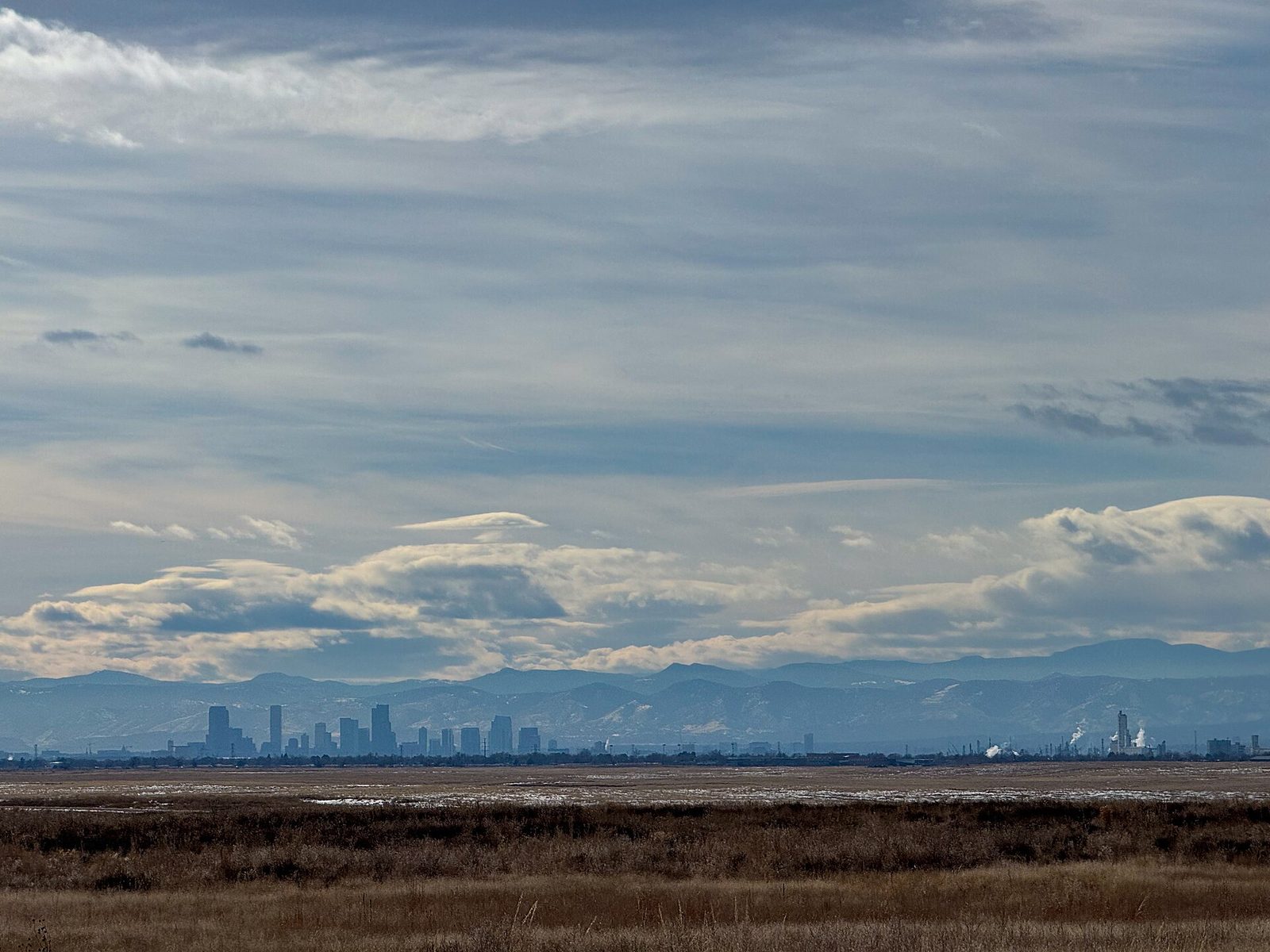
Denver sits at exactly one mile above sea level — there is a marker on the west steps of the Colorado State Capitol, and more than one of them, because successive surveys disagreed about where the line fell. At that elevation there is about 25 percent less atmosphere overhead, and the practical consequences are consistent and well documented.
You dehydrate without noticing. The air is both thin and very dry, so you lose moisture through breathing as well as sweating, and you often do not feel thirsty until you are well behind. Official visitor guidance is roughly twice your normal water intake. Denver’s tap water comes off Rocky Mountain snowmelt and is good, so this costs nothing.
You burn faster. A quarter less atmosphere means meaningfully more UV. Sunscreen, sunglasses and lip balm are year-round items here, and the combination of snow glare and high sun in March catches more visitors than August does.
Alcohol hits harder, mostly through dehydration rather than anything exotic. The standard advice is to go easy until you have acclimatized, which in a city with this density of taprooms is worth taking seriously. Alternate with water from the first round, not the fourth.
You get tired earlier for the first two days. Stairs feel like more stairs. Plan a lighter arrival day, and put the big museum or the long hike on day two or three.
Mountain destinations are considerably higher than the city — the Eisenhower–Johnson tunnels on I-70 sit above 11,000 feet, and Red Rocks is at about 6,400 — so everything above applies more strongly out there. Anything medical, including questions about a specific condition, belongs with your own doctor rather than a travel guide.
Weather, and What That Means for Your Bag
Denver’s weather is sunnier, drier and more volatile than most visitors expect. The defensible sunshine figure is about 270 clear and partly cloudy days a year, roughly 3,200 hours — more than Miami or San Diego, though the familiar “300 days of sunshine” is marketing rounding.
Three patterns matter for packing.
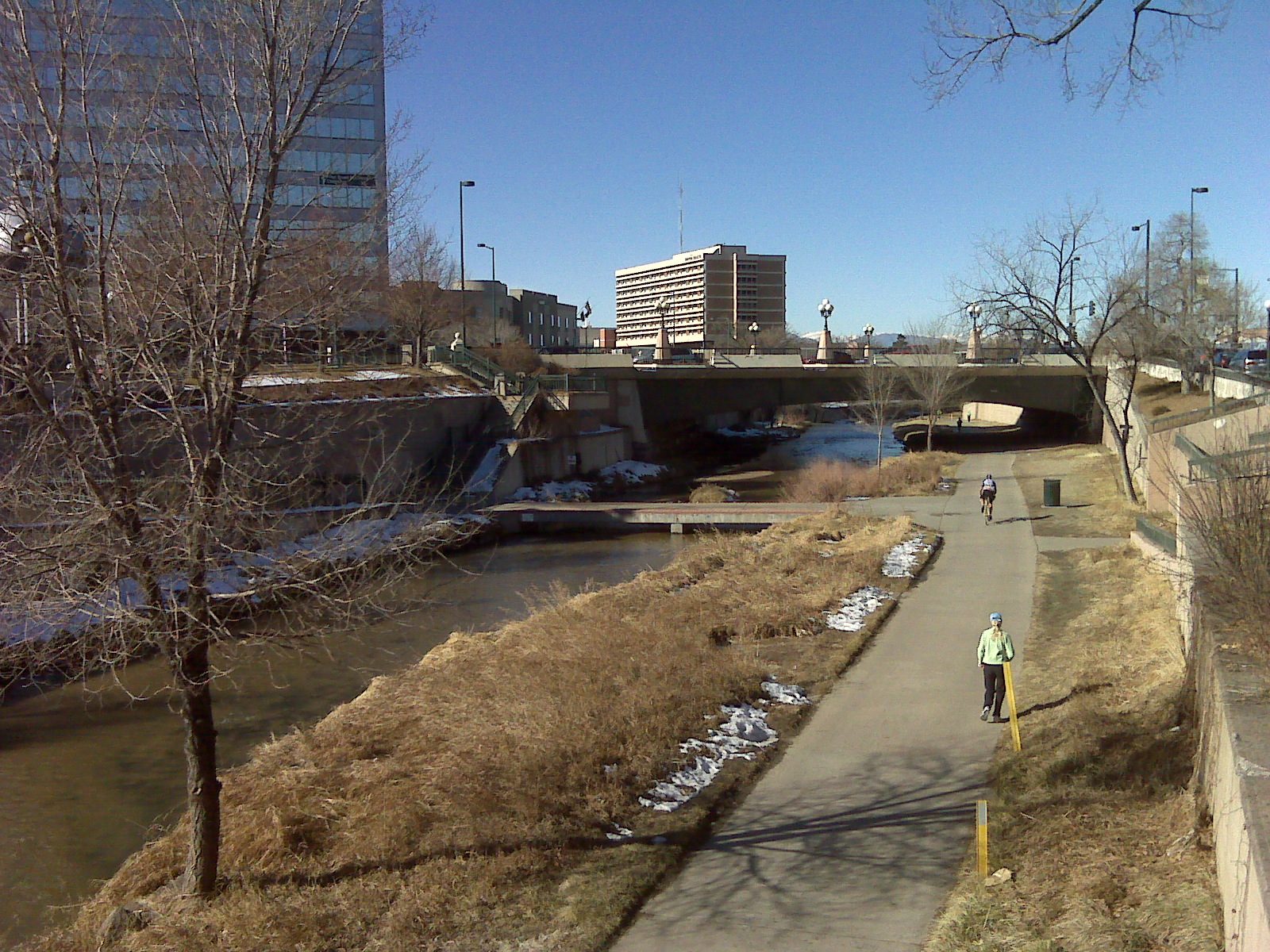
The daily swing is enormous. Thin dry air holds very little heat, so a 90-degree July afternoon regularly becomes a 58-degree evening. Denver patios keep blankets. Take a warm layer even in high summer.
Spring is the snowy season, not winter. March averages 8.8 inches of snow and February 7.6, against 6.4 in January. Total annual snowfall is 49 inches, but it arrives in five or six big storms rather than a continuous blanket, and the city plows fast. A storm costs you a day, not a week.
Summer afternoons bring thunderstorms. From roughly early July into August, storms roll east off the Front Range between about two and six most days. Hike in the morning, keep the afternoon flexible, and carry a light shell. Hail is a genuine Front Range hazard from late spring into midsummer and can dent a rental car in ten minutes.
Our guide to the best time to visit Denver goes through the climate normals month by month if you are still choosing dates.
Navigating a City That Is Two Grids
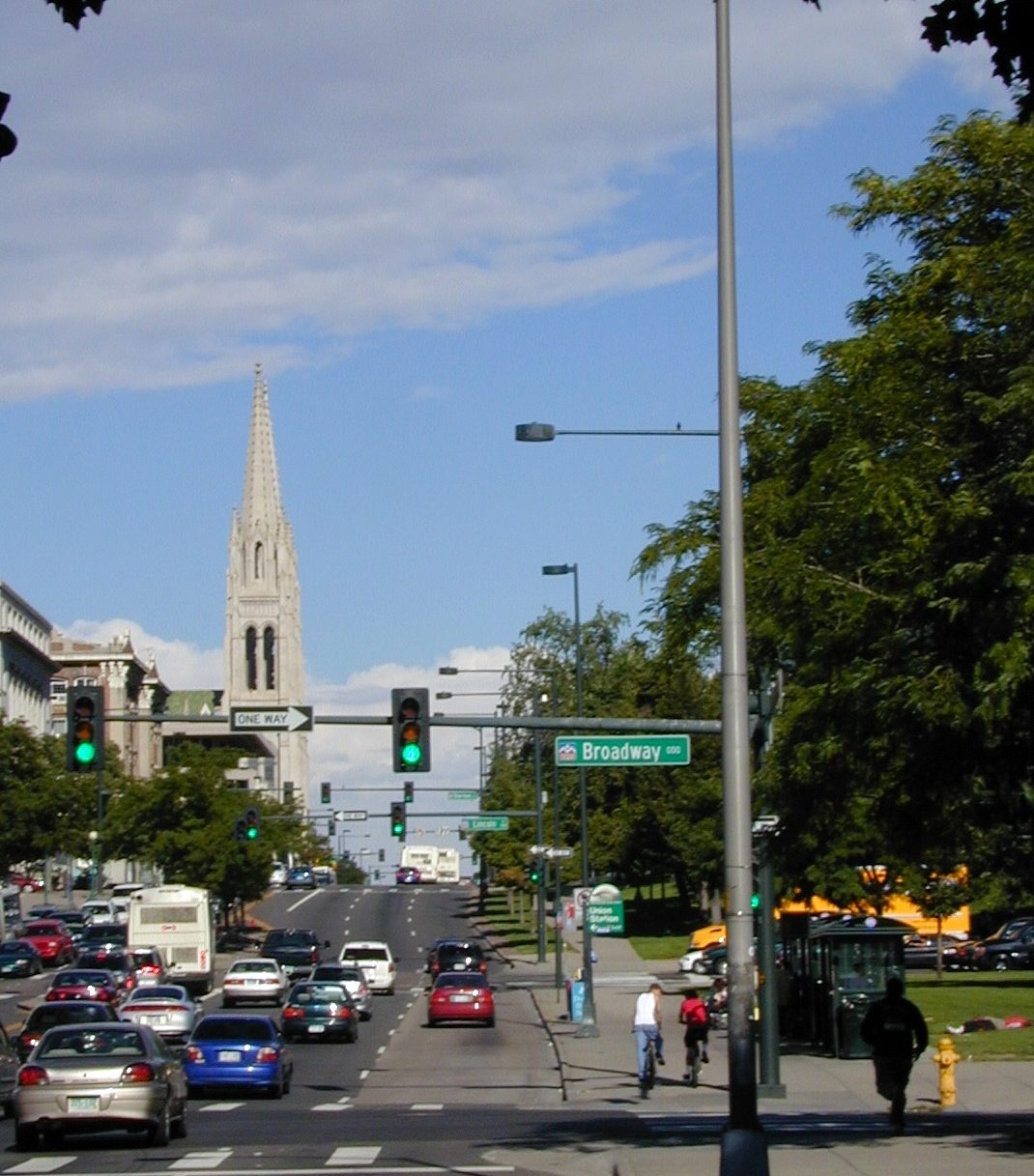
Downtown Denver is rotated roughly 45 degrees to line up with the South Platte River. Step outside that pocket and the city reverts to a conventional north-south grid. The seam between the two, around Broadway and Colfax, produces the odd triangular blocks you will notice around Civic Center.
Three navigation rules make this manageable.
- The mountains are always west. The Front Range fills the western horizon from anywhere with a sightline. It is a more reliable compass than the street grid.
- Downtown’s named streets run alphabetically. Larimer, Lawrence, Arapahoe, Curtis, Champa, Stout, California, Welton. Once you notice this, the core stops being confusing.
- Addresses count outward from Broadway and Colfax. Streets split into east and west, north and south from that intersection near the Capitol. An address on East 17th Avenue and one on West 17th Avenue are in different parts of town — check which one before you set off.
Arriving
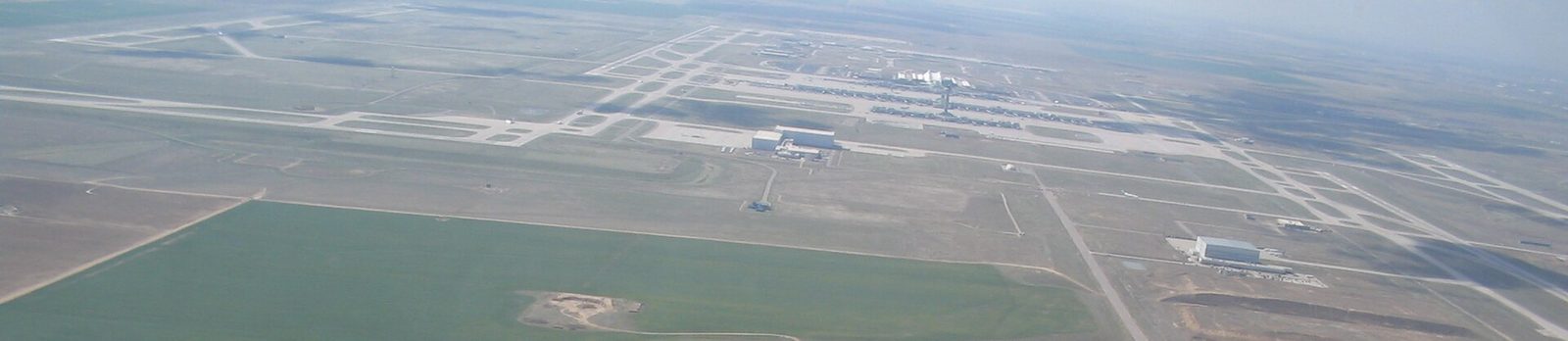
Denver International sits 25 miles northeast of downtown on a site of about 53 square miles — larger than the city limits of Boston, Miami or San Francisco. It handled 82,427,962 passengers in 2025, fourth busiest in the United States and tenth in the world. It is a long way out, and how you leave it matters.
The A Line train is the answer for most people. Union Station in about 37 minutes, unaffected by traffic, on a $10 Airport Day Pass that also covers your other travel that day. For one or two people it is both cheapest and usually fastest.
Allow extra time in the terminal. The Great Hall Program is rebuilding the Jeppesen Terminal under the tent roof — ticket counters, restrooms, security, thirty-year-old infrastructure — with completion due in 2027. Expect construction hoardings and rerouted walkways until then. Our airport guide covers the concourses in detail.
Rent a car only for the mountain days. Picking one up at the airport to drive downtown and park it for four nights is the most expensive way to arrive in this city.
What Things Cost
The prices below were checked in September 2026 and are the ones that come up most.
| Item | Cost |
|---|---|
| RTD 3-hour local pass | $2.75 |
| RTD local day pass | $5.50 |
| RTD Airport Day Pass (includes A Line) | $10 |
| Riders 19 and under | Free, all services |
| 16th Street FreeRide shuttle | Free |
| Colorado State Capitol tour | Free |
| Denver Mint tour | Free, booked 30 days ahead |
| Coors Field tour | $10 adult |
| Denver Art Museum | $22–$30; under-18s free |
| Denver Museum of Nature & Science | $27.95 adult |
| Denver Zoo Conservation Alliance | $27 adult, timed ticket required |
| Denver CityPASS | $54 adult, $44 child, 3 of 8 attractions |
| Downtown hotel parking | $20–$45 per night |
| Lodger’s tax plus state sales tax | ~15–16% on top of the room rate |
Tipping works as it does across the United States: 18 to 20 percent in restaurants with table service, a dollar or two per drink at a bar, and tour guides are tipped — guides on free walking tours are paid entirely that way. Note that some venues add an automatic service charge; Casa Bonita, for example, applies an automatic 15 percent. Check the bill before adding more.
The hotel tax catches everyone. Denver’s lodger’s tax is 10.75 percent, rising to 11.75 percent at hotels with more than 50 rooms, on top of 4 percent Colorado state sales tax. A $150 room arrives at checkout around $173 before parking. Our guide to Denver on a budget costs out a full trip.
What Sells Out, and How Far Ahead
Denver is a fairly relaxed city to book, with four specific exceptions that catch people out.
- Denver Mint tour — 30 days ahead. Booked only through the U.S. Mint’s own online system, released at 1am Denver time, maximum five tickets, Monday to Thursday only, age 7 and up. This is the tightest window in the city.
- Coors Brewery Tour in Golden — 25 days ahead, released at midnight Mountain Time, first come first served, and it goes.
- Denver Zoo — 10 days ahead. Online timed reservation required and non-refundable.
- Casa Bonita — reservation only, through its own site, released in blocks, no walk-ins, with a card held against a $10 per person no-show fee.
Beyond those: the Molly Brown House sells out and should be booked; Clyfford Still uses 15-minute timed slots reserved in advance and not sold at the door; and Meow Wolf runs on timed entry. Hotels need real notice only around the big event weekends — PrideFest in June and the Great American Beer Festival, 10 and 11 October in 2026.
Safety and Common Sense
Denver is a normal large American city and the usual approach applies: busy areas are fine, empty blocks late at night less so, and a little attention to where you are goes a long way. Two things are more specific.
The bigger practical risk is transport, not crime. RTD frequency drops substantially after about nine in the evening and on Sundays, particularly on secondary routes. If you are out late somewhere away from the rail lines, budget for a rideshare rather than assuming a last bus exists.
Outdoors, the risks are weather and altitude. Afternoon lightning on an exposed foothills trail is a real hazard in summer; so is running out of water. In winter, watch for the refreeze — a wet afternoon becomes black ice at seven in the evening, and that catches visiting drivers more often than the snow does. Colorado enforces traction requirements on I-70 during storms, so a rental with all-season tires and no chains can be turned around.
Alcohol, Cannabis and the Law
Alcohol service ends at 2am statewide — Colorado law restricts liquor sales to between 7am and 2am, and repeated attempts to extend it have failed in the legislature. Denver has drafted a proposal to let nightclubs stay open to 4am with last call unchanged, but at the time of writing it had not reached City Council. Most brewery taprooms stop serving considerably earlier, around nine or ten.
Recreational cannabis is legal for adults in Colorado, but public consumption is not, and hotels overwhelmingly prohibit smoking. That gap is why licensed private venues and tour vehicles exist here. If this is relevant to your trip, research the current rules and any operator carefully — the law is specific, it has changed several times since legalization, and a travel guide is the wrong source for it. Do not carry any product across a state line.
Etiquette and Local Norms
Denver is informal, and a few things about it surprise visitors.
Nobody dresses up. Outdoor clothing is acceptable almost everywhere, including in good restaurants. A fleece at dinner is not a faux pas here.
People start early and finish early. A 7am trailhead is normal, a 6pm dinner is normal, and a taproom emptying at nine is normal. If you are used to a city that starts at ten, Denver will feel front-loaded.
Dogs are everywhere. Taprooms, patios, parks, trails. This is a dog city and the norms reflect it.
Denver is not a cowboy theme park. The Western element is real — the National Western Stock Show is a working agricultural event, not a pageant — but the city is a modern one, and treating it as a film set does not land well.
The zoo is the Denver Zoo Conservation Alliance, and Mount Evans was renamed Mount Blue Sky in 2023. Using current names costs nothing and signals you have paid attention.
Health, Connectivity and Practicalities
Tap water is good and free everywhere. Given how much of it you need at this altitude, this matters more than it sounds.
Mobile coverage is reliable in the metro area and patchy to nonexistent in the mountains and canyons. Red Rocks in particular has poor signal, which is why arranging a lift home after a concert before you leave the hotel is standard advice rather than paranoia.
Air quality can deteriorate in summer, usually from wildfire smoke originating well outside Colorado, and it can flatten the mountain views for days. It is not forecastable months ahead; check the reading on the day through a public air-quality service rather than trying to predict it.
Pharmacies and supermarkets are plentiful, and buying sunscreen and a large bottle of water on arrival is the single most useful errand of the trip.
The Free Things Worth Building Around
Denver has an unusually good free list, and knowing it changes how you plan.
The Colorado State Capitol runs free guided tours Monday to Friday on the hour from 10am to 3pm, walk-ins welcome. The Denver Mint’s free tour is described above. Wings Over the Rockies Air & Space Museum is free for everyone, funded by the regional cultural tax. Red Rocks Park is free to enter and free to park on any non-event day, with the Visitor Center, Trading Post and the 1.4-mile Trading Post Trail all open. Jefferson County Open Space parks charge nothing to enter or park. The Union Station Great Hall is open to the public with seating you do not need a ticket for. And the 16th Street FreeRide runs the downtown spine free, seven days a week, roughly every five minutes.
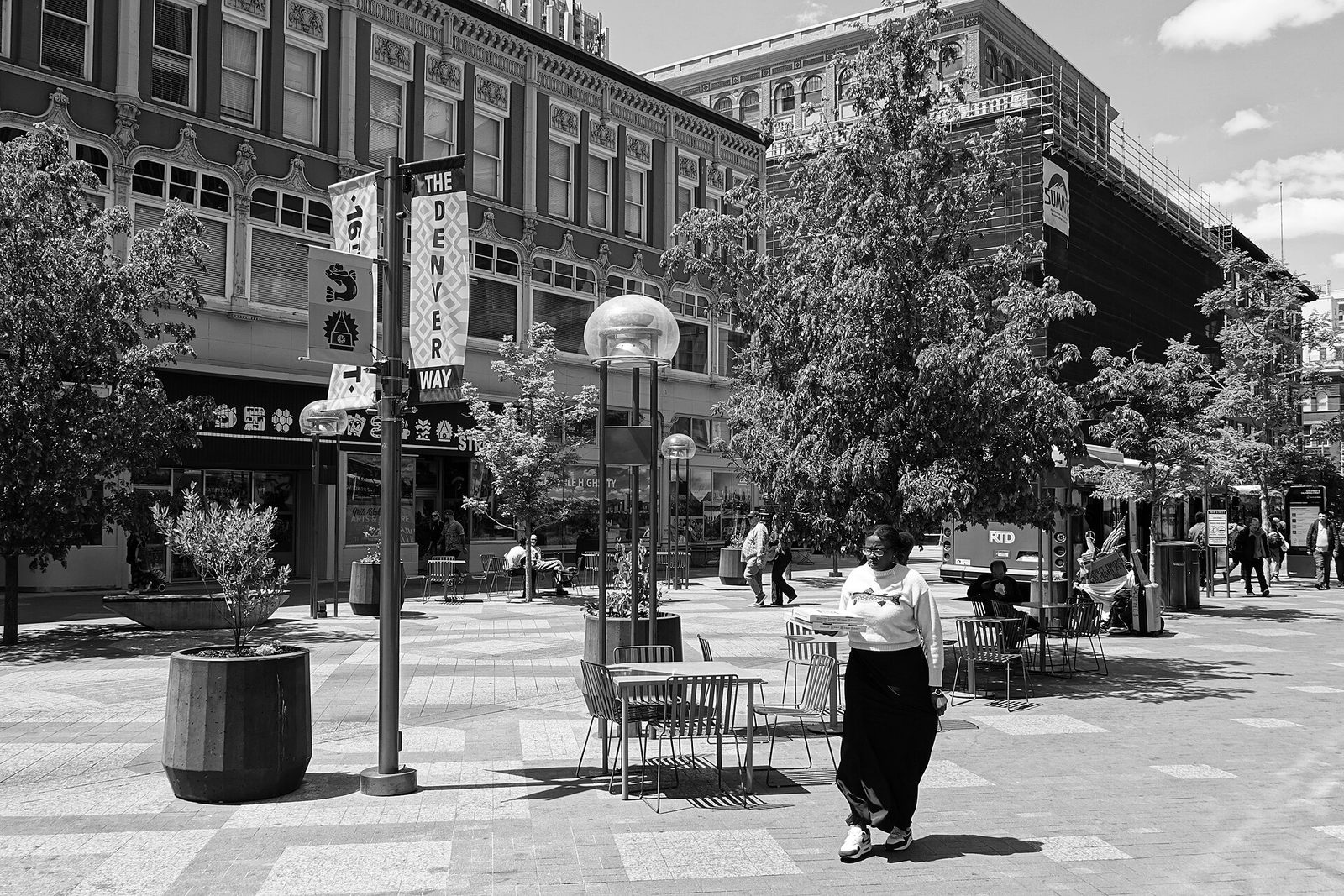
One correction worth making explicitly, because a great deal of published advice is stale: 16th Street reopened in October 2025 after a $175.4 million reconstruction, and the shuttle returned as the 16th Street FreeRide, formerly the Free MallRide. Anything describing the street as torn up or the shuttle as suspended is out of date.
Accessibility and Traveling With Limited Mobility
Downtown Denver is flat, which is the single biggest thing in its favor. RTD buses and rail vehicles are accessible, and discounted fares of $1.35 for three hours and $2.70 for a day apply to riders with a disability and to Medicare recipients as well as to anyone 65 and over.
The obstacles here are specific rather than general, and worth knowing in advance. The Colorado State Capitol dome is 99 steps above the third floor with no lift, though the rest of the free tour is fine. The Denver Mint has airport-grade security and no bag storage at all. Red Rocks is a hillside amphitheatre with rows running to at least 70, and accessible seating sits at row 1 and row 70 rather than being distributed through the bowl — plan the approach as carefully as the seat. Meow Wolf does not permit strollers and involves dark, disorienting spaces.
The altitude belongs in this section too, and is rarely treated as an accessibility question. Thin air makes any exertion harder, and visitors who manage a full day comfortably at sea level often need an afternoon rest here for the first two days. Build in more sitting-down time than you think you need, and treat the first day as a short one. Contact venues directly rather than relying on a general listing — the answers are usually specific and helpful.
Traveling Solo, and Traveling in a Group
Denver handles both better than most American cities of its size.
Solo is easy here. The core is compact and walkable, the bar culture is conversational rather than exclusive, taprooms have communal tables and people talk across them, and sitting at a bar alone attracts no attention at all. A live music night is the simplest solo evening in the city. The transport network means you are never dependent on anyone else’s car.
Groups hit two specific constraints worth planning around. Light rail’s bike zones take only two bikes each, so a party of four cyclists cannot travel together. And the Denver Mint’s tour booking caps at five tickets per request, so a larger group needs multiple bookings on the same release — which, given it opens at 1am Denver time and sells out, needs coordinating in advance.
For either, the free RTD travel for anyone 19 and under is the quiet saving that changes a group budget more than anything else on this page.
Mistakes First-Time Visitors Make
Treating the altitude as trivia. The most common and the most consequential. It costs people their first day.
Renting a car for a city trip. Rental plus $20 to $45 a night parking, for a vehicle used twice.
Putting Rocky Mountain National Park into a three-day visit. It needs a timed-entry permit in season and a long drive each way. Our guide to day trips from Denver is blunt about which destinations deserve their own trip.
Buying CityPASS without doing the arithmetic. On the right three attractions it saves about $31. On the wrong three it saves about $2, and one of its eight options — Wings Over the Rockies — is free anyway.
Skiing from Denver on a weekend without leaving early. I-70 westbound on a winter Saturday morning is regularly at a standstill. Before six, or midweek, or stay in the mountains.
Assuming the zoo can be a spontaneous decision. Ten days, timed, non-refundable.
Planning an evening entirely in RiNo. The taprooms close around nine or ten. Our guide to Denver nightlife covers where the night moves to.
Reading a guide written before October 2025 about 16th Street. See above.
How Long to Stay, and How to Pace It
Three full days covers the city comfortably. Four or five lets you add a mountain day without rushing. Fewer than three and you are choosing between the museums and the foothills rather than doing both.
The pacing rule that matters here is specific to Denver: paid morning, free afternoon. Attractions open at nine or ten, mornings bring the most reliable weather of the day in summer, and the free half of this city — the parks, the murals, Red Rocks, the Capitol — flexes around whatever the afternoon does. Stacking two paid attractions into one day works at sea level and wears people out here.
Build the trip around the things that cannot move. The Denver Mint tour is fixed 30 days out on a Monday-to-Thursday slot. The zoo is fixed 10 days out. A Rockies fixture or a Red Rocks show fixes an evening. Everything else can be decided the morning of, which is one of the genuine pleasures of this city — it does not require a spreadsheet. Our Denver itinerary guide sets out what actually fits into one to five days.
Seasonal Practicalities
Spring. Waterproof shoes and an outer layer; spring snow here is wet and heavy. Mountain roads are unreliable — do not build a trip around an April drive over a pass. Hotel rates are at their annual floor in March.
Summer. A rain shell for the afternoon storm, a warm layer for the evening, a hat, and considerably more water than feels reasonable. Trailhead parking fills by about eight in the morning. Peak hotel prices.
Fall. The easiest packing of the year and the most stable weather. September is the best month in Denver on almost every measure. Add gloves from mid-October, and expect the mountain corridors to be busy on peak aspen weekends.
Winter. A proper insulated coat, gloves and boots with grip that live in your bag rather than the hotel room, because the temperature can move 40 degrees while you are at lunch. City rates are low; mountain rates are not.
Frequently Asked Questions
What should I know before visiting Denver?
That the altitude is real: drink roughly twice your usual water, wear sunscreen year-round, and plan a short first day. Beyond that — anyone 19 and under rides RTD free, under-18s are free at two major museums, you do not need a car for the city, last call is 2am, and hotel rates gain about 15 to 16 percent in tax at checkout.
How does Denver’s altitude affect visitors?
At 5,280 feet there is about 25 percent less atmosphere overhead. You dehydrate faster through both dry air and thin air, you burn faster in the sun, alcohol hits harder, and you tire earlier for the first couple of days. Mountain destinations are considerably higher. Anything medical is a question for your own doctor.
Do you need a car in Denver?
Not for the city. Downtown, LoDo, RiNo, the museum district and Union Station all work on foot and rail, and downtown hotel parking runs $20 to $45 a night. You do need one for the mountains, trailheads and most day trips, so rent for those specific days.
What should I pack for Denver?
Layers, in every season, because the daily temperature swing is enormous — a 90-degree afternoon becomes a 58-degree evening. Year-round: sunscreen, sunglasses, lip balm and a refillable water bottle. Add a rain shell in summer, waterproof shoes in spring, and a proper coat with gripping boots in winter.
Is Denver walkable?
The visitor core is, and easily. Union Station to Coors Field is about ten minutes, to RiNo fifteen, to the Capitol about thirty, all flat. The complication is the rotated downtown grid, which will send you the wrong way at least once. Remember that the mountains are west.
What time do things close in Denver?
Museums generally at 4pm or 5pm, with late openings on specific evenings — the art museum to 8pm on Tuesdays, the nature museum to 9pm most Fridays, the Clyfford Still to 8pm on Fridays. Brewery taprooms wind down around nine or ten. Bars serve until 2am, which is the statewide last call.
How much should I tip in Denver?
As elsewhere in the United States: 18 to 20 percent in table-service restaurants, a dollar or two per drink at a bar, and tour guides tipped — especially on free walking tours, where the tip is the guide’s pay. Check for an automatic service charge before adding more.
Is the 16th Street Mall still under construction?
No. The corridor reopened in October 2025 after a $175.4 million reconstruction, and the free shuttle returned as the 16th Street FreeRide, running seven days a week at about five-minute intervals along the 1.25 miles between Union Station and Civic Center. Guides saying otherwise are out of date.
What is the best way to get from Denver airport to the city?
The A Line train to Union Station, about 37 minutes, on a $10 Airport Day Pass that also covers the rest of your travel that day. Rideshare is the alternative with a lot of luggage or a group, at considerably higher cost and subject to traffic. Our guide to getting around Denver covers the full network.
One more thing to know before you open your wallet: sales tax in the city runs to 9.15 percent, it is added at the register, and international visitors cannot claim it back at the airport. Paper bags cost extra, too. Our guide to shopping in Denver covers those rules alongside the districts worth your time, from Cherry Creek North to the vintage shops of South Broadway.
Traveling alone changes a few of these tips rather than all of them. You pay the whole room rate, you have nobody to split a mountain car with, and on a solo hike you are the only one watching for the altitude headache. Our guide to solo travel in Denver covers the best bases for one, the state-run buses that reach the mountains without a car, and the precautions that make hiking alone sensible.
Related Denver Guides
- Things to Do in Denver — the full attractions guide with prices and honest verdicts.
- Denver Itinerary — one to five days, paced for the altitude.
- Best Time to Visit Denver — the climate normals and what they mean for your dates.
- Getting Around Denver — RTD fares, the rail lines that run, and the car question.
- Denver on a Budget — the free list, the CityPASS arithmetic and the hotel tax.
- Denver Airport Guide — DEN, the Great Hall works and the A Line.
- Where to Stay in Denver — neighborhoods, real costs and the parking trap.
- Denver With Kids — the family version of everything on this page.
Photo Credits
Colfax Avenue at Broadway, Denver: photo by Vertigo700 at English Wikipedia / Wikimedia Commons (Public domain)
The Cherry Creek trail below Speer Boulevard, Denver: photo by Gtj82 / Wikimedia Commons (CC BY-SA 3.0)
Fares, admission prices, tax rates, booking windows and licensing hours were checked against the operators’ own sites and published sources in September 2026 and change without notice. Climate normals are the 1991–2020 series measured at Denver International Airport.
Denver Tourism Guide is an independent publication. We are not affiliated with VISIT DENVER, the City and County of Denver, RTD or any attraction listed here.