From downtown Denver on a clear winter morning, the snow on the Continental Divide fills the western horizon, and the nearest lifts are about an hour away. On a Saturday in February that hour can stretch to three. The distance on the map is short and the time on I-70 is not, and that gap is the most important thing to understand about ski resorts near Denver: which mountain you choose matters less than when you drive, how you get there and which pass, if any, is in your pocket.
This guide sorts the ski areas within reach of the city by distance, price, ability and how easily you can reach them without a car. Then it works through the pass arithmetic for 2026–27, how to beat I-70, the buses and the ski train, whether to stay in the mountains, and when to go. Pass prices were checked in October 2026, but lift tickets are priced dynamically and change by the day, and the 2026–27 bus and train schedules had not been published when we checked; confirm anything time-sensitive before you book.
Ski Resorts Near Denver at a Glance
| Resort | Drive from Denver, no traffic | Pass | Best for | Without a car |
|---|---|---|---|---|
| Eldora | About 1 hour 15 minutes, via Boulder | Ikon | Short days, Boulder-side skiers, avoiding I-70 | RTD bus from Boulder in season |
| Loveland | About 1 hour, I-70 exit 216 | Its own passes | Value, high terrain, the shortest I-70 drive | Snowstang |
| Arapahoe Basin | About 1 hour 20 minutes, over Loveland Pass | Ikon | Strong skiers, the longest season | Snowstang |
| Keystone | About 1 hour 30 minutes | Epic | Families and beginners | Bus to Frisco, then the free Summit Stage |
| Copper Mountain | About 1 hour 30 minutes, I-70 exit 195 | Ikon | Mixed-ability groups | Snowstang |
| Winter Park | About 1 hour 30 minutes, over Berthoud Pass | Ikon | Bumps, variety, and a train to the base | Winter Park Express |
| Breckenridge | About 1 hour 45 minutes | Epic | A real town plus a big mountain | Snowstang |
| Vail and Beaver Creek | About 2 hours or more | Epic | The big-resort experience, with a night or two | Bustang and Pegasus to Vail |
How to Choose: The Short Version
- Closest: Loveland, about an hour up I-70, and Eldora, which avoids I-70 altogether by going through Boulder.
- Cheapest: Loveland, especially on its four-ticket 4-Pak, which works out at about $75 a day for 2026–27.
- Beginners: Keystone and Copper, both with long, gentle green runs, and Loveland’s separate beginner area, Loveland Valley.
- Families: Keystone first, then Winter Park and Copper.
- Experts: Arapahoe Basin for steep high-alpine terrain, then Mary Jane at Winter Park for moguls.
- No car: Winter Park on the ski train, or any Snowstang resort by bus.
- The best all-round day trip: Copper or Winter Park on a weekday, leaving Denver early.
- Worth a night or more: Breckenridge, Vail and Beaver Creek, which are too far and too big to rush.
The Resorts, One by One
Eldora
Eldora sits above the old mining town of Nederland, about 21 miles west of Boulder, and it is the only significant ski area near Denver that you reach without touching I-70. That alone makes it attractive on a weekend. It is a modest mountain compared with the Summit County resorts, with a solid mix of groomed runs and trees, and it can be very windy. Boulder locals treat it as their after-work and half-day hill. RTD runs buses from Boulder to the base in ski season; check the current schedule before you rely on one. It is on the Ikon Pass, with unlimited access on both tiers for 2026–27.
Loveland
Loveland sits right at the east portal of the Eisenhower Tunnel, at exit 216 on I-70, which makes it the shortest drive of any of the major ski areas up the interstate. It is independent, owned by neither of the big pass companies, and it has kept the feel of a local’s mountain: no slopeside village, no lodging, a straightforward base area and some of the highest lift-served terrain in the state, rising to bowls along the Continental Divide. When conditions allow, a snowcat ferries skiers along the ridge.
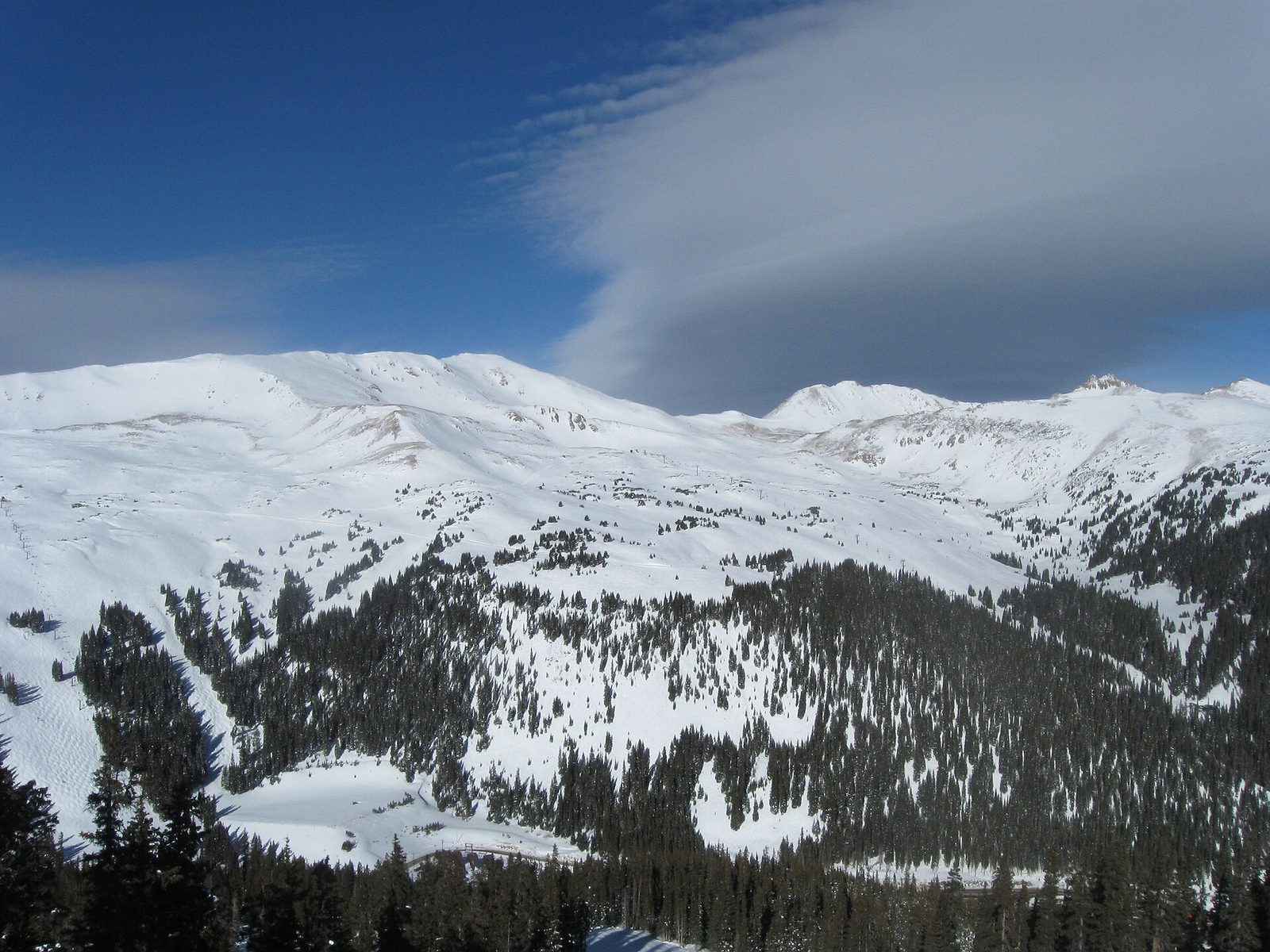
Loveland is also the value pick. Its 2026–27 No Restrictions 4-Pak costs $299 for four lift tickets valid any day of the season, and an adult season pass was $599. Beginners should head for Loveland Valley, a separate area with its own lifts and gentle terrain, a short shuttle from the main base. Loveland typically opens between mid-October and early November, as soon as snowmaking and cold allow, and it is a Snowstang stop.
Arapahoe Basin
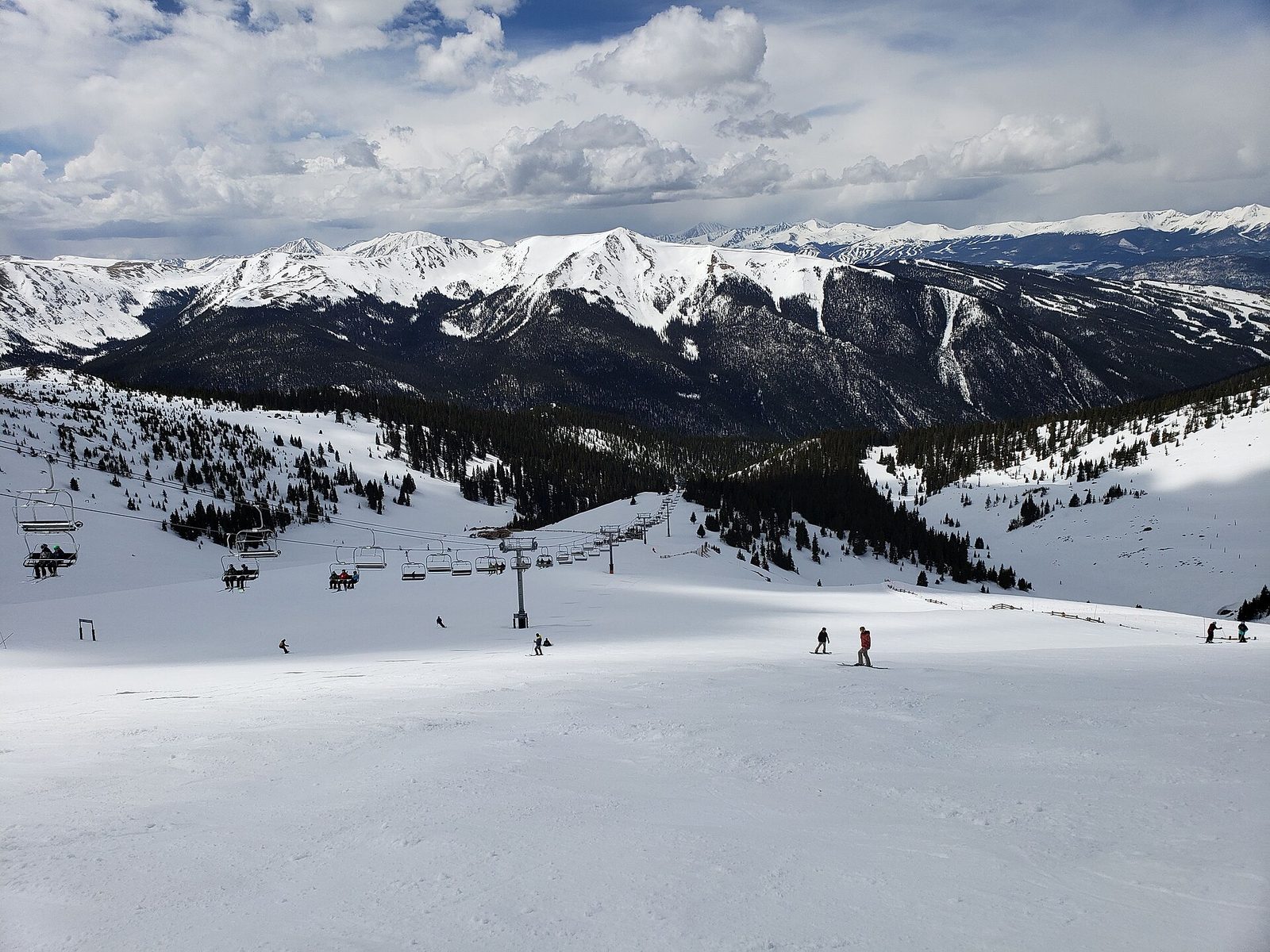
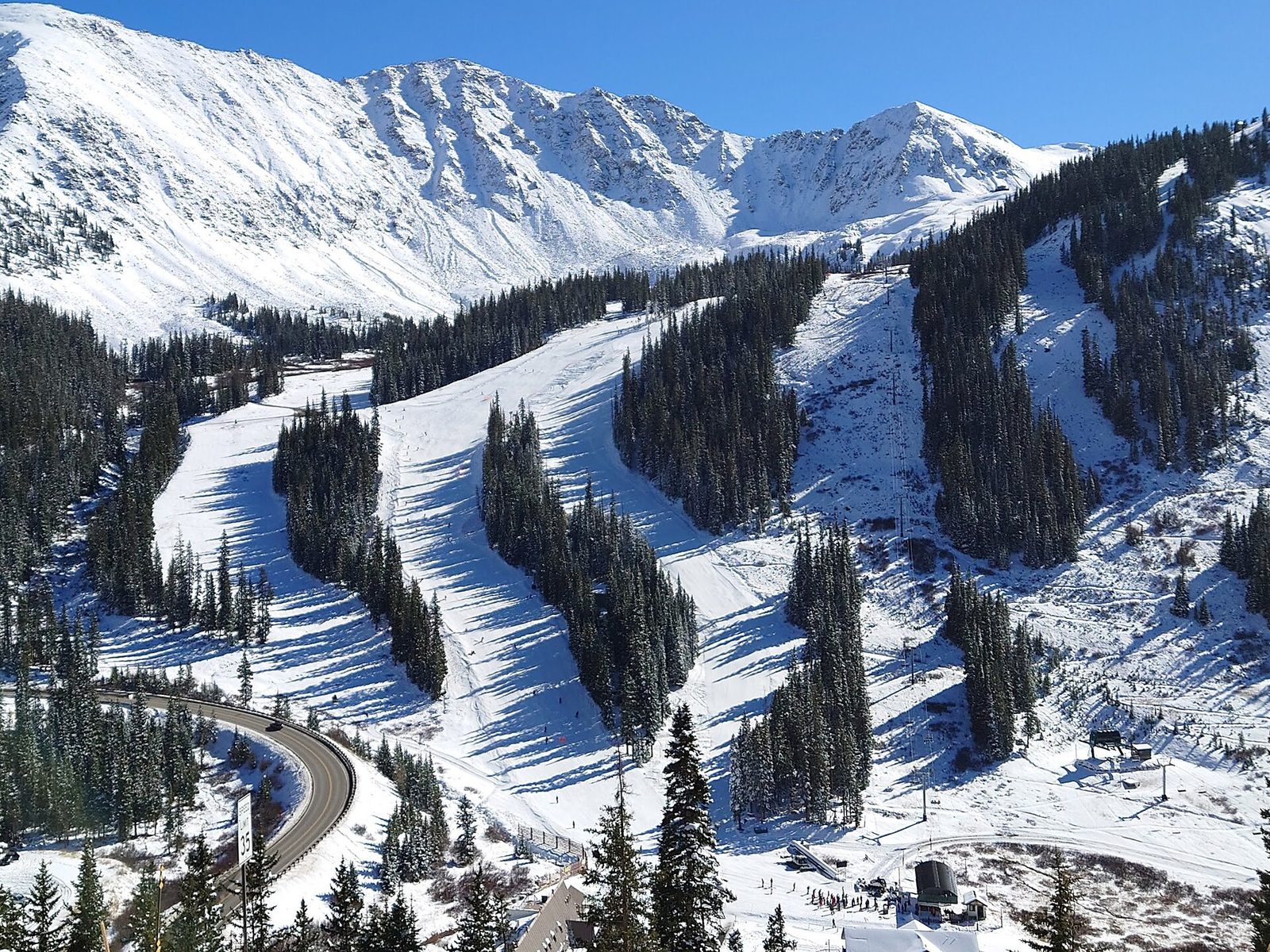
A-Basin, as everyone calls it, celebrates its 80th season in 2026–27, and it remains the most purely mountain-focused ski area near Denver. The base sits at about 10,800 feet and the terrain climbs above 13,000, so much of it is above the tree line: steep chutes on the East Wall and Pallavicini, open bowls in Montezuma, and a long season that often starts in October and runs well into spring. There is little in the way of a village, and that is the point.
The usual route from Denver leaves I-70 at the Loveland exit and climbs US 6 over Loveland Pass, at 11,990 feet. In storms the pass can close, and then the way round is through the tunnel and back east past Keystone. A-Basin is on the Ikon Pass, unlimited on the Ikon Base Pass for 2026–27, and it is a Snowstang stop. It is not the best choice for a first day on skis.
Keystone
Keystone, just past Dillon in Summit County, is the family resort among the big names near Denver. It spreads across three linked peaks, with long, gentle runs from the top of the front mountain that let newer skiers enjoy the views rather than just the bunny hill, and harder terrain on the back side. It is owned by Vail Resorts, so it is on the Epic Pass, and it is often one of the first resorts in Colorado to open, aiming for October when the weather allows. There is no Snowstang service, but Bustang and Pegasus reach Frisco, where Summit County’s free Summit Stage buses connect to Keystone, Breckenridge and Copper.
Copper Mountain
Copper sits right beside I-70 at exit 195, and it has a reputation as the resort that suits mixed groups best, because its terrain is naturally divided: easier runs on the western side, intermediate in the middle, and steeper ground to the east. That makes it easy to split up and meet again for lunch. It is also known for its terrain parks. Copper is on the Ikon Pass, unlimited on both tiers for 2026–27, and a Snowstang stop, and because it sits on the interstate it is one of the easiest resorts to reach and leave.
Winter Park
Winter Park has the closest connection to Denver of any ski area. The city and county of Denver has owned it since its earliest days as part of the city’s mountain parks system, and it is now operated by Alterra, the company behind the Ikon Pass, with unlimited access on both tiers for 2026–27. It is really two mountains: Winter Park itself, with plenty of cruising terrain, and Mary Jane, famous for its moguls.
You reach it by leaving I-70 at the US 40 exit near Empire and climbing over Berthoud Pass. That route avoids the Eisenhower Tunnel and the worst of the traffic beyond it, though not the bottleneck around Idaho Springs. Winter Park is also the only resort near Denver with a train to the base, the Amtrak Winter Park Express from Union Station, covered below.
Breckenridge
Breckenridge is two attractions in one: a large, high mountain spread across five peaks, and a real Victorian town born in the 1859 gold rush, with a main street of restaurants, bars and shops. The Imperial Express chairlift, topping out at about 12,840 feet, is billed as the highest chairlift in North America. The free BreckConnect Gondola links town to the base areas on Peaks 7 and 8.
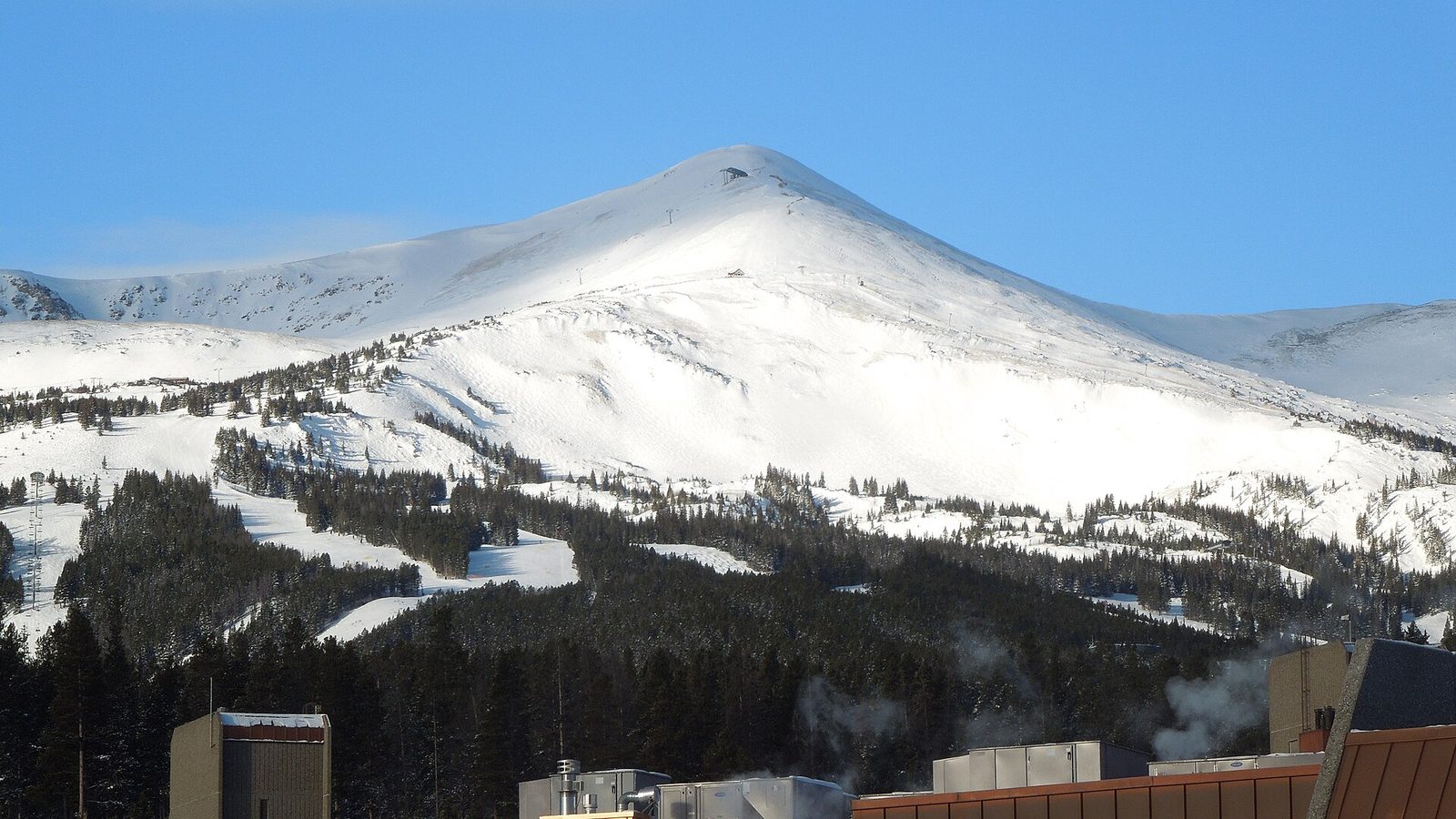
It is reachable as a day trip, about an hour and three-quarters from Denver without traffic, and it is a Snowstang stop. But Breckenridge is the resort that suffers most from a day-trip approach: parking is limited and expensive, the town is the half of the experience you miss, and on a weekend the I-70 drive home is at its worst. Give it at least one night. It is on the Epic Pass.
Vail and Beaver Creek
Vail, about two hours west of Denver over Vail Pass, is one of the largest ski resorts in the country, best known for its vast Back Bowls; Beaver Creek, a little farther, is its polished, upscale neighbor. Both are Epic Pass resorts. Both are possible as a long day from Denver, and neither is a sensible one: too far, too big and too expensive per hour of skiing. If they are on your list, book a night or two. Bustang’s West Line and the Pegasus vans both reach Vail from Union Station.
Farther afield
Steamboat, about three hours north and west, and Aspen Snowmass, three to four hours away, are destination resorts rather than Denver ski trips, and both are on the Ikon Pass. Smaller, cheaper areas within a couple of hours include Ski Cooper near Leadville, worth knowing about if you want a quiet, inexpensive day.
Epic, Ikon or Day Tickets? The Pass Arithmetic
The ski resorts near Denver are split between two big pass systems, plus Loveland on its own.
| Pass | 2026–27 adult price at launch | Colorado resorts near Denver |
|---|---|---|
| Epic Pass (Vail Resorts) | $1,089; Epic Local $809 | Breckenridge, Keystone, Vail, Beaver Creek |
| Ikon Pass (Alterra) | $1,399; Ikon Base $949 | Winter Park, Copper Mountain, Eldora, Arapahoe Basin, plus Steamboat and limited Aspen Snowmass days |
| Loveland | 4-Pak $299; season pass $599 | Loveland only |
Prices are the spring 2026 launch prices; pass prices rise in stages through the fall, and the cheaper tiers carry holiday blackout dates and limits at some resorts, so read the details before you buy. Both companies also sell shorter multi-day products for visitors.
The arithmetic is simple. For one or two days of skiing, buy lift tickets, and buy them online, well in advance: the resorts price tickets dynamically, the cheapest dates sell first, and window prices at the biggest resorts can run well over $200 a day at peak. For four or five days or more at one company’s resorts, a season pass often pays for itself, especially if you might come back. For value on a short trip, Loveland’s 4-Pak is hard to beat, and it suits a group that wants two days each. Whatever you choose, match the pass to the mountain before you match the mountain to the pass: a cheap Ikon day is no bargain if your group would be happier at Keystone.
I-70: The Real Obstacle
Every ski trip from Denver is shaped by one road. I-70 climbs west from the city through Idaho Springs and the Eisenhower–Johnson Memorial Tunnel, which at over 11,000 feet is the highest point on the Interstate Highway System, and on winter weekends it carries a large share of the Front Range’s population to the same handful of ski areas at the same time.
The traffic pattern
- Westbound, Saturday and Sunday mornings, roughly 6:30am to 9:30am, and on holiday mornings.
- Eastbound, Saturday and Sunday afternoons, from roughly 1pm to 7pm, worst on Sundays and the last day of a holiday weekend.
- After a big storm, everything is worse, because everyone wants the powder and the road is slower.
The fixes are well known and they work. Leave Denver by 6am, or ski on a weekday. Come home either early, leaving the mountain by about 1pm, or late, after dinner in the mountains. Check the Colorado Department of Transportation’s travel times before you set off. The tolled Mountain Express Lanes between Idaho Springs and Empire open on busy days and can save real time for the price of the toll.
Tires, the traction law and the passes
In winter storms, Colorado activates its traction law on the I-70 mountain corridor. When it is in force, every vehicle needs four-wheel or all-wheel drive with tires that have at least 3/16 of an inch of tread, or snow or mud-and-snow rated tires with the same tread, or chains or an approved traction device. Many rental cars arrive on worn all-season tires, so check the tread before you leave the lot, and ask for an all-wheel-drive vehicle if you can.
Two mountain passes matter. Loveland Pass, on US 6 at 11,990 feet, is the direct route to A-Basin and closes in severe weather. Berthoud Pass, on US 40, is the route to Winter Park. Both are steep and winding, and both reward patience and daylight. If you are not comfortable driving in snow, the buses and the train below are a better answer than a white-knuckle morning.
Skiing From Denver Without a Car
It is easier than most visitors expect, and it removes both the traffic stress and the parking bill.
Snowstang. Colorado’s state-run ski bus runs from Denver to Arapahoe Basin, Breckenridge, Copper Mountain and Loveland on Saturdays, Sundays and holiday Mondays in ski season. In 2025–26 it ran from mid-December into early May, with round-trip tickets of $25 for adults and $12.50 for children aged 2 to 11 with a paying adult, and discounts for seniors and riders with disabilities. The 2026–27 schedule had not been announced when we checked; look for it on the Bustang website in late fall.
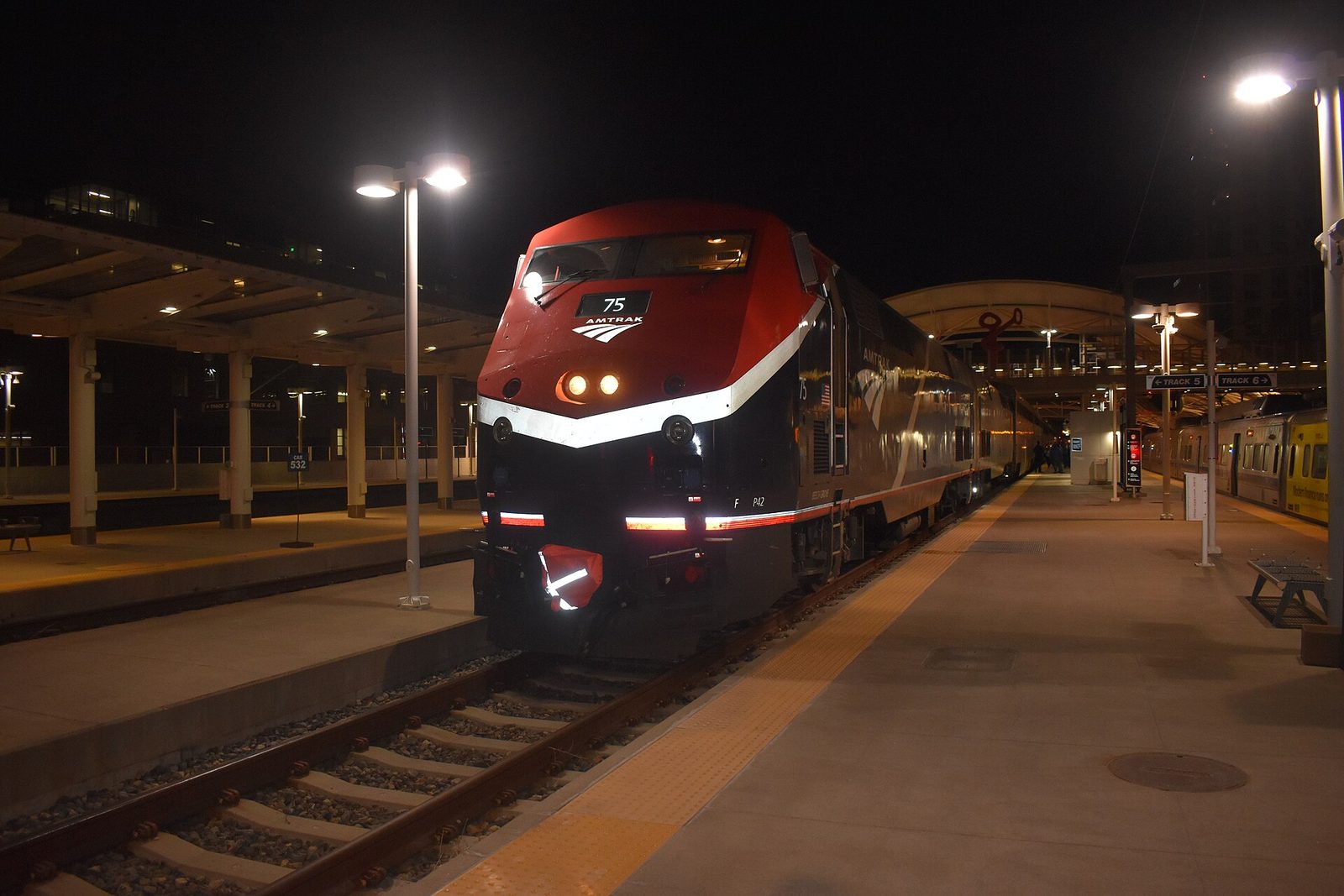
The Winter Park Express. Amtrak’s ski train runs from Denver Union Station through the Moffat Tunnel to a platform at the base of Winter Park Resort, with a stop in Fraser. In 2025–26 it ran from 19 December to 29 March, with one-way fares from $9 and children’s fares from $4.50. Amtrak has confirmed it will return for 2026–27, with dates and fares still to be published when we checked. Seats on popular weekends go fast once tickets are released.
Bustang, Pegasus and the Summit Stage. Bustang’s West Line and the smaller Pegasus vans run from Union Station along I-70 to Idaho Springs, Frisco, Vail and Avon, with room for skis. From Frisco, Summit County’s free Summit Stage buses reach Keystone, Breckenridge and Copper. It takes longer than driving, but it works seven days a week.
RTD to Eldora. In ski season, RTD buses run from Boulder up to Eldora. Combined with the Flatiron Flyer from Union Station to Boulder, it makes a car-free day possible, if a long one.
Tours and shuttles. Private shuttle companies and ski tours run from Denver and the airport to the resorts, and for a group they can make sense. Our guides to Denver tours and getting around Denver cover the options, and solo travel in Denver covers the state buses in more detail.
A Ski Day From Denver, Hour by Hour
This is how a well-run weekend day trip looks, using Copper, Loveland or Winter Park as the example. On a weekday you can start an hour later and still beat the crowds.
- 5:30am to 6am: leave Denver with skis, boots and lunch already in the car, and breakfast to eat on the way. Check road conditions and CDOT travel times before you go.
- 7:15am to 7:45am: arrive while the close-in parking is still open, and boot up in the car rather than the crowded lodge.
- Opening time: be in the lift line when it opens. The first two hours are usually the best snow and the shortest lines of the day.
- 11am: eat early, before the lodge fills at noon, or eat late after one.
- 1pm: decide. Either ski one more hour and leave by about 2pm, aiming to be through the tunnel before the worst of the eastbound queue, or commit to staying late.
- If you stay late: ski to closing, have dinner in the mountains, and drive home after about 7pm, when the road has usually cleared.
The worst plan is the one most people follow by default: skiing until the lifts close at about 4pm and joining every other car on I-70 at the same moment. That turns a 90-minute drive into three hours.
Waiting out the traffic
The mountain towns along I-70 make good places to let the queue pass. Idaho Springs, the last town before the city, has a short main street of pizza places, brewpubs and burger joints, and a long dinner there on a Sunday evening often costs you nothing in total travel time compared with sitting in traffic. Georgetown, Silverthorne and Frisco work the same way farther up the road.
Day Trip or Stay in the Mountains?
Denver works well as a ski base for one or two days, especially at Loveland, A-Basin, Eldora, Winter Park, Copper and Keystone. Hotels in the city are usually cheaper than slopeside lodging, the restaurants and nightlife are better, and you can mix ski days with city days without moving bags. It also helps with the altitude, because you sleep at 5,280 feet rather than 9,000. Our guide to where to stay in Denver covers the city neighborhoods.
For three or more ski days, or for Breckenridge, Vail and Beaver Creek, staying in the mountains makes more sense. You drive I-70 once in each direction instead of every day, you get first chair, and you can ski the morning after a storm before the Denver crowds arrive. Frisco, Silverthorne and Dillon in Summit County are usually cheaper than the resort villages and sit in the middle of several mountains. Spend your first night in Denver if you can, and go up the next morning.
Rentals, Lessons and Saving Money
- Rent the night before. Picking up skis or a board in Denver the evening before saves time on the morning, avoids the slopeside rental line and can cost less. Compare prices, and reserve online.
- Book lessons early. Ski school places, especially for children and especially over the holidays, sell out weeks ahead.
- Buy tickets in advance. Dynamic pricing rewards booking early and punishes the walk-up window.
- Pack lunch. Mountain food is expensive; a sandwich in your pocket and a hot drink in the lodge saves a surprising amount.
- Ski weekdays. Prices, traffic and lift lines are all lower from Monday to Thursday, outside holiday weeks.
- Think about the whole cost. A $75 Loveland day with no parking fee and a one-hour drive can beat a cheaper-looking day farther away once you count gas, parking and time.
Our guide to Denver on a budget covers the rest of the trip.
Skiing With Kids
Families do well near Denver, as long as they plan around the two things children like least: early mornings and cold, long car rides. Keystone is the most family-oriented of the big resorts, with gentle runs from the top and plenty of child-focused programs; Winter Park and Copper are close behind. Book ski school well ahead, especially over the holidays and spring break, and put younger children in a full-day program rather than trying to teach them yourself at 10,000 feet.
Children feel the cold and the altitude more than adults expect, and they rarely say so until they are miserable. Dress them in proper layers, mittens rather than gloves for the youngest, and a helmet and goggles; take a hot-chocolate break every hour or so; and keep them drinking water. Plan a shorter first day, and consider staying near the mountain for a multi-day family trip so the drive does not bookend every day. Our guide to Denver with kids covers the city half of a family ski trip.
When to Ski Near Denver
| Period | What to expect |
|---|---|
| October and November | A-Basin, Keystone and Loveland open first, usually on a few runs of man-made snow; more terrain opens as storms arrive |
| Early December | Thin cover is possible, but crowds and prices are low before the holidays |
| Christmas to New Year | The busiest and most expensive weeks of the season |
| January | Cold, often quiet on weekdays, with the Martin Luther King Jr. weekend the exception |
| February | Often the best snow and coverage; Presidents’ Day weekend is very busy |
| March | Big storms, sunny days and spring break crowds; often excellent skiing |
| April and later | Spring skiing, softer snow and late-season deals; most resorts close, A-Basin often runs on |
Mid-January to mid-March is the most reliable window for a ski trip from Denver. March is Denver’s snowiest month too, which means some of the best days and some of the worst drives. Our guide to Denver weather by month explains why, and the best time to visit Denver covers how ski season affects city prices.
Altitude, Cold and Sun
Ski areas near Denver are high. Most base areas sit between about 9,000 and 10,800 feet, and several lifts top out above 12,000. That is a big step up from the city, and it affects nearly everyone a little.
- Acclimatize first. Spend a night or two in Denver before skiing if you can, and take it easy on the first ski day.
- Drink water. The air is cold and very dry, and you dehydrate quickly while working hard. Go easy on alcohol, especially on the first night.
- Protect your skin and eyes. UV is intense at altitude and doubled by snow glare. Sunscreen, lip balm and goggles or sunglasses are essential, even on cloudy days.
- Dress in layers. It can be well below zero with wind chill on an exposed chairlift in January and warm enough for a T-shirt in the sun in April.
- Know the warning signs. Headache, nausea, dizziness and unusual exhaustion at altitude are signals to rest and descend. Anything medical belongs with your own doctor.
Our Denver travel tips cover the altitude in more depth.
Safety and Etiquette on the Mountain
Colorado’s ski areas follow a common code of conduct, and skiers here take it seriously.
- The skier below you has the right of way. Overtake with room to spare, and stop only where you can be seen from above, never below a blind roll.
- Respect closures and ropes. Closed terrain is closed for a reason, often avalanche danger or obstacles. Beyond the ski area boundary, avalanche terrain is uncontrolled, and nobody should leave the boundary without avalanche training, equipment and a partner.
- Watch for tree wells. The deep, loose snow around the base of evergreens after big storms is a real hazard; ski trees with a partner.
- Wear a helmet. Most skiers and riders here do, and rental shops rent them.
- Slow down in slow zones and near the base, where beginners and children gather.
Not Skiing? The Mountains Still Work
Non-skiers in a ski group have plenty to do. Most resorts have snowshoe trails, tubing hills and cross-country ski centers nearby, and Summit County and the Fraser Valley near Winter Park both have Nordic centers. Idaho Springs, on the way up I-70, has hot springs and a historic main street, and Georgetown’s Victorian streets make a pleasant stop. Or stay in Denver: a ski day for one half of the group can be a museum and brewery day for the other. Our guide to day trips from Denver covers the I-70 towns.
Frequently Asked Questions
What is the closest ski resort to Denver?
Among the major ski areas, Loveland is the shortest drive up I-70, about an hour from Denver without traffic at exit 216. Eldora, about an hour and 15 minutes away via Boulder and Nederland, avoids I-70 altogether.
Can you ski as a day trip from Denver?
Yes. Loveland, Eldora, Arapahoe Basin, Winter Park, Copper and Keystone all work well as day trips if you leave by about 6am and avoid the weekend afternoon traffic home. Breckenridge, Vail and Beaver Creek are better with at least one night.
Which ski resort near Denver is best for beginners?
Keystone and Copper both have long, gentle runs and good ski schools, and Loveland has a separate beginner area, Loveland Valley. Arapahoe Basin is the one to avoid for a first day.
What is the cheapest ski resort near Denver?
Loveland is the best value: its 2026–27 No Restrictions 4-Pak costs $299 for four lift tickets valid any day, about $75 a day. Smaller areas such as Ski Cooper near Leadville are also inexpensive.
How do I get to the ski resorts from Denver without a car?
Take the Snowstang bus to A-Basin, Breckenridge, Copper or Loveland on weekends and holidays, the Amtrak Winter Park Express train to Winter Park, Bustang or Pegasus to Frisco and the free Summit Stage to Keystone, Breckenridge or Copper, or RTD buses from Boulder to Eldora. Check each service’s current schedule before you plan.
Should I buy the Epic Pass or the Ikon Pass?
Choose by mountain. The Epic Pass covers Breckenridge, Keystone, Vail and Beaver Creek; the Ikon Pass covers Winter Park, Copper, Eldora and Arapahoe Basin. For only one or two days of skiing, advance-purchase lift tickets are usually cheaper than either pass.
When does ski season start near Denver?
Arapahoe Basin, Keystone and Loveland usually open first, from mid-October to early November, depending on snow and cold. Most resorts are fully open by mid-December, and the most reliable conditions run from mid-January to mid-March.
How bad is I-70 ski traffic?
On winter weekends, very bad at peak times: westbound on Saturday and Sunday mornings and eastbound on weekend afternoons, especially Sundays. Leave Denver by 6am, ski weekdays where possible, and come home before about 1pm or after dinner.
Related Denver Guides
- Day Trips from Denver: the I-70 towns and what works in winter.
- Denver Weather by Month: snow, storms and mountain temperatures.
- Getting Around Denver: rail, buses and the car question.
- Where to Stay in Denver: a city base for ski days.
- Denver Travel Tips: altitude, costs and what to pack.
- Denver Tours: guided trips into the mountains.
- Best Time to Visit Denver: how the seasons change prices.
- Rocky Mountain National Park From Denver: snowshoeing and the park in winter.
Photo Credits
Skiers in Montezuma Bowl at Arapahoe Basin: photo by Runningonbrains / Wikimedia Commons (CC BY 4.0)
Loveland Ski Area, north view: photo by Mitch Bennett from Columbia, MO, USA / Wikimedia Commons (CC BY 2.0)
Arapahoe Basin base area in October: photo by Runningonbrains / Wikimedia Commons (CC0)
Peak 8 at Breckenridge Ski Resort: photo by DReifGalaxyM31 / Wikimedia Commons (CC BY 3.0)
The Winter Park Express at Denver Union Station: photo by HarrisonOfTheFrontRange / Wikimedia Commons (CC BY 4.0)
Pass prices, Loveland ticket prices, and the 2025–26 Snowstang and Winter Park Express details were checked against the operators and published sources in October 2026. Lift tickets are dynamically priced, and transport schedules for 2026–27 had not been published at the time of checking; confirm everything before you book. Nothing on this page is medical advice.
Denver Tourism Guide is an independent publication. We are not affiliated with VISIT DENVER, the City and County of Denver, Vail Resorts, Alterra Mountain Company, CDOT, Amtrak or any resort listed here.