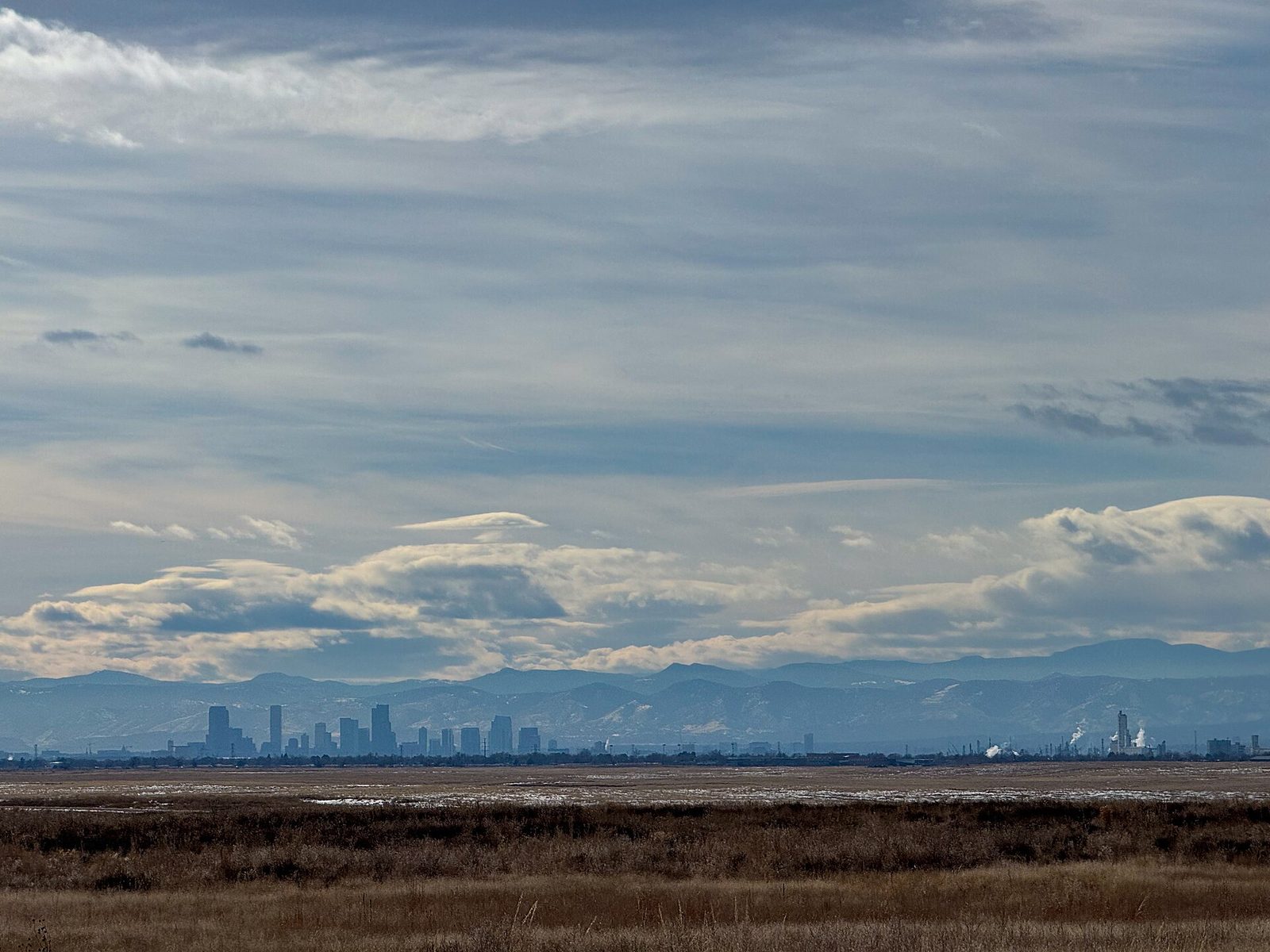
There is a purple row in the upper deck at Coors Field, and it sits exactly one mile above sea level. It is the best single explanation of Denver sports you will find, because the altitude that makes that row worth painting is also the thing that bends every game played in this city. Baseballs carry about 10 percent farther here. Curveballs break less. Visiting teams gasp in the fourth quarter. A ballpark that had to invent a humidor to keep scores plausible is not a normal ballpark, and a city that fields five major-league teams inside four miles of downtown is not a normal sports town.
This page covers what it is actually like to attend a game here: which venues are worth the ticket, how to reach them without driving, what a stadium tour gets you, and which nights are a genuinely great evening rather than just a game you went to. Prices and venue rules were checked in September 2026 and change — confirm before you book.
Denver’s Teams and Venues at a Glance
| Team | Sport | Venue | Capacity | Season |
|---|---|---|---|---|
| Denver Broncos | NFL | Empower Field at Mile High | 76,125 | September–January |
| Colorado Rockies | MLB | Coors Field | 46,897 | Late March/April–September |
| Denver Nuggets | NBA | Ball Arena | 19,520 | October–April |
| Colorado Avalanche | NHL | Ball Arena | 17,809 | October–April |
| Colorado Rapids | MLS | Dick’s Sporting Goods Park, Commerce City | — | Spring–autumn |
| Colorado Mammoth | NLL lacrosse | Ball Arena | — | Winter–spring |
| Denver Summit FC | NWSL | Varies — confirm per fixture | — | Spring–autumn |
The short version: Coors Field is the one to prioritize. It is the most attractive ballpark in the city, it is a ten-minute walk from Union Station, it has the cheapest tickets of the major venues, and the altitude makes the baseball itself genuinely different. If you are here in football season and can get a Broncos ticket at a price you are comfortable with, the atmosphere at Empower Field is the loudest thing in Colorado — but it is expensive and it is a long way from downtown in every sense.
Coors Field and the Altitude
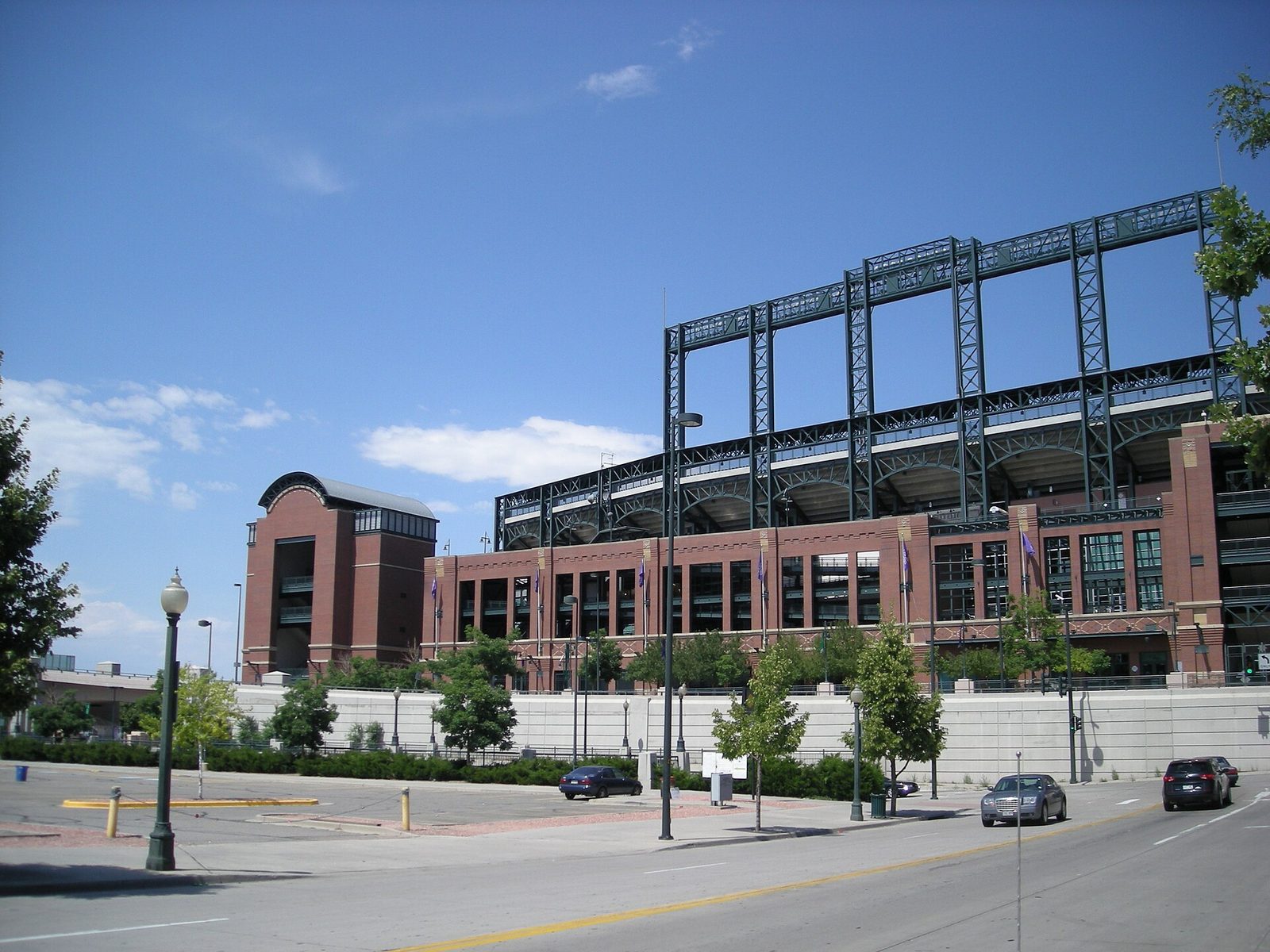
Coors Field opened in LoDo in the mid-1990s and did as much as any single building to turn a district of empty warehouses into the busiest part of Denver. It seats 46,897, it is built in red brick to match the neighborhood rather than in concrete to overpower it, and the view west from the upper deck takes in the Front Range behind the outfield. It is one of the genuinely good ballparks in American sport.
Why the Baseball Is Different Here
Air density at 5,280 feet is about 20 percent lower than at sea level, which means about 20 percent less drag on a moving ball. The physics is not subtle: a ball hit 400 feet at sea level would carry roughly 440 feet in Denver, about 10 percent farther. Thin air also gives a curveball less to bite against, so breaking pitches break less. For most of the ballpark’s first decade this produced scores that looked like a misprint.
Since 2002 the Rockies have stored game balls in a humidor, held at 70 degrees Fahrenheit and 50 percent relative humidity, which restores moisture the dry Colorado air pulls out of the leather and makes the balls slightly heavier and less lively. It cut home runs by roughly 25 percent. It did not eliminate what everyone in baseball calls the Coors effect, and it was never going to — the humidor changes the ball, not the air.
What this means for you as a spectator: expect more offense than you would see elsewhere, expect outfielders playing deeper than looks sensible, and expect a game that can turn around late. It is a good ballpark to take someone who does not love baseball, because things happen.
Going to a Game
Coors Field is the easiest major venue to reach in the city — about ten minutes on foot from Union Station, at 20th and Blake on the edge of LoDo. Do not drive. Event parking prices float upward on game days, the surrounding streets fill, and the walk back through LoDo afterward is half the point.
The district fills about ninety minutes before first pitch and empties into the bars afterward, so book a restaurant before or well after rather than during. Our guide to downtown Denver covers what is around the ballpark; the brewery districts start a few blocks northeast.
The Ballpark Tour
Coors Field runs public tours Monday to Saturday, with times varying on game days. They run 70 to 80 minutes, cover about a mile on foot, and start at Gate D on the corner of 20th and Blake. Tickets are $10 adult, $8 for seniors 55 and over and $7 for children 12 and under, which makes it one of the best-value hours in the city. Group tours start at $400 for the first 25 people, batting-practice tours run $350 per person for a maximum of four, and happy-hour tours are $750 for up to 30.
The tour takes you to the purple row — the twentieth row of the upper deck, painted to mark exactly 5,280 feet — and that alone justifies the ticket. If you are in Denver outside the baseball season, the tour is how you see the ballpark anyway.
Empower Field at Mile High
The Broncos play in front of 76,125 people, and Denver is a genuine football city in a way that surprises visitors — the team has been sold out for decades, the noise at a big game is physical, and the horse on the roof is the city’s most recognizable piece of sporting iconography after the purple row.
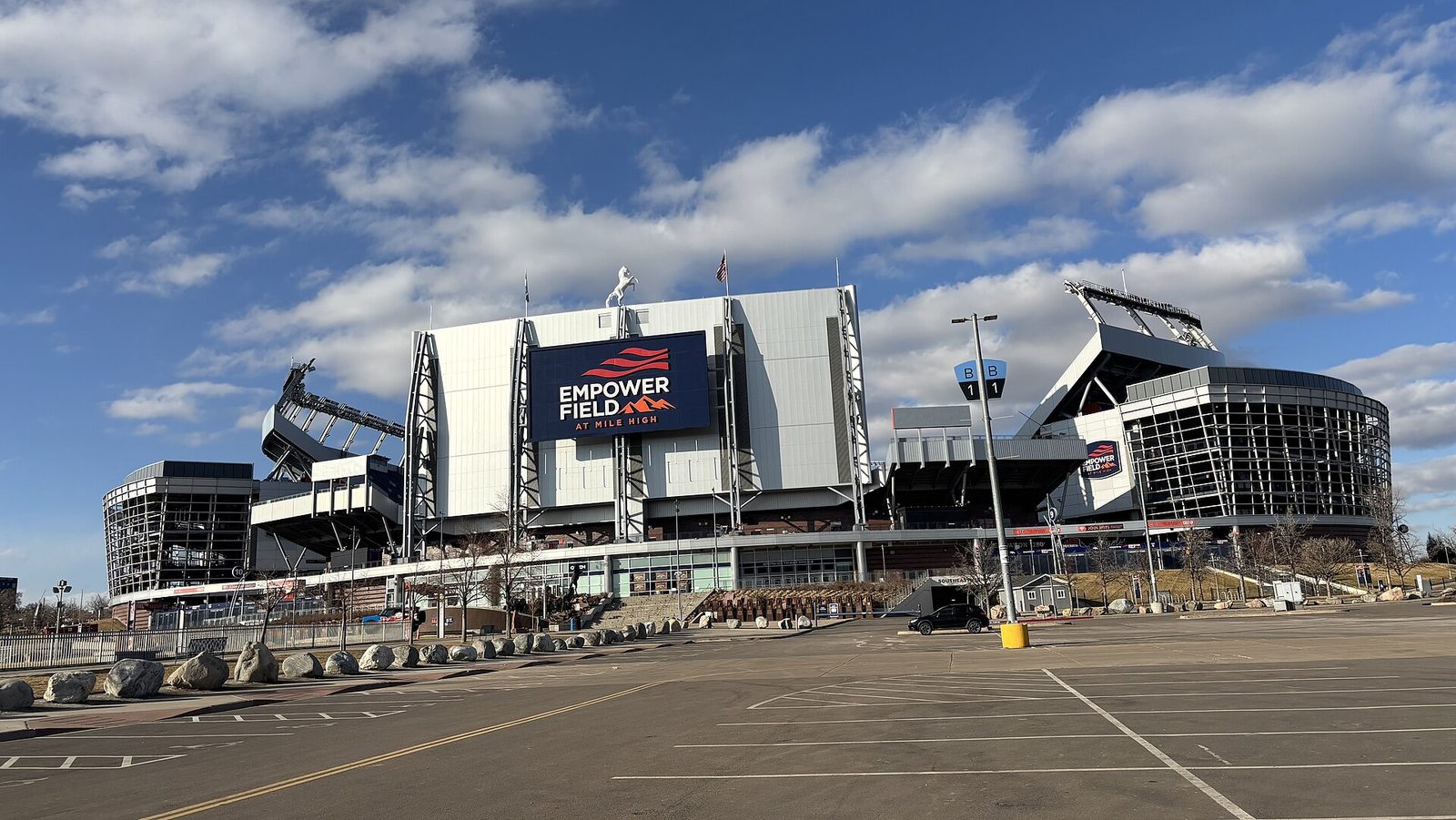
Two honest points. Tickets are expensive and hard to come by at face value, which is the reality of a long-running sellout. And the stadium sits across I-25 from downtown, close enough to reach easily but far enough that it does not feed into the city’s nightlife the way Coors Field does — after a Broncos game, people disperse rather than converge.
The practical route in is light rail: the W Line and the connecting lines serve a station a short walk from the stadium, and using them avoids both the parking charge and the exit traffic. A local day pass is $5.50, and anyone 19 and under rides free. Note that Meow Wolf, which sits nearby, closes its $15 parking lot entirely during Broncos home games — so if you were planning to combine the two, plan the transport properly.
Ball Arena: Nuggets, Avalanche and Mammoth
Ball Arena sits on the western edge of downtown between the Auraria campus and the river, and it is the busiest building in Colorado sport — 19,520 for basketball, 17,809 for hockey, plus lacrosse and the largest indoor concerts. Three professional teams share it, which means that from October to April there is almost always something on.
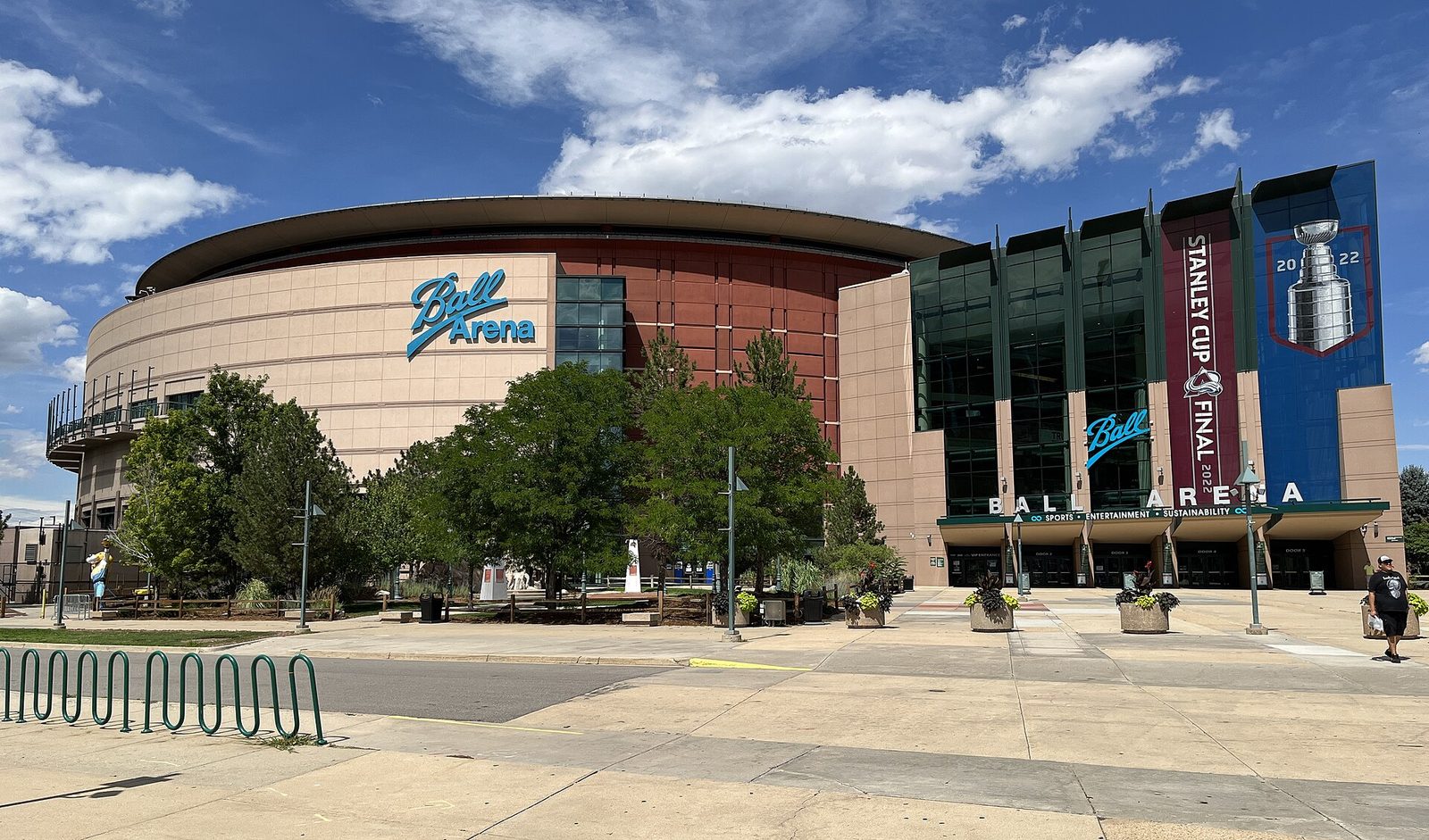
This is the venue with the most recent silverware attached to it — the Avalanche won the Stanley Cup in 2022 and the Nuggets won the NBA title in 2023, which produced two of the largest street parties the city has seen. The practical effect for a visitor is that tickets are harder and more expensive than they were a decade ago, particularly for the Nuggets.
Getting there is straightforward: it is walkable from Union Station in about twenty minutes, closer from the 16th Street corridor, and served directly by light rail. Rideshare prices spike sharply at turn-out, which is the standard argument for taking the train.
Which of the Three to Pick
If you have one winter evening and a choice, the honest ranking depends on what you want. Hockey is the best live spectacle of the three for someone who does not follow the sport — the speed does not come across on television, and the crowd knows the game. Basketball is the hottest ticket and the hardest to get at a sensible price. Lacrosse, which most visitors have never considered, is fast, cheap by comparison, loud, and one of the more genuinely surprising nights out in Denver. The Mammoth have a real following and the tickets are not hard to get.
Soccer in Denver
The Colorado Rapids play in MLS at Dick’s Sporting Goods Park in Commerce City, a purpose-built soccer stadium northeast of the city. It is a proper football ground rather than a shared stadium, and the atmosphere in the supporters’ end is good. The catch is location — Commerce City is a drive or a long transit trip from downtown, and it is not somewhere you would otherwise spend an evening, so budget for the round trip rather than treating it as a downtown night.
Denver Summit FC is the newer story. Awarded to the city in 2025, the club played its inaugural NWSL season in 2026 and sold out 8,500 season tickets before a ball was kicked, which is a serious signal of demand. Home matches that season were split between Empower Field, Dick’s Sporting Goods Park and a new stadium in Centennial from mid-July. Always confirm which venue a given fixture uses before you set off — this is the single most common mistake people make with Summit FC tickets, and the three venues are nowhere near each other.
Getting to the Venues
The single best thing about Denver as a sports city is that the two central venues are walkable from the main railway station and the rest are on rail lines. You do not need a car for any of it.
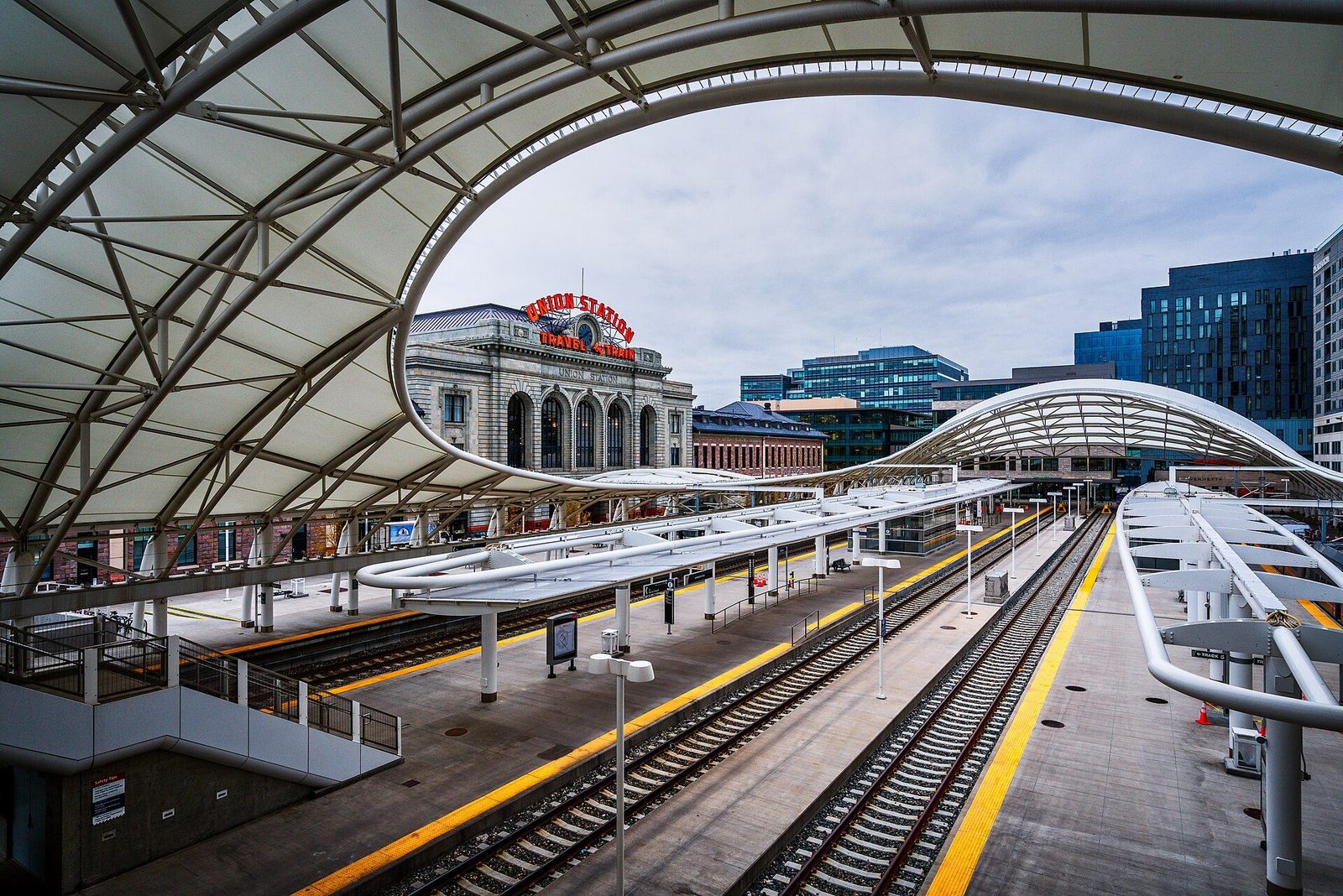
- Coors Field — ten minutes on foot from Union Station. Walk.
- Ball Arena — twenty minutes on foot from Union Station, or light rail directly.
- Empower Field — light rail to the stadium station, a short walk away.
- Dick’s Sporting Goods Park — the awkward one. Check the route in advance; a rideshare each way is often the realistic answer.
RTD charges $2.75 for a 3-hour local pass and $5.50 for a local day pass, with anyone 19 and under riding free. For the full picture, including which light rail lines are currently suspended, see our guide to getting around Denver.
What a Game Night Actually Costs
Ticket prices move too fast to quote, but the surrounding costs are predictable and are what catch visitors out.
Parking at a downtown venue on an event night is the first one. Rates float upward around Coors Field, Ball Arena and Empower Field on game days, which is the practical argument for the train rather than a moral one. Food and drink inside any major American venue carries the usual premium; eating in LoDo before a Rockies game costs less and is better, provided you book outside the ninety-minute window when the district fills.
Rideshare at turn-out is the one people underestimate. Twenty thousand people leaving Ball Arena at the same moment produces exactly the surge you would expect, and the walk to Union Station takes about the same twenty minutes you would spend waiting. And if your night ends at Red Rocks, the problem is sharper still: several thousand people requesting cars from a foothills parking lot with patchy signal. The venue’s own post-show shuttle runs only between its lots — from the Top Circle Lot and Trading Post to the Jurassic Lot, itself a mile from the South Gate — so arrange the journey home before you go.
Hotel rates respond to the calendar rather than to individual fixtures, with one exception: a marquee playoff run will move prices across the city. Whatever you pay, Denver’s lodger’s tax is 10.75 percent, rising to 11.75 percent at hotels with more than 50 rooms, on top of 4 percent state sales tax — so the quoted rate grows by roughly 15 to 16 percent before parking.
Buying Tickets
The general shape of the market here: Rockies tickets are the most available and the cheapest, and you can often decide on the day. Avalanche and Mammoth tickets are usually obtainable with a little notice. Nuggets tickets are hard, and have been since the 2023 title. Broncos tickets at face value are effectively a season-ticket-holder market, so a visitor is buying on the resale market and paying accordingly.
Two practical notes. Bag policies at all the major venues are restrictive and enforced, so check the current rule before you leave the hotel rather than discovering it at the gate. And if you are buying resale, do it through the venue’s or the league’s official resale channel rather than a street seller — the Denver venues all use digital ticketing and a printed ticket bought outside the gate is a bad idea.
The History Behind the Fandom
Denver crowds are louder than the city’s size explains, and the reason is a run of success compressed into a few decades. The Broncos spent the late 1990s winning back-to-back Super Bowls and then won another in the 2015 season, which is why you see orange in this city on a Sunday in a way you rarely see a team’s colors anywhere else. The Avalanche arrived from Quebec in 1995 and won the Stanley Cup in their first season, won again in 2001, and won a third in 2022. The Nuggets, who spent decades as the team that never quite did it, won the NBA championship in 2023 and turned downtown into a street party for a week.
The Rockies are the outlier and the local sore point. The franchise reached the World Series in 2007 after one of the great late-season runs in baseball history, and has spent most of its existence being defined by the ballpark rather than by results. Denver supports them anyway, in large numbers, partly because Coors Field on a summer evening is a good place to be regardless of the score. It is worth understanding this before you talk to anyone about baseball here.
The practical consequence of all that silverware is on the ticket market: Nuggets prices have not come back down since 2023, Avalanche demand is steady, and the Broncos sell out regardless. The Rockies remain the accessible option, which for a visitor is a feature.
Live Entertainment Beyond Sport
The same infrastructure that carries Denver’s teams carries its live entertainment, and the city punches above its weight here too.
Red Rocks Amphitheatre is the headline — a natural amphitheatre between two sandstone monoliths at about 6,400 feet, seating close to 10,000, with a concert season running roughly April to October. It is the most distinctive music venue in the United States and the one thing on this page that people fly in for. Our guide to Red Rocks covers both the concert night and the free daytime visit in detail, including the post-show shuttle arrangements that catch people out.
The Denver Performing Arts Complex is the city’s cultural engine and is genuinely enormous: ten performance spaces on a four-block, 12-acre site, ranging from rooms of about 200 seats to the 2,839-seat Buell Theatre, billed as the largest performing arts center under one roof. It carries touring Broadway, opera, ballet and the symphony, and it sits in the Golden Triangle within easy walking distance of downtown hotels.
Ball Arena handles the largest indoor concerts between sporting fixtures, which is why its calendar is so dense. Levitt Pavilion, an outdoor amphitheatre in Ruby Hill Park, runs its own program and from 2026 hosts the Great American Beer Festival. And the smaller, better rooms are spread along Colfax Avenue and South Broadway, where most of the city’s actual music happens on an ordinary weeknight.
One practical note that applies across all of them: Denver evenings are cold. Thin dry air holds little heat, so a 90-degree July afternoon becomes a 58-degree evening, and an outdoor show at Red Rocks is colder still for the extra 1,100 feet of elevation. Bring a layer you think you will not need.
Planning a Sports Weekend
Denver is one of the easier American cities to build a weekend around games, because the venues are close together and on rail. A workable shape:
| Season | Friday | Saturday | Sunday |
|---|---|---|---|
| Summer | Rockies at Coors Field, then LoDo | Coors Field tour in the morning, RiNo in the afternoon | Red Rocks on a non-event morning, free |
| Autumn | Nuggets or Avalanche at Ball Arena | Foothills hike, then downtown | Broncos at Empower Field, by light rail |
| Winter | Mammoth lacrosse at Ball Arena | Skiing, leaving before 6am | Museums and the Capitol tour |
Two rules make all of these work. Base yourself within walking distance of Union Station, because everything radiates from there. And do not schedule two evening fixtures back to back on your first two nights — the altitude catches up with visitors on day two, and a late finish followed by an early start is how a sports weekend turns into a tired one. Our Denver itinerary guide sets out how the rest of the city fits around a fixture list.
Sport You Can Do Rather Than Watch
Denver is an unusually active city, and a decent share of what looks like sport tourism here is participation rather than spectating.
Running and cycling on the South Platte and Cherry Creek trails, which meet at Confluence Park and run for miles in each direction entirely separated from traffic. Be realistic about the altitude: a sea-level runner who comfortably does 10 miles should think about 6 here, at least for the first few days.
Hiking in the foothills, where Jefferson County Open Space parks — Mount Falcon, Matthews/Winters, Deer Creek Canyon — are free with no parking charge. Our guide to the best hikes near Denver covers which work year round.
Skiing, which for most visitors is the reason Colorado exists. Resorts generally open through October and November and run into April, and each publishes its own dates. The constraint is I-70, which on a winter weekend morning westbound is regularly at a standstill — leaving before six, or skiing midweek, is the whole trick.
The Red Rocks steps, which on a non-event day are free to use and are treated by Denver as an outdoor gym. Admission and parking are both free when there is no show, and people run the aisles at seven in the morning. At 6,400 feet it is harder than it looks.
Where to Stay for a Sports Trip
Location does more work than hotel quality on a trip built around fixtures. Three options, in order of usefulness.
LoDo and around Union Station is the obvious answer and the expensive one. You are ten minutes from Coors Field, twenty from Ball Arena, on the rail line to Empower Field, one train from the airport, and surrounded by places to eat before and after. If your trip is two games and a tour, this is where to be.
The Golden Triangle and Capitol Hill sit fifteen minutes’ walk or a short FreeRide from downtown, with noticeably lower rates and quieter streets. The trade is a walk home rather than a stumble home, which after an evening game in January is a real consideration.
Anywhere on a light rail line works if price is the priority, provided you check evening frequency — RTD thins out substantially after about nine, which is exactly when a game finishes. Confirm the last service before you commit, or budget for a rideshare.
Wherever you land, our guide to where to stay in Denver covers the neighborhoods properly, including what downtown parking actually costs if you do bring a car.
What to Skip
A Broncos ticket bought at any price. If the resale market is asking several hundred dollars and you are not a Broncos fan, a Rockies game, an Avalanche game and a Coors Field tour together cost less and give you more of Denver.
Driving to any downtown venue. Event parking is expensive, the exit traffic is worse than the parking, and both central venues are walkable from Union Station.
Assuming Summit FC play where you think they play. Three venues in one season, none of them adjacent. Check the fixture.
Treating a stadium tour as a substitute for a game. The Coors Field tour is genuinely good and genuinely cheap, but it is a different thing — if the season is on and tickets are available, go to the game.
Frequently Asked Questions
What sports teams does Denver have?
Five major-league teams: the Broncos in the NFL at Empower Field at Mile High, the Rockies in MLB at Coors Field, the Nuggets in the NBA and the Avalanche in the NHL at Ball Arena, and the Rapids in MLS at Dick’s Sporting Goods Park. Add the Colorado Mammoth in the National Lacrosse League at Ball Arena and Denver Summit FC in the NWSL, awarded to the city in 2025.
Why do baseballs travel farther at Coors Field?
Air density at 5,280 feet is about 20 percent lower than at sea level, so there is roughly 20 percent less drag. A ball hit 400 feet at sea level would carry about 440 feet here. The Rockies have stored game balls in a humidor at 70°F and 50 percent humidity since 2002, which cut home runs by around 25 percent without eliminating the effect.
How much is a Coors Field tour?
$10 for adults, $8 for seniors 55 and over and $7 for children 12 and under. Tours run Monday to Saturday, last 70 to 80 minutes, cover about a mile on foot and start at Gate D at 20th and Blake. They include the purple row that marks exactly one mile above sea level.
What is the capacity of Empower Field at Mile High?
76,125. Ball Arena holds 19,520 for basketball and 17,809 for hockey, and Coors Field holds 46,897.
Can you get to Denver’s stadiums by public transport?
Yes, and you should. Coors Field is a ten-minute walk from Union Station and Ball Arena about twenty; Empower Field is served by light rail. Dick’s Sporting Goods Park in Commerce City is the awkward one and usually needs a rideshare. RTD fares are $2.75 for three hours or $5.50 for a day, free for anyone 19 and under.
Which Denver game is best for a visitor?
A Rockies game at Coors Field, for the ballpark, the walk from Union Station, the price and the strangeness of baseball at altitude. In winter, an Avalanche game is the better live spectacle than basketball for someone who does not follow either, and Mammoth lacrosse tickets are the cheapest surprise in town.
When do the Denver sports seasons run?
Baseball from late March or early April to the end of September. Football from September into January. Basketball and hockey from October to April. Soccer from spring into autumn. Lacrosse through the winter and spring. In practice there is something on in this city almost every week of the year.
Is Denver a good city for a sports weekend?
Unusually good, because the venues are close together and connected by rail, and because the density of teams means a three-day visit can easily include two games. Check our guide to Denver events for what else is on, and remember that a game night lifts prices and fills restaurants in the surrounding district.
Does the altitude affect visiting teams?
It is one of the longest-running debates in American sport and there is no settled answer, but the physics is real — less oxygen, less drag, less recovery between efforts. What is certain is that it affects the ball, which is why the humidor exists, and that it affects you: take the first day gently and drink about twice your usual water.
The weather is part of the ticket here. April and May night games at Coors Field can be properly cold, summer storms bring lightning delays, and a December Broncos game after dark is a test of your layers. Our guide to Denver weather by month lines the climate up against the sporting calendar.
Related Denver Guides
- Things to Do in Denver — the full attractions guide, with honest verdicts.
- Denver Events — the calendar that decides what a game weekend costs.
- Downtown Denver — LoDo around Coors Field, and where to eat before a game.
- Getting Around Denver — RTD fares and the routes to every venue.
- Denver Breweries — the RiNo taprooms a few blocks from the ballpark.
- Best Time to Visit Denver — which months put which sports in front of you.
- Where to Stay in Denver — the neighborhoods within walking distance of the venues.
- Best Hikes Near Denver — for the half of Denver sport you do rather than watch.
Photo Credits
Empower Field at Mile High, Denver: photo by MhcL947 / Wikimedia Commons (CC BY 4.0)
Ball Arena exterior, Denver: photo by Troutfarm27 / Wikimedia Commons (CC BY-SA 4.0)
Venue capacities, tour prices, RTD fares and the physics of the Coors Field altitude effect were checked in September 2026 against venue operators and published sources. Ticket availability and bag policies change — confirm before you travel.
Denver Tourism Guide is an independent publication. We are not affiliated with VISIT DENVER, the City and County of Denver or any team, league or venue listed here.