On a clear morning, from the upper floors of a downtown Denver tower, you can pick out the flat-topped summit of Longs Peak on the northwestern horizon: 14,259 feet, the highest point in Rocky Mountain National Park. It looks close. Getting there is another matter. Reaching Rocky Mountain National Park from Denver means about 70 miles and up to two hours of driving each way, a timed entry permit for most of the summer and early fall, and, on a busy day, a parking lot at Bear Lake that is full not long after sunrise.
None of that is a reason not to go. It is a reason to plan, because the park rewards the visitor who has decided a few things in advance and punishes the one who has not. This guide settles those decisions: whether to go for the day or stay a night (our honest answer is the night, if you can), which route and entrance to use, how the permit system works and what it cost in 2026, which part of the park to give a single day to, how to get there without a car, and when to go. Dates, hours and fares were checked in October 2026 against the National Park Service and the Colorado Department of Transportation. The permit system is announced fresh each year, so read the 2026 details as a guide to 2027, not a promise.
Rocky Mountain National Park From Denver at a Glance
| Question | Answer |
|---|---|
| Distance and drive | About 70 miles to Estes Park; 90 minutes to two hours each way |
| Main entrance from Denver | Beaver Meadows, just west of Estes Park, via US 36 through Boulder and Lyons |
| Timed entry permit | Required in season: 22 May to 13 October in 2026, and to 19 October for Bear Lake Road |
| Permit cost | $2 booking fee on Recreation.gov, plus the park entrance fee or a pass |
| Without a car | Bustang to Estes on summer weekends ($7.50 one way in 2026), then park shuttles |
| Best months | Late June to early October; September for elk and aspens |
| Altitude | Estes Park about 7,500 ft; Bear Lake about 9,500 ft; Trail Ridge Road 12,183 ft |
| Our verdict | Worth it, but better with a night in Estes Park than as a 15-hour day trip |
Day Trip or Overnight? The Honest Answer
Our guide to day trips from Denver lists Rocky Mountain National Park among the famous places that make poor day trips, and for most visitors we stand by that. Count the hours. Two hours each way on the road, an entry window you have to hit, a shuttle or a hunt for parking at the trailhead, a hike at altitude that takes longer than the same distance at home, and an afternoon thunderstorm that usually arrives right when you want to drive Trail Ridge Road. A Denver day trip that does the park justice is a 14- or 15-hour day, much of it spent in a car.
One night in Estes Park, the gateway town five minutes from the main entrance, changes all of it. You can be at a trailhead at dawn, when the light is best, the wildlife is out and the lots still have spaces; you can hike in the morning and drive Trail Ridge on the following day if the first one storms; and you can watch the elk come into the meadows at dusk without a two-hour drive ahead of you in the dark. If you have the choice, take the night.
If a day is all you have, it can still be a great day. The rules are simple: go on a weekday if you can, book your permit the moment it is released, leave Denver early, and choose one area of the park rather than trying to see it all. The plan later on this page shows how.
Getting There From Denver
There are three practical routes to the east side of the park, where nearly all first-time visitors go, and one long way round to the quieter west side.
| Route | Approximate time | Entrance | Best for |
|---|---|---|---|
| US 36 via Boulder and Lyons | 90 minutes to 2 hours | Beaver Meadows | The default: the most direct road to Bear Lake and Trail Ridge |
| I-25 north, then US 34 through the Big Thompson Canyon | About 2 hours | Fall River | Coming from north of Denver, or a different road home |
| The Peak to Peak Highway | 2 hours 30 minutes or more | Beaver Meadows or Wild Basin | A scenic route along the foothills, best one way |
| I-70 and US 40 over Berthoud Pass | About 2 hours 30 minutes | Grand Lake (west side) | The Kawuneeche Valley and its moose, or a Trail Ridge loop |
The US 36 route is the one to choose for a first visit. It runs up past Boulder and through the small town of Lyons, then climbs along the St. Vrain River into Estes Park, and the Beaver Meadows entrance is a few minutes beyond the town on the same road. Fill the tank in Estes Park: there is no gas inside the park. In winter, check road conditions before you set off, and our getting around Denver guide covers renting a car for the day.
Timed Entry Permits, Explained
Since 2020, Rocky Mountain National Park has used a timed entry reservation system to manage summer crowds, and it is the single thing most likely to ruin an unplanned visit. The permit is separate from the entrance fee, and you need both.
How the 2026 system worked
- Season: from 22 May 2026. The reservation requirement for most of the park ended on 13 October; for the Bear Lake Road corridor it ran to 19 October.
- Park Access+: covers the Bear Lake Road corridor and the rest of the park, and is required to enter between 5am and 6pm.
- Park Access: covers the rest of the park but not Bear Lake Road, and is required between 9am and 2pm.
- Cost: a $2 processing fee on Recreation.gov. The park entrance fee, or a valid pass such as the America the Beautiful annual pass, is charged on top. Check current entrance fees on the park’s website before you go.
- Release schedule: permits went on sale at 8am Mountain Time on 1 May for entry from 22 May to 30 June, then on the first of each month for the month after: 1 June for July, 1 July for August, 1 August for September and 1 September for October.
In recent seasons the park has also held back a share of permits for release at 7pm the evening before, which is how many people rescue a trip at short notice; check whether that applies when you book. Popular summer weekends sell out within minutes of release, so be logged in to Recreation.gov before 8am on the release day.
If you could not get a permit
You still have options. The reservation requirement applies only during its hours, so you can enter without one before 5am, or after 6pm for Bear Lake Road, or outside the 9am to 2pm window for the rest of the park. An early start, or an afternoon arrival after 2pm for Trail Ridge Road, both work. Riders on the Bustang to Estes service do not need a timed entry permit, though they still need a park pass, and the park’s Hiker Shuttle from Estes Park has its own tickets. Outside the reservation season, from mid-October to late May, no permit is needed at all.
The Bear Lake Road Corridor
If you have one day and want one area, make it this one. Bear Lake Road runs about nine miles from the Beaver Meadows entrance up to Bear Lake, at about 9,500 feet, past Moraine Park and a string of the park’s best-known trailheads. It holds the most rewarding short hikes in the park, a free shuttle system, and the views of the Continental Divide that appear on the postcards.
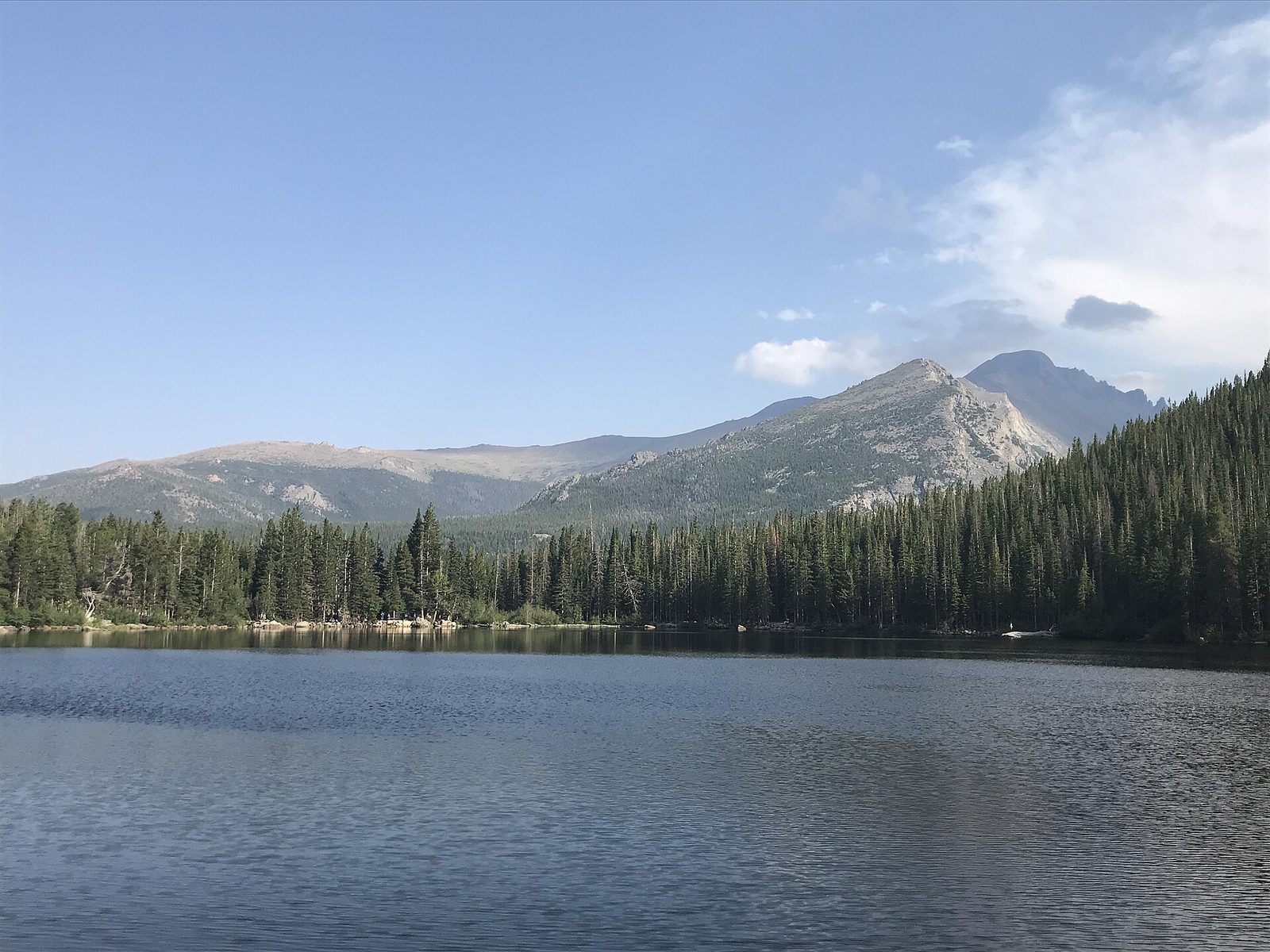
The catch is parking. The Bear Lake and Glacier Gorge lots are small and fill early on summer and fall days, and once they are full, cars are turned away. The answer is the Park & Ride on Bear Lake Road, where free park shuttles run up to Bear Lake and around to Moraine Park; in 2026 both shuttle routes ran daily from 22 May to 18 October. Leave the car there and the corridor becomes much easier. A Park Access+ permit is needed to drive the road during the reservation hours, including to the Park & Ride.
Easy hikes for a first visit
| Hike | Distance | Why go |
|---|---|---|
| Bear Lake loop | About 0.6 miles, flat | The easiest introduction, with the Divide reflected in the lake |
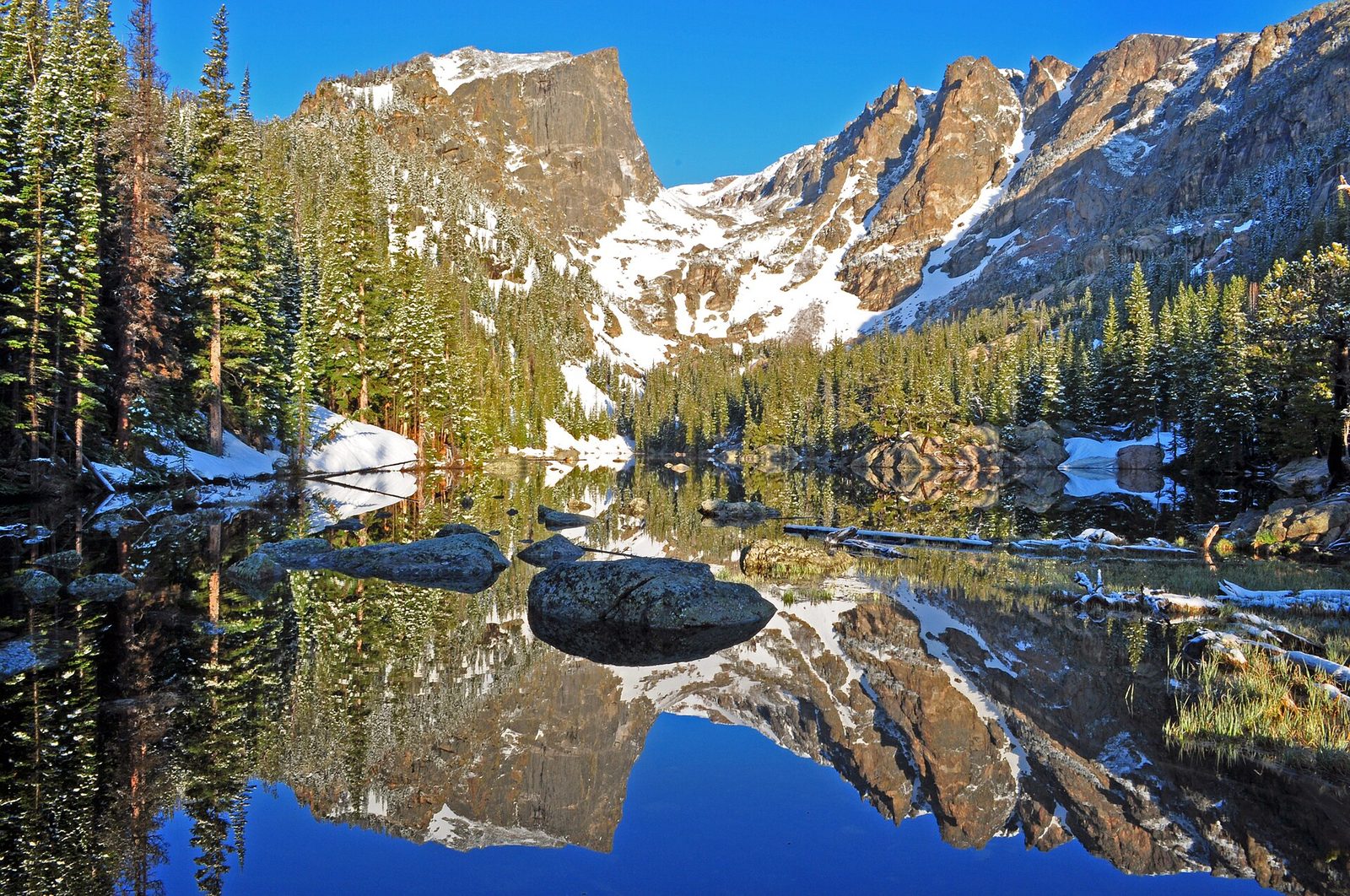
| Nymph, Dream and Emerald lakes | About 3.6 miles round trip to Emerald, around 600 feet of climbing | The park’s classic short hike: three lakes, each more dramatic than the last |
| Alberta Falls | Under 2 miles round trip from the Glacier Gorge trailhead | A loud, pretty waterfall on a gentle trail |
| Sprague Lake | Under a mile, flat | Accessible, with big mountain views across the water |
Distances on a map look short, but the altitude makes them feel longer. Allow two and a half to three hours for the Emerald Lake walk at a relaxed pace with stops, and start it in the morning. Our guide to the best hikes near Denver covers trails closer to the city for an acclimatization day before you go.
Trail Ridge Road
Trail Ridge Road is the other half of the park’s fame: about 48 miles across the park from Estes Park to Grand Lake, climbing to 12,183 feet at its high point, with roughly 11 miles above the tree line. It is the highest continuous paved road in the country, and from the overlooks you look across alpine tundra and down into valleys thousands of feet below. The Alpine Visitor Center, at about 11,800 feet, has a café and shop in season.
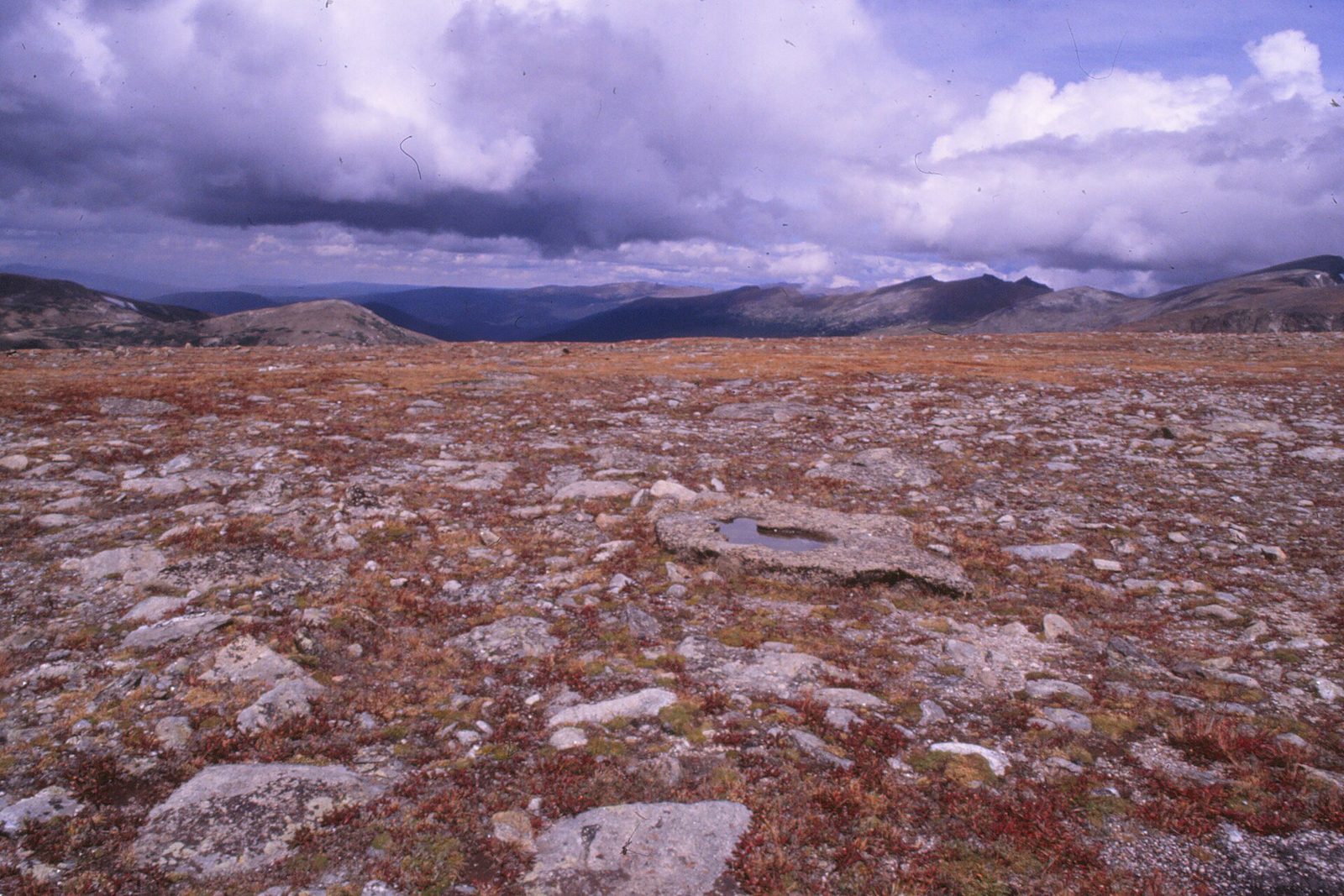
Three things about Trail Ridge catch visitors out. First, it is a seasonal road: it usually opens around late May, weather permitting, and closes for the winter in the fall, and both dates depend on the snow. Do not plan a trip around an opening date until the park has announced it. Second, the weather at the top has nothing to do with the weather in Denver. Expect temperatures 25 to 35 degrees colder, wind, and afternoon storms with lightning in July and August, so drive it in the morning if you can. Third, the altitude. Walking even the short Tundra Communities Trail, about half a mile each way above 12,000 feet, leaves most visitors out of breath; take it slowly.
From Denver, driving Trail Ridge as an out-and-back from Estes Park is the realistic day-trip version: drive up to Rock Cut or the Alpine Visitor Center and come back down. The full crossing to Grand Lake and home by I-70 makes a loop of six hours or more of driving, which is a better plan for a two-day trip with a night on the west side.
Other Corners of the Park
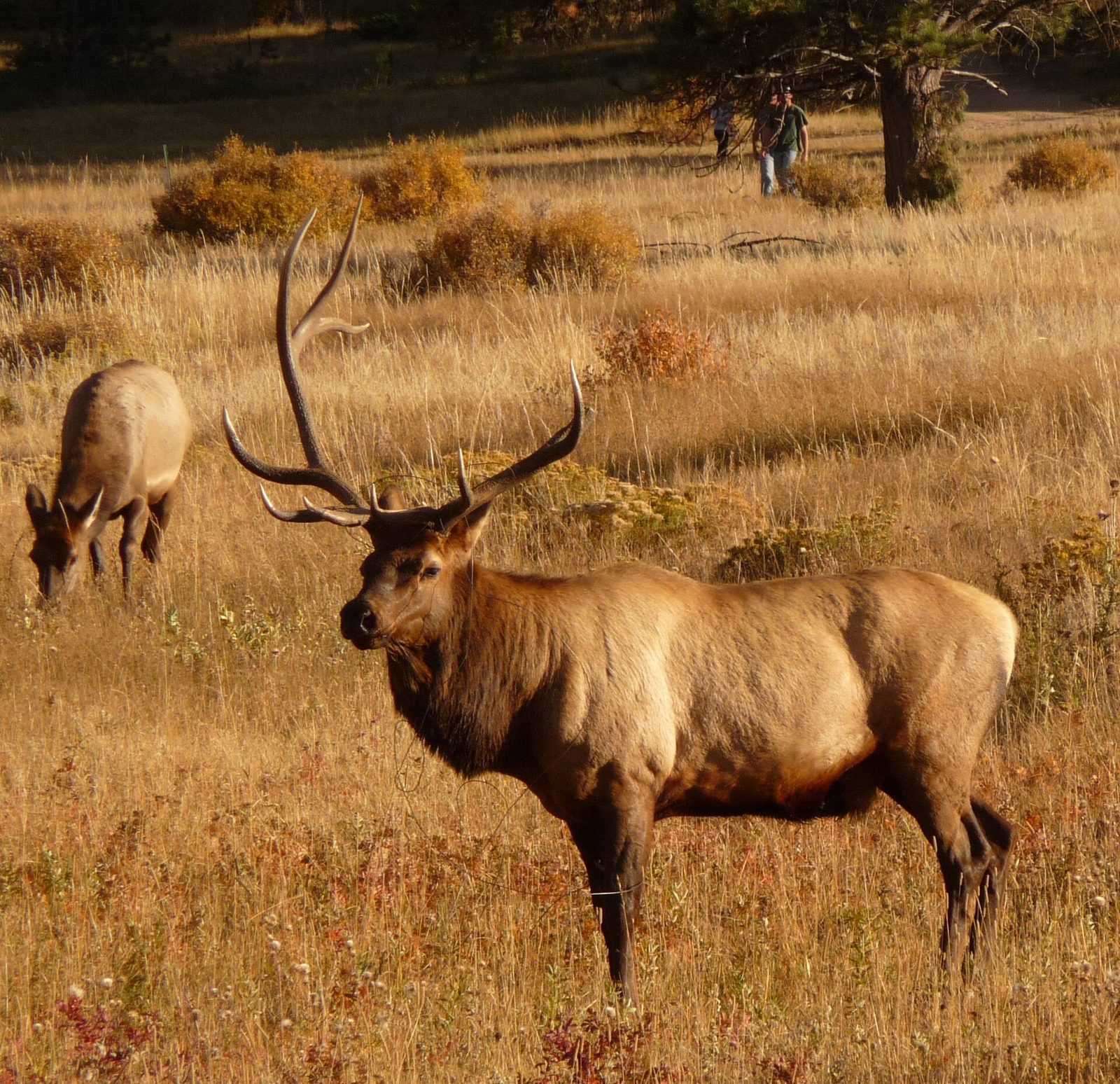
- Moraine Park and Horseshoe Park. Wide meadows on the east side where elk graze, especially at dawn and dusk. In September and early October, during the rut, the bulls bugle and gather their herds, and the roadsides fill with people watching. Sheep Lakes in Horseshoe Park is the place to look for bighorn sheep in late spring and early summer.
- Old Fall River Road. The park’s original auto road, a narrow one-way gravel climb to the Alpine Visitor Center. It opens later in the summer than Trail Ridge Road and is not for nervous drivers or long vehicles.
- Wild Basin. A quieter corner in the southeast of the park, reached along the Peak to Peak Highway, with waterfall hikes and a small trailhead lot.
- The Kawuneeche Valley and Grand Lake. The west side is greener, wetter and far less crowded, and the valley of the young Colorado River is the best place in the park to see moose. Grand Lake, the town at the west entrance, sits on Colorado’s largest natural lake.
- Longs Peak. The park’s only fourteener is a serious undertaking, a very long day with exposed scrambling on its standard route. It is not a day-trip hike from Denver, and not a first mountain.
Wildlife: Where and When to Look
For many visitors the animals are the highlight, and the park is one of the most reliable places in the West to see them. The rule of thumb is the same everywhere: the first and last hours of daylight are best, and the middle of a summer day is worst.
- Elk are almost guaranteed on the east side. Look in Moraine Park, Horseshoe Park and Upper Beaver Meadows at dawn and dusk. In the rut, from roughly mid-September to mid-October, bulls bugle across the meadows and the roadsides fill with watchers; rangers and volunteers manage the crowds, and you must pull fully off the road rather than stopping in a lane.
- Bighorn sheep come down to Sheep Lakes in Horseshoe Park in late spring and early summer to lick the minerals in the soil. They cross the road to get there, so drive slowly through the area.
- Moose are a west-side animal, most often seen in the willows along the Colorado River in the Kawuneeche Valley. They are large, fast and unpredictable, and they charge when they feel crowded; give them even more room than elk.
- Marmots and pikas live among the rocks on the tundra along Trail Ridge Road. Listen for the pika’s sharp squeak near boulder fields.
- Black bears live in the park but are seen far less often. Never leave food in a car with the windows open, and use the bear-proof lockers at campgrounds.
Binoculars or a long camera lens let you enjoy all of them from a safe distance. Feeding any animal, including the chipmunks and birds that beg at picnic areas, is illegal and harmful to them.
A One-Day Plan From Denver
This plan assumes a weekday in summer or early fall, a car, and a Park Access+ permit with an early arrival slot. It is a long day, and it is designed to put the hiking in the morning and leave the afternoon flexible for the weather.
- 6am: leave Denver on US 36 through Boulder and Lyons, with breakfast and lunch already packed.
- 8am: enter at Beaver Meadows. If the Bear Lake lot is full, park at the Park & Ride and take the shuttle.
- 8:30am to noon: walk to Nymph, Dream and Emerald lakes and back, with a long stop at Emerald Lake.
- Noon: picnic lunch at Sprague Lake or along Bear Lake Road; there are no restaurants in the corridor.
- 1pm: if the sky is clear, drive Trail Ridge Road to Rock Cut or the Alpine Visitor Center. If storms are building over the Divide, skip it and stay low.
- Late afternoon: Moraine Park or Horseshoe Park for elk, which come into the meadows as the light softens.
- Evening: dinner in Estes Park, then the drive back to Denver, arriving between 9pm and 10pm.
If you can stay the night, split this into two easy days: Bear Lake on the first morning, Trail Ridge Road early on the second. Our full Denver itinerary shows how a park day fits into a longer trip.
Rocky Mountain National Park Without a Car
It is possible, and in summer it is easier than many visitors realize.
Bustang to Estes. Colorado’s state-run bus ran from Denver Union Station to the park on Saturdays, Sundays and holidays from Memorial Day weekend to 27 September in 2026, with departures at 7am and 8am and an adult fare of $7.50 each way. It stops in Westminster, Broomfield, Superior, Boulder and Lyons, then at the Estes Park Visitor Center and the park’s Park & Ride on Bear Lake Road, about three hours from Union Station. Riders do not need a timed entry permit but do need a park pass. It is the best-value way into the park from Denver, and it is likely to return next summer; check the Bustang website for the new season’s dates.
The Hiker Shuttle. From the Estes Park Visitor Center, the park’s Hiker Shuttle runs to the Park & Ride, where you change to the Bear Lake or Moraine Park routes. In 2026 it ran daily from 22 May to 7 September and at weekends from 12 September to 18 October, with morning and early-afternoon departures and the last return at 6pm. Tickets are booked on Recreation.gov. There is no shuttle on the west side of the park or across Trail Ridge Road.
Guided tours. Day tours from Denver handle the driving, the permit and the parking, and for one or two people they often cost less than renting a car. Our guide to Denver tours covers when a tour is worth paying for, and our solo travel in Denver guide covers the buses in more detail.
When to Go
| Season | What you get | What to know |
|---|---|---|
| Late May and June | Trail Ridge Road opening, rushing water, bighorn sheep at Sheep Lakes | Deep snow on higher trails into June; permits required |
| July and August | Wildflowers on the tundra, every trail open, long days | The busiest season; daily afternoon thunderstorms; book permits on release day |
| September | The elk rut, golden aspens, settled weather | Weekends are extremely busy in Estes Park and the meadows |
| October | Late color, quiet trails, the end of the permit season | Trail Ridge Road can close for the season at any time with snow |
| Winter | Snowshoeing from Bear Lake, sledding at Hidden Valley, solitude | Trail Ridge closed; short days; avalanche terrain off the main trails |
September is our pick. The storms of high summer fade, the aspens turn gold, the elk are at their most dramatic, and the light is beautiful all day. It is also the busiest month in Estes Park, so book accommodation early. Winter is the underrated season: the park is quiet, Bear Lake Road is plowed, and snowshoeing to Dream Lake is one of the best winter days in Colorado, though it needs warm gear and some care. Our guide to Denver weather by month explains how much colder and stormier the mountains are than the city.
What to Bring for a Park Day
There are almost no services along Bear Lake Road and only a seasonal café high on Trail Ridge Road, so pack as if you will be self-sufficient all day.
- Your permit and pass. Have the timed entry reservation on your phone, downloaded or as a screenshot, since signal at the entrance is unreliable, and bring your park pass or a card for the entrance fee.
- Water and food. At least two liters of water per person, and a packed lunch and snacks. Do not drink untreated water from streams or lakes.
- Layers. A warm fleece or puffy jacket, a rain shell, a hat and light gloves, even in July. It can be 85 degrees in Denver and 45 with wind at the Alpine Visitor Center.
- Sun protection. Sunscreen, sunglasses and lip balm. The sun at 12,000 feet burns quickly, even through cloud.
- Navigation. Offline maps on your phone, ideally with the National Park Service app’s park content downloaded before you leave Denver.
- Footwear. Trail shoes or light boots with grip. In June and again from October, slip-on traction devices help on icy sections of the higher trails.
Altitude, Weather and Safety
The park is a high, wild place, and a few rules keep a good day from going wrong.
- Respect the altitude. Estes Park sits at about 7,500 feet, Bear Lake at about 9,500 and Trail Ridge Road above 12,000. Spend a day in Denver first, drink plenty of water, and turn around if you develop a headache, nausea or unusual exhaustion. Anything medical belongs with your own doctor.
- Beat the storms. In July and August, plan to be below the tree line by early afternoon. If you hear thunder, head down.
- Dress for winter in summer. Carry a warm layer, a rain shell, a hat and gloves on any visit; the top of Trail Ridge can be near freezing in July.
- Give wildlife room. Stay at least 25 yards from elk and moose, much farther during the autumn rut, and never feed any animal. Moose are more dangerous than they look.
- Leave the dog at home. Pets are not allowed on trails in the park, and drones are prohibited.
- Plan for no signal. Coverage is patchy; download maps before you go and tell someone your plan.
Accessible Ways to See the Park
Much of the park’s grandeur can be seen without a long walk. Trail Ridge Road itself is the park’s great accessible experience, with roadside overlooks such as Many Parks Curve, Rainbow Curve and Forest Canyon Overlook giving huge views from the car or a short path. Sprague Lake has an accessible loop trail with mountain views across the water, the Bear Lake trail is partly accessible, and on the west side the flat Coyote Valley Trail follows the young Colorado River through a meadow where moose and elk often graze. The visitor centers have accessible facilities. Check the park’s accessibility page for current trail conditions before you go.
Staying Near the Park
Estes Park is the obvious base: a busy mountain town with a full range of hotels, motels, cabins and restaurants, a riverwalk along Elkhorn Avenue, and the Stanley Hotel, which opened in 1909 and inspired Stephen King’s The Shining after he stayed there in 1974. It is five minutes from the Beaver Meadows entrance, and rooms book up far ahead in summer and September.
Grand Lake, on the west side, is smaller, quieter and lovely, and the right base for the Kawuneeche Valley or a Trail Ridge crossing. Lyons and Allenspark are cheaper alternatives within reach of the east side. Inside the park, several campgrounds take reservations on Recreation.gov and fill quickly in summer.
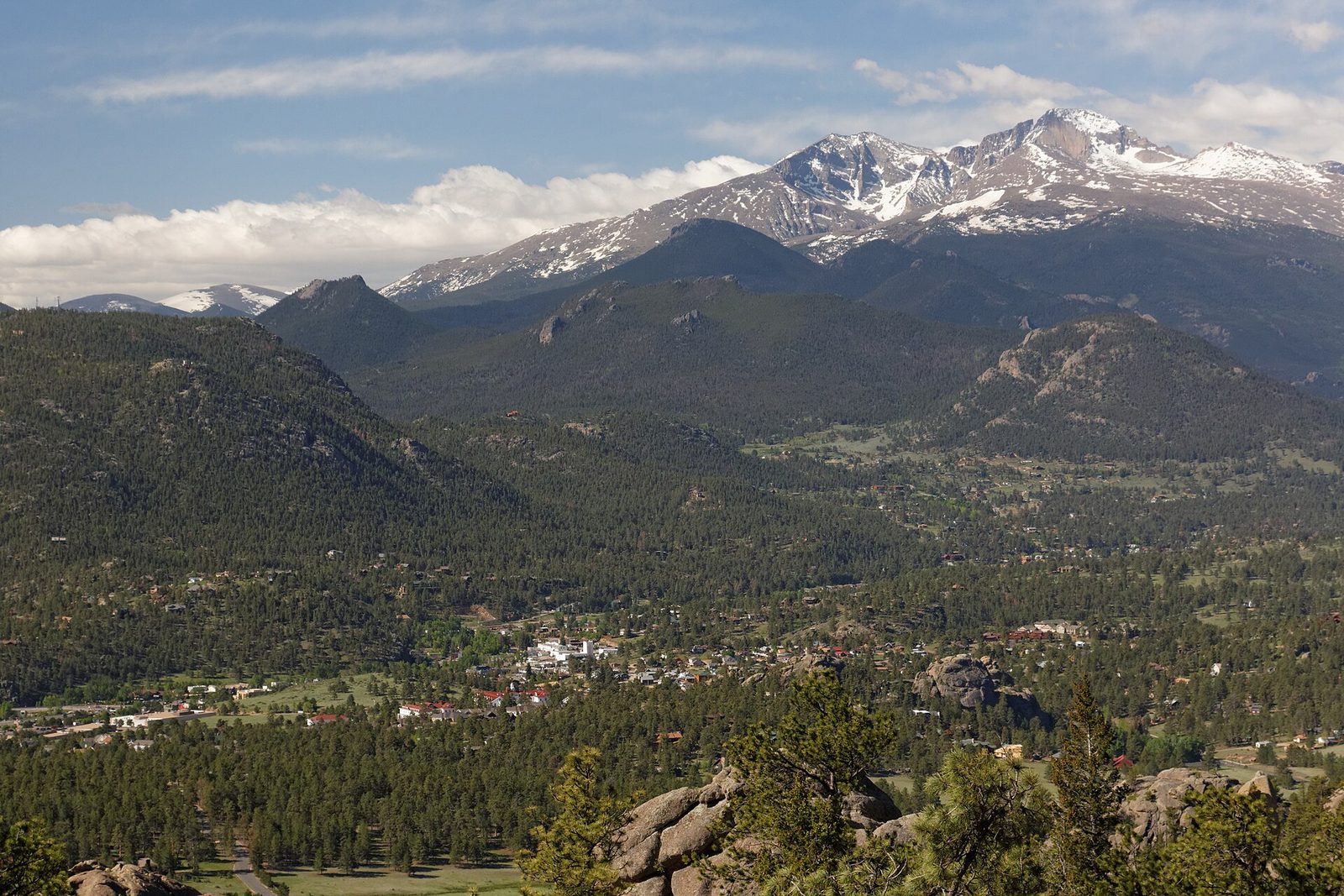
Estes Park is not the park
Visitors sometimes treat the two as the same place, and they are not. Estes Park is the town outside the entrance, and you do not need a permit to visit it; its shops, restaurants and riverwalk make a pleasant hour, but they are not the reason to come. If you cannot get a permit for your date, a day in Estes Park with an entry to the park after the reservation window closes in the afternoon is a reasonable fallback.
Mistakes That Cost People the Day
- Arriving at 10am in July without a permit. You will be turned around at the entrance. Book on release day, or arrive outside the reservation hours.
- Trying to see everything. Bear Lake, Trail Ridge Road and Grand Lake in one day from Denver is mostly a day in the car. Pick one area.
- Circling the Bear Lake lot. If it is full, go straight to the Park & Ride and take the shuttle.
- Driving Trail Ridge in an afternoon storm. Go in the morning, or wait for the storm to pass at a lower elevation.
- Stopping in the road for elk. Pull fully off the pavement, and stay out of the meadow.
- Forgetting how high you are. A hike that would be easy at home is hard at 10,000 feet, especially on your first day out of Denver.
Frequently Asked Questions
How far is Rocky Mountain National Park from Denver?
About 70 miles to Estes Park and the main Beaver Meadows entrance, which takes 90 minutes to two hours each way via US 36 through Boulder and Lyons. Bear Lake is about nine miles beyond the entrance. The west entrance at Grand Lake is about two and a half hours away via I-70 and US 40.
Can you do Rocky Mountain National Park as a day trip from Denver?
Yes, but it is a long day of 14 hours or more, and you will see only one part of the park. Choose either the Bear Lake corridor or Trail Ridge Road, leave Denver early, and book your timed entry permit as soon as it is released. A night in Estes Park makes for a far better visit.
Do I need a reservation for Rocky Mountain National Park?
In season, yes. In 2026 a timed entry permit was required from 22 May to 13 October, and to 19 October for Bear Lake Road: Park Access+ between 5am and 6pm for the Bear Lake Road corridor and the rest of the park, and Park Access between 9am and 2pm for the rest of the park only. Outside those hours and dates no permit is needed.
How much does it cost to visit Rocky Mountain National Park?
The timed entry permit costs a $2 booking fee on Recreation.gov, and you also pay the park entrance fee or use a valid pass such as the America the Beautiful annual pass. Check the park’s website for current entrance fees.
Can I get to Rocky Mountain National Park from Denver without a car?
In summer, yes. Bustang to Estes ran from Union Station on weekends and holidays from Memorial Day weekend to late September in 2026, at $7.50 each way, and riders did not need a timed entry permit. Park shuttles connect the Estes Park Visitor Center and the Park & Ride with Bear Lake and Moraine Park. Guided day tours run from Denver year-round.
When is Trail Ridge Road open?
Usually from around late May until a fall snowstorm closes it for the winter, but both dates depend on the weather each year. Check the park’s road status page before you plan around it.
What is the best time to visit Rocky Mountain National Park?
September, for the elk rut, the aspens and the most settled weather, followed by July and August for wildflowers and fully open trails. Winter is quiet and beautiful for snowshoeing but Trail Ridge Road is closed.
Can I bring my dog to Rocky Mountain National Park?
Pets are allowed in parking areas, campgrounds and along roads, but not on any trail in the park. If hiking is the plan, leave your dog at home or in Denver.
Related Denver Guides
- Day Trips from Denver: what works, what doesn’t, and when.
- Best Hikes Near Denver: closer trails for acclimatizing first.
- Denver Tours: guided trips to the park and the mountains.
- Denver Weather by Month: storms, snow and mountain temperatures.
- Denver Itinerary: fitting a park day into a longer trip.
- Solo Travel in Denver: the buses that replace a car.
- Getting Around Denver: transit and the car question.
- Denver Travel Tips: altitude and what to pack.
Photo Credits
Hallett Peak reflected in Dream Lake, Rocky Mountain National Park: NPS Photo / Wikimedia Commons (Public domain)
Bear Lake, Rocky Mountain National Park: photo by Untitled.docx / Wikimedia Commons (CC BY-SA 4.0)
Alpine tundra along Trail Ridge Road: photo by Wasted Time R / Wikimedia Commons (CC BY-SA 3.0)
Elk in Moraine Park, Rocky Mountain National Park: photo by Daniel Mayer (Mav) / Wikimedia Commons (CC BY-SA 3.0)
Estes Park and Longs Peak: photo by KimonBerlin / Wikimedia Commons (CC BY-SA 2.0)
Timed entry dates, hours and fees, shuttle schedules and Bustang fares were checked against the National Park Service, Recreation.gov and CDOT in October 2026. The park announces each season’s system in advance; confirm the current rules before you travel. Nothing on this page is medical advice.
Denver Tourism Guide is an independent publication. We are not affiliated with VISIT DENVER, the City and County of Denver, the National Park Service, CDOT or any attraction listed here.