The first thing to understand about where to stay in Denver is that the city’s best neighborhoods for eating and drinking are not the same as its best neighborhoods for sleeping, and the gap between them is about fifteen minutes and $45 a night in parking. Denver is a low, spread-out city with one dense core, one train line that matters, and a ring of desirable residential districts that have almost no hotels in them. Pick the core and you walk everywhere and pay for it. Pick the ring and you save money and drive. This guide sets out which trade-off suits which kind of trip, with the tax and parking arithmetic that turns a $190 room into a $260 night. Checked September 2026.
One structural point before the neighborhoods. Denver’s hotel stock is heavily concentrated downtown, which means the walkable areas are also the ones with real competition and the widest range of price points. The residential neighborhoods visitors fall in love with — the Highlands, Wash Park, Berkeley — are mostly houses. If you want to sleep in them, you are looking at a short-term rental rather than a hotel, and Denver’s rules on those are stricter than most visitors expect.
Denver Neighborhoods for Visitors, Compared
| Area | Best for | Price | The trade-off |
|---|---|---|---|
| Union Station / LoDo | First visits, car-free trips, walkers | $$$–$$$$ | The most expensive beds in the city, and noisy on weekend nights |
| Downtown core / 16th Street | Conferences, value inside the walkable zone | $$–$$$ | Dead at street level after office hours; the street scene can be rough at night |
| Golden Triangle | Museum trips, quieter downtown nights | $$–$$$ | Few restaurants within two blocks |
| Capitol Hill | Budget, character, longer stays | $–$$ | Older buildings, mixed street conditions, a mile from LoDo |
| RiNo | Nightlife, design hotels, younger trips | $$–$$$ | Industrial blocks, thin daytime offering, twenty minutes’ walk to Union Station |
| Cherry Creek | Shopping, families, quiet and green | $$$ | You will drive or bus into town every day |
| The Highlands / LoHi | Eating well, residential calm | $$–$$$ | Very few hotels; mostly rentals |
| Airport corridor | Early flights, cheap parking, road trips | $–$$ | You are not in Denver in any meaningful sense |
The Only Question That Really Matters
Before comparing neighborhoods, answer this: are you renting a car for the whole trip, or not?
If you are not renting a car, stay within walking distance of Union Station or the 16th Street corridor. The A Line puts you 37 minutes from the airport, the free FreeRide shuttle covers the length of downtown, and an RTD day pass at $5.50 reaches the museums at City Park. Everything else in this guide costs you rideshare fares twice a day, which adds up faster than the room saving.
If you are renting a car for the whole trip, downtown is actively the wrong choice. Hotel parking runs $40 to $60 a night on top of the room, the rotated street grid makes short hops slow, and you have paid a premium for walkability you are not using. Cherry Creek, Glendale and the Denver Tech Center all offer more room for less money with free or cheap parking, and the drive into downtown is fifteen to twenty-five minutes outside rush hour.
The version that works best for most first visits is the hybrid: stay downtown without a car, and rent one for the single day you go west to Red Rocks and the mountains. Our Denver itinerary guide sets out which day that should be.
Union Station and LoDo
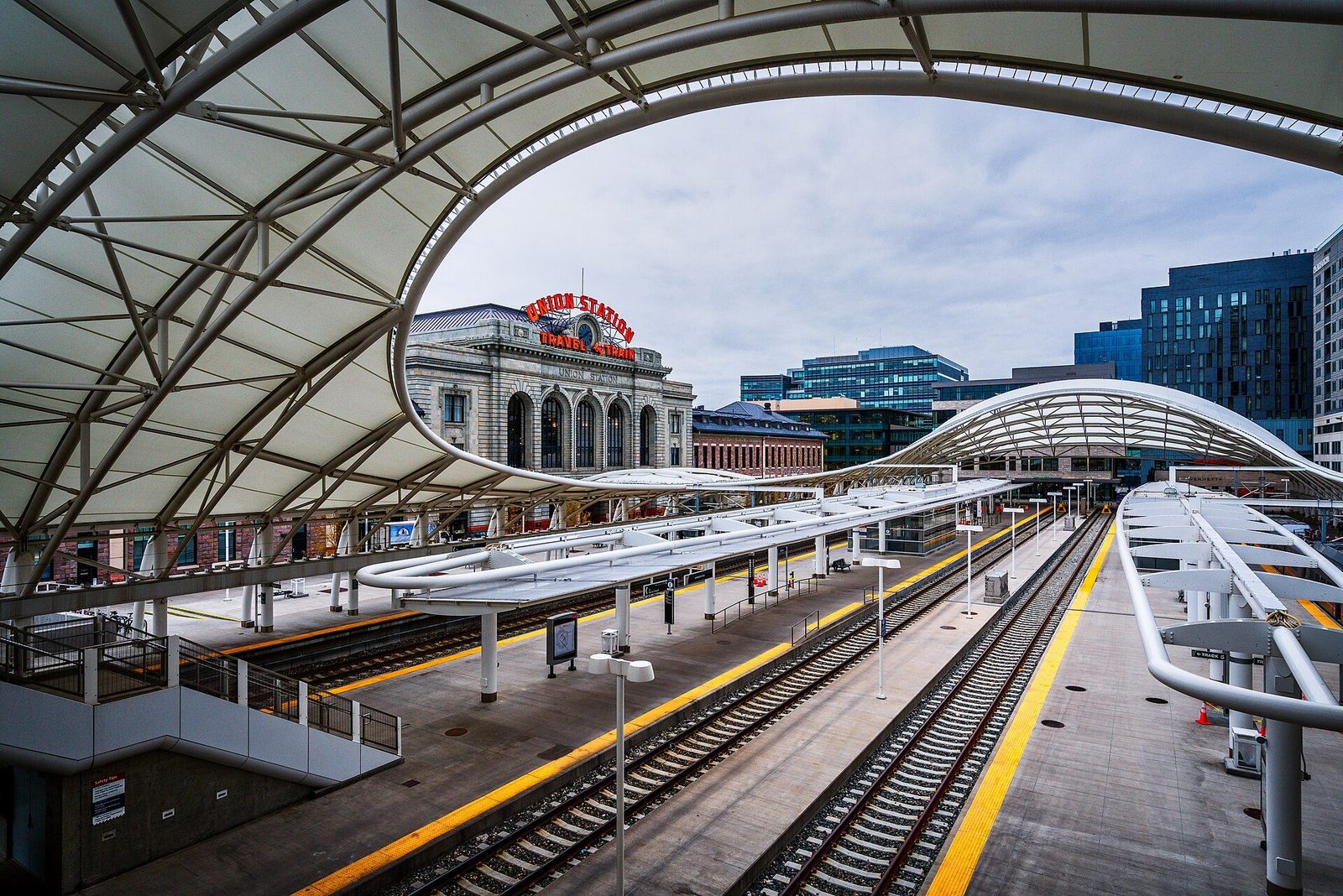
The most expensive and, for a first visit, the most obviously correct choice. You are inside the historic warehouse district, eight blocks from Coors Field, on top of the transit hub, and within a twenty-minute walk of almost everything in the downtown Denver core.
The signature property is The Crawford, built into Union Station itself, where some rooms look down into the Great Hall and the “lobby” is a working train station with bars in it. It is a genuine experience rather than a marketing line. Around it sit a cluster of upscale and boutique hotels on Wynkoop, Wazee and 17th, plus a handful of reliable mid-range chains one street further from the station.
The honest caveats: this is the priciest square mile in Colorado for a bed, weekend nights on Market and Blake Street are loud until 2am — ask for a room facing away from the street — and parking here is at the top of the $40 to $60 range. If you are here for two nights and want to walk, pay it. If you are here for five, consider whether nights three to five need to be this expensive.
The Downtown Core and 16th Street
The office district between 16th Street and the Capitol holds most of the city’s big-box business hotels, and because they are built for weekday corporate travel, weekend rates frequently fall below LoDo by a third or more. That is the single most reliable value play in Denver: a Friday and Saturday in a large downtown hotel, four blocks from the same restaurants the LoDo guests are walking to.
The trade-off is atmosphere. These blocks empty out after 6pm, ground floors are lobbies and banks rather than bars, and parts of the 16th Street corridor have a visible street-homelessness and drug problem that is more apparent at night. It is a normal-large-American-city situation rather than a dangerous one, but it is real, and travelers who would rather not walk past it should weight LoDo or the Golden Triangle instead.
The Brown Palace sits at the eastern end of this zone at 17th and Tremont, and belongs in a category of its own — see below.
The Golden Triangle
South of Civic Center, wrapped around the Denver Art Museum, the Clyfford Still and History Colorado. A handful of hotels, a quieter street scene than the core, and the shortest possible commute to the city’s museum cluster. It suits travelers whose Denver is primarily cultural, and people who want downtown proximity without downtown noise.
What it lacks is dinner. The restaurant density here is thin — the cluster around 12th and Bannock and then not much — so most evenings involve a fifteen-minute walk or a short ride to LoDo or Capitol Hill. For a two-night museum trip, that is a fair trade. For a week, it gets tiring.
Capitol Hill
Denver’s densest neighborhood, immediately east of the Capitol: Victorian mansions subdivided into apartments, 1920s brick courtyard buildings, coffee shops, dive bars, the Molly Brown House and the city’s best concentration of independent bookshops and record stores. It is where young Denver actually lives.
For visitors it delivers character and price. The lodging is a mix of small historic hotels, bed and breakfasts in converted mansions, and rentals. You will pay meaningfully less than downtown, you will be a mile or so from Union Station, and you will be in a real neighborhood rather than a hospitality district.
The caveats are the ones that come with density and age: street parking rather than garages, buildings without elevators, and blocks that vary noticeably from one to the next, particularly toward Colfax. Walk the specific address on a map before booking rather than trusting the neighborhood name.
RiNo
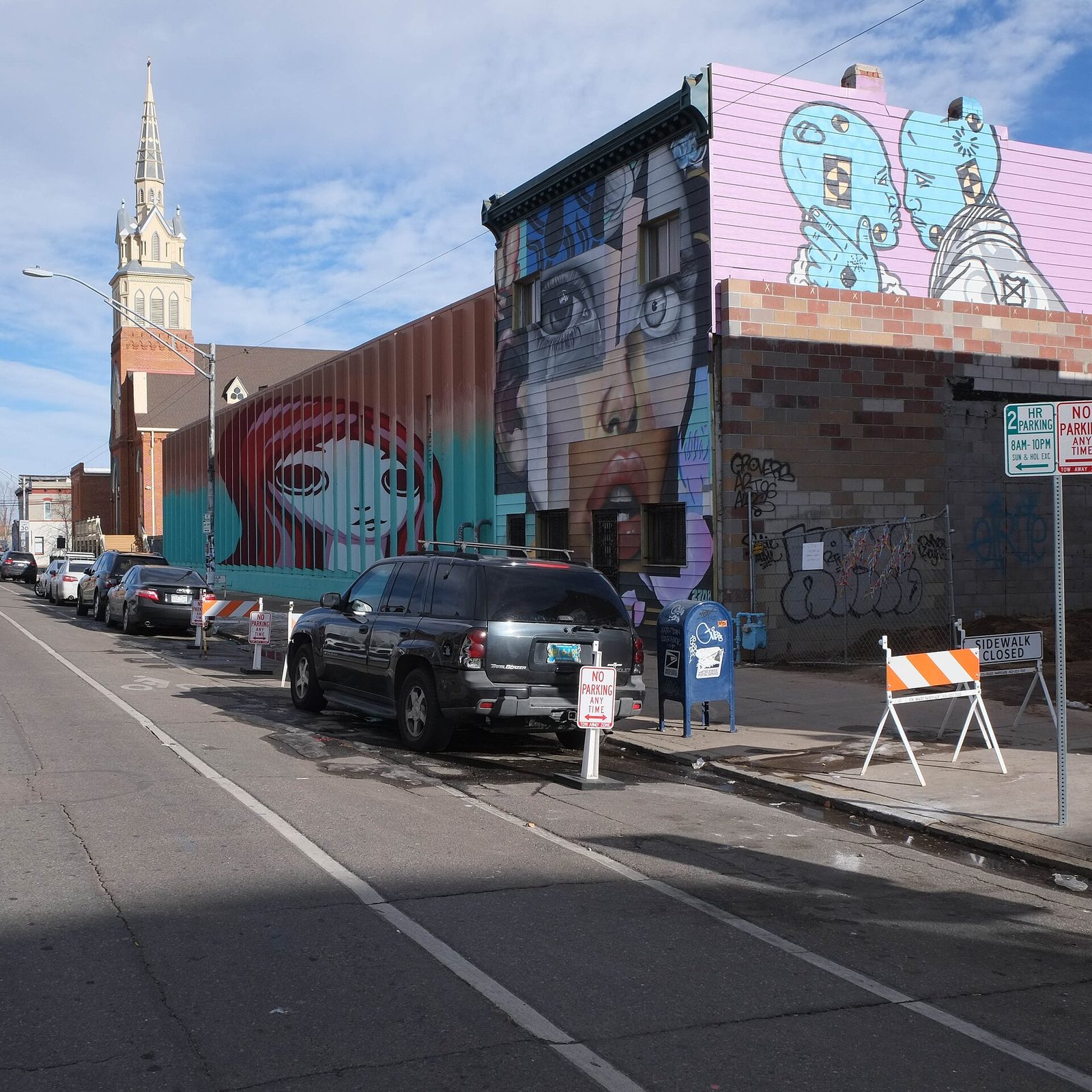
River North is the design-hotel district: converted industrial buildings, rooftop bars, murals on every wall, and the densest concentration of breweries in the city. It has attracted most of Denver’s interesting new hotel openings over the last decade, and if your trip is weighted toward eating, drinking and going out, this is the most fun place to wake up.
Understand what you are choosing. RiNo is not pretty in daylight — it is a working industrial grid with art on it — and it is short on the things that make a neighborhood comfortable for a full day: grocery stores, parks, daytime cafés away from the main strips. It is fifteen to twenty minutes on foot from Union Station along Larimer or Walnut, and that walk is fine by day and quiet at night.
Cherry Creek
Three miles southeast of downtown: a large shopping mall, a grid of low-rise boutiques and restaurants, tree-lined streets and the Cherry Creek Trail running through it toward the city. It is Denver’s affluent, low-key option, and it works well for families and for travelers who want quiet and green space over nightlife.
Cherry Creek splits into two halves that feel quite different. Cherry Creek North is the walkable grid of low-rise blocks north of First Avenue — boutiques, patios, galleries and the city’s densest concentration of good lunch — and it is where you want to be if you are staying here. South of First Avenue is the shopping center and its surrounding parking, which is convenient and charmless. The Cherry Creek Trail runs through the neighborhood and connects, uninterrupted and traffic-free, all the way to Confluence Park downtown, which makes this the best base in the city for anyone who wants to ride a bike into town rather than drive.
The hotels here are good and the parking is easier and often cheaper than downtown. The cost is that you commute: fifteen to twenty minutes by car, or a bus ride, into the center every day. If your plan is museums and mountains rather than bars and baseball, that is a small price. If you intend to be downtown every evening, it is not.
The Highlands, Berkeley and the Residential Ring
Across the river from LoDo, the Highlands — and the sub-district everyone calls LoHi — is where a lot of Denver’s best eating happens, on a hill with skyline views and a pedestrian bridge straight into downtown. Berkeley, further northwest along Tennyson Street, is similar and cheaper.
The problem is supply: these are residential neighborhoods with very few hotels. What exists is mostly short-term rentals, and that brings Denver’s licensing rules into play. The city licenses short-term rentals only in a host’s primary residence, which is deliberately designed to prevent whole-building operators, and it means the legal supply is limited and the illegal supply gets delisted without much warning. Book only licensed listings, confirm the licence number appears on the listing, and have a fallback. Rules change — check the current position with the city before committing to a long stay.
Near the Airport
Denver International is 25 miles northeast of downtown, and the hotel cluster around it exists for early flights, late arrivals and road trips. Rates are low, parking is free or cheap, and the A Line runs into Union Station in about 37 minutes from the terminal.
Stay out here for a 5am departure or a midnight landing. Do not stay out here for a city break. The distance is real, the surroundings are prairie and business parks, and the money saved evaporates into train fares and travel time within two days.
Historic Hotels Worth the Splurge
Two properties in Denver are destinations in themselves rather than places to sleep.
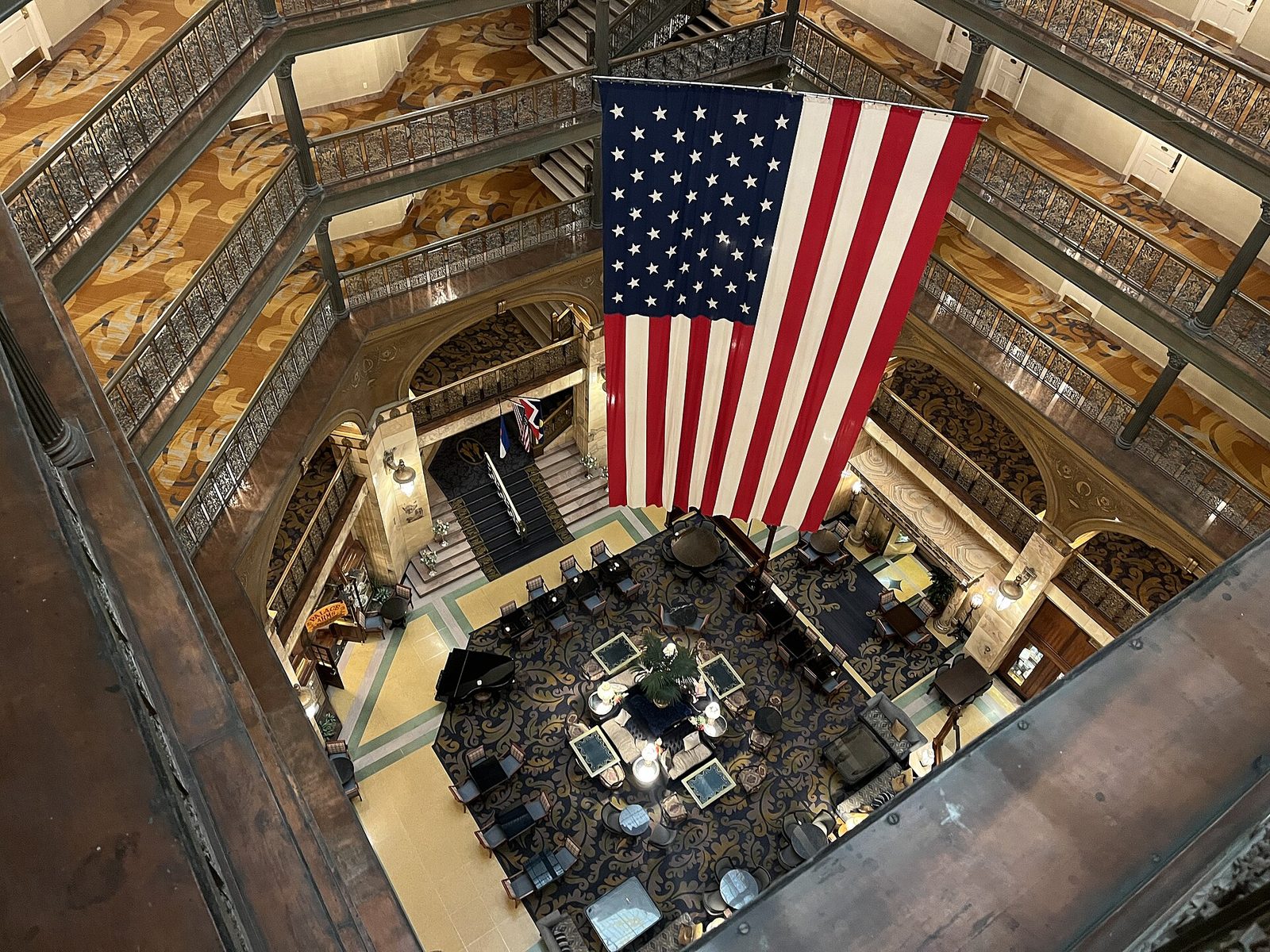
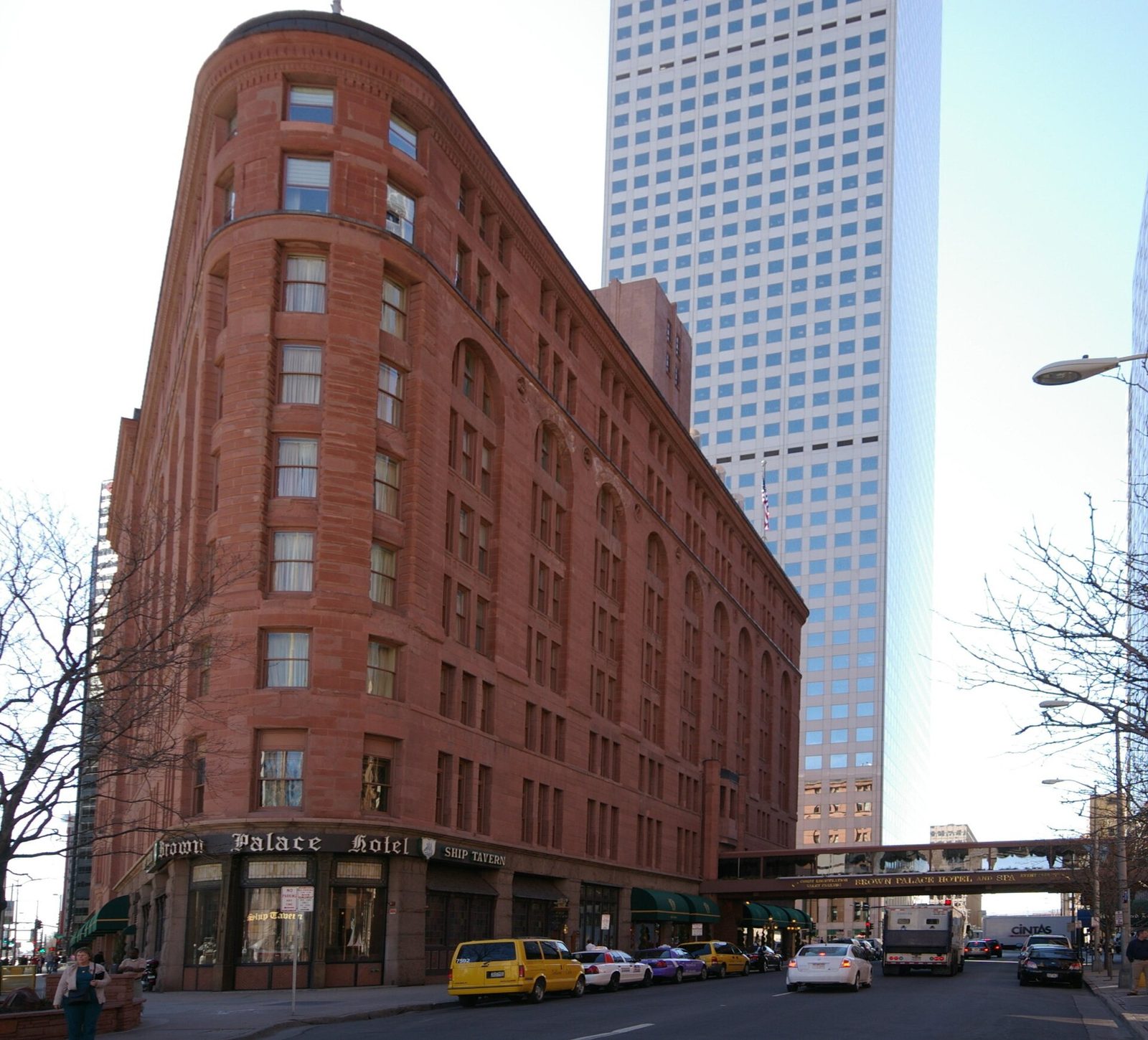
The Brown Palace, opened in 1892 at 17th and Tremont, is a triangular wedge of red sandstone and Colorado granite built to fit an awkward lot, wrapped around a nine-story atrium lobby under a stained-glass ceiling. Every US president since Theodore Roosevelt bar two is said to have stayed here, the Beatles stayed here in 1964, and the afternoon tea in the lobby has run for well over a century. You do not have to be a guest to walk in, sit down and look up, which is the best free five minutes in downtown Denver — though if you take a table, you are buying the tea.
The Crawford, inside Union Station, is the modern counterpart: 112 rooms above and around the Great Hall, with the station’s restaurants and bars as your ground floor. The trains are audible if you are sensitive to that. Most people find it the point rather than the problem.
Staying for an Event
A large share of Denver trips are built around something with a date on it, and the right base shifts accordingly.
Conventions. The Colorado Convention Center sits on 14th between the Golden Triangle and the core, so the shortest walks are from the downtown business hotels and the Golden Triangle. Those are also the hotels whose rates rise most when a big show is in town, which is the argument for booking the moment your dates are fixed rather than waiting for a deal that will not come.
Baseball. Coors Field is at 20th and Blake, inside LoDo, so the ballpark blocks and the Ballpark district hotels put you a five-minute walk from the gate. A night game plus a downtown hotel is one of the easier logistical wins in American sport — no parking, no traffic, walk home.
Basketball, hockey and football. Ball Arena is on the western edge of downtown, ten minutes on foot from Union Station or one light-rail stop. Empower Field is across I-25 with its own rail station. Both are comfortably reachable from any downtown base, and neither justifies staying out near the stadium.
Red Rocks concerts. Nothing near the venue is worth booking. Morrison and the western suburbs have little stock and you will still be driving. Stay downtown, take a concert shuttle or a car, and accept the exodus.
Denver Summit FC. The 2026 NWSL season splits home matches across Empower Field, Dick’s Sporting Goods Park in Commerce City and a new stadium in Centennial from 18 July. The last two are not downtown and not a short ride. Check which venue your date uses before you pick a hotel around it.
Families, Long Stays and Accessibility
A few things to ask about that are specific to this city rather than generic hotel advice.
Elevators and stairs. Capitol Hill’s converted mansions and some LoDo warehouse conversions have partial or no elevator service, and “historic building” in a listing often means three flights with a suitcase. Ask directly rather than assuming, particularly for a walk-up rental.
Air conditioning. Denver’s dry summer heat means older buildings here were historically built without it, and some smaller properties and rentals still rely on swamp coolers or fans. In late June a top-floor room without proper cooling is genuinely unpleasant. Confirm it in writing.
Kitchens and laundry. For a stay over five nights, an extended-stay property or a licensed rental with a kitchen changes the cost structure entirely, because Denver’s restaurant prices are closer to coastal than to mountain-town. The extended-stay cluster sits in the Tech Center and around the airport rather than downtown.
Altitude with small children. The standard guidance applies to everyone in the party: more water than usual, easy on the first day, sunscreen year-round. A ground-floor room near the lobby is worth requesting if anyone in the group is finding the stairs harder than expected — that is the altitude, not their fitness, and it passes in a day or two.
Pets. Denver is unusually dog-friendly and a large share of downtown and RiNo hotels accept dogs, often with a fee. Patios, breweries and the Cherry Creek Trail all assume dogs. The exception is the museums and the amphitheatre itself.
What Denver Hotels Do Well, and What They Don’t
The strengths are real: new stock, generous rooms by the standards of older American cities, an unusual density of good design hotels in RiNo, and a service culture that is friendly without being formal. Rooftop bars are everywhere and the mountain views from them justify the cliché.
The weaknesses are worth knowing before you arrive. Rooftop pools at this latitude are seasonal and frequently unheated, so a pool in the photographs may be closed from October to May. Hotel restaurants outside the historic properties are mostly unremarkable, and you are five minutes from something better in almost every neighborhood in this guide. The dry air — often below 30% humidity — makes hotel rooms harsher than most visitors expect; ask for a humidifier, which many properties keep on request, and drink more water than feels necessary. And breakfast is not a strong suit downtown, where the good options are independent cafés rather than the buffet.
What a Denver Hotel Actually Costs
The quoted rate is not the rate. Three additions turn one number into another.
- Tax. Denver’s lodger’s tax is 10.75%, rising to 11.75% for hotels with more than 50 rooms, on top of 4% Colorado state sales tax. Expect roughly 15 to 16% added at checkout.
- Parking. $40 to $60 a night at downtown hotels, and it is almost always billed separately. Valet-only properties sit at the top of that range. This is the single largest avoidable cost in a Denver trip.
- Property fees. Less universal here than in Las Vegas or Miami, but increasingly common at the newer downtown and RiNo hotels. Check before booking; a $30 daily “urban fee” changes the comparison between two otherwise similar rooms.
Rough working numbers for a double room, before tax: budget and older Capitol Hill properties from around $110 to $150; mid-range downtown and Cherry Creek from about $160 to $230; LoDo, RiNo design hotels and the historic properties from roughly $240 upward, well beyond that in peak summer. Treat these as orientation rather than quotes — Denver’s rates swing hard with the calendar.
When to Book, and When Rates Spike
Denver’s hotel pricing follows a clear and exploitable pattern.
- Summer, June to August is peak: conventions, Red Rocks concerts, baseball and road-trip traffic all at once. Book six to eight weeks ahead.
- The Great American Beer Festival weekend — 10 and 11 October 2026 — spikes rates across the whole metro area, and in 2026 the festival moves outdoors to Levitt Pavilion for the first time. If you are not attending, avoid those dates entirely.
- Large conventions at the Colorado Convention Center distort downtown pricing for three or four days at a time and are worth checking against your dates.
- January and February are the bargain months in the city, because the ski traffic drives straight past Denver toward the mountains. Downtown rooms in midwinter are routinely half their July price.
- Weekends are cheaper than weekdays in the business-hotel core, and the reverse is true in LoDo and RiNo. Splitting a stay between the two is an unglamorous but effective way to cut a bill.
Where Not to Stay
- The airport corridor, for a city trip. You will spend two hours a day on a train to save $60 a night.
- Anywhere requiring a car, if you did not want a car. Two daily rideshares into downtown will exceed the room saving by day three.
- Downtown, if you are renting a car for the week. You are paying twice: once for walkability you will not use, and again for parking.
- A cheap motel on a busy arterial. Denver’s older motel strips along parts of Colfax and Federal are cheap for reasons that become apparent at 2am. If a downtown-adjacent rate looks implausibly low, check the specific block on a map.
- An unlicensed short-term rental. Denver enforces its primary-residence rule, listings get removed, and a cancellation three days out with the city sold out is a genuinely bad start to a holiday.
Matching the Area to the Trip
Five common trips and the answer for each.
- A first visit, three nights, no car. LoDo or Union Station. Pay the premium, walk everywhere, rent a car for the Red Rocks day only.
- A weekend on a budget. A large hotel in the downtown core on Friday and Saturday, when corporate rates collapse. Same walk to dinner, a third less money.
- A family week. Cherry Creek for space, quiet and parking, with a car and a plan to drive to the museums. Or a licensed rental in the Highlands if you want a kitchen.
- A trip built around eating and nightlife. RiNo, without hesitation.
- A ski trip using Denver as the gateway. One night near the airport on arrival, then straight up I-70 in the morning — and one night downtown at the end, so the trip finishes with a city evening rather than a motel.
Frequently Asked Questions
What is the best area to stay in Denver for first-time visitors?
LoDo and the Union Station area. It puts you inside the historic core, on top of the airport train and the free downtown shuttle, and within walking distance of the ballpark, Larimer Square and the restaurants most visitors want. It is also the most expensive area in the city, so the money argument runs the other way — if that matters, take a big hotel in the downtown core four blocks away on a weekend rate.
Is downtown Denver safe to stay in?
Yes, with ordinary city awareness. Downtown has a visible street-homelessness and drug problem concentrated around parts of the 16th Street corridor, Civic Center and upper Colfax, and it is more apparent at night. Stay on busy streets after dark, use the FreeRide rather than walking quiet blocks late, and leave nothing visible in a parked car. LoDo, RiNo and the Golden Triangle all feel calmer at night than the core does.
Do I need a car if I stay in Denver?
Not if you stay downtown. The A Line covers the airport in 37 minutes, the FreeRide covers 16th Street for nothing, and a $5.50 RTD day pass reaches the City Park museums. Rent for the day you go west to Red Rocks, Golden or the mountains — those are genuinely hard without one.
How much are hotels in Denver?
As a rough guide before tax: $110 to $150 for budget and older properties, $160 to $230 mid-range, and $240 upward in LoDo, RiNo and the historic hotels, with summer running well above that. Add roughly 15 to 16% in lodger’s and state tax, and $40 to $60 a night for downtown parking.
Is it cheaper to stay outside downtown Denver?
Yes on the room, and often no overall. Cherry Creek, Glendale and the Tech Center are meaningfully cheaper with easier parking, which works well if you have a car. Without one, two rideshares a day will eat the saving and cost you an hour. The airport corridor is cheapest of all and the least useful for actually seeing the city.
Can I use Airbnb in Denver?
Yes, within limits. Denver licenses short-term rentals only in a host’s primary residence, which keeps whole-building operations out of the market and makes the legal supply smaller than in most large US cities. Book listings that display a valid licence number, and keep a backup option, because unlicensed listings do get removed. Verify the current rules with the city before a long stay.
What is the cheapest month to stay in Denver?
January and February, by a wide margin in the city itself. The ski traffic drives straight through Denver toward the mountains rather than stopping in it, conventions are sparse, and downtown rooms routinely sell for close to half their July price. The museums, the theaters and the restaurants are all indoors and unaffected, which makes midwinter the best-value city break Denver offers.
Should I stay in Denver or Boulder?
Denver, unless Boulder is the reason you came. Boulder is smaller, prettier and considerably more expensive per night, with a much thinner hotel supply, and it is about 55 minutes from Denver’s Union Station on the Flatiron Flyer bus. Staying in Denver and taking a day in Boulder works well; the reverse leaves you commuting into a city you are trying to see.
Where should I stay in Denver for a ski trip?
Near the airport for the night you land, then drive I-70 west in the morning rather than sleeping downtown and adding a city commute to a mountain drive. The exception is if you want a night out in Denver at either end of the trip, in which case take downtown on the last night when the drive is behind you.
Which neighborhood you book also decides what you eat, because Denver’s dining is far more unevenly distributed than its hotels are — RiNo and the Highlands have the density, the downtown core has the convenience, and the best value is a drive away. Our Denver food guide maps the restaurant scene onto the same neighborhoods compared above.
Comparing hotel districts only gets you so far, because several of the neighborhoods worth spending an evening in have almost no hotels in them at all. For the fuller picture of what each area is actually like — RiNo after dark, the Highlands on a Sunday, Five Points and its jazz history — read our Denver neighborhoods guide alongside this one.
The case for staying downtown rests largely on one train, and the case for an airport hotel rests on what time your flight leaves. Our Denver airport guide sets out how the A Line works, what the parking ladder at DEN actually costs you in time, and how much margin to leave while the terminal is under construction.
Traveling as a couple? The historic hotels downtown, from the Brown Palace to the hotel on the upper floors of Union Station, make a romantic base within walking distance of Larimer Square. Our guide to romantic things to do in Denver covers what to do once you are there, from sunset at Red Rocks to afternoon tea in the Brown Palace atrium.
Related Denver Guides
- Denver Itinerary: How to Plan One to Five Days in the City — the routes each of these areas serves, and the day to rent a car.
- Downtown Denver: A District-by-District Guide to the City Core — what is inside the area most visitors book a room in.
- Red Rocks Amphitheatre: The Free Visit and the Concert Night — the trip west that decides whether you need a car at all.
Photo Credits
Brown Palace Hotel atrium lobby: photo by David Wilson / Wikimedia Commons (CC BY 4.0)
Brown Palace Hotel exterior: photo by Hustvedt / Wikimedia Commons (CC BY-SA 3.0)
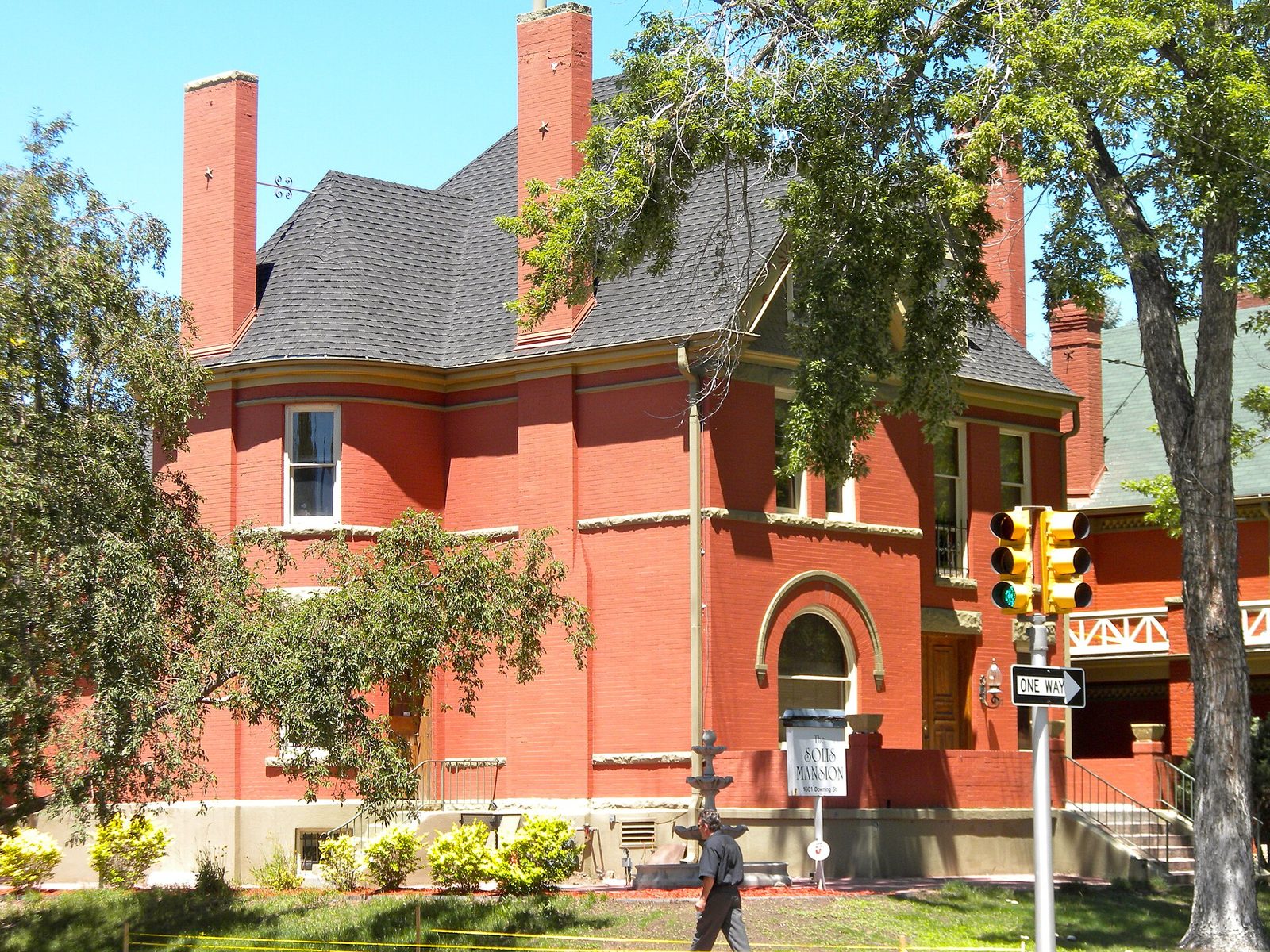
Solis Mansion, Swallow Hill historic district: photo by Smallbones / Wikimedia Commons (Public domain)
Tax rates were checked against the City and County of Denver’s own tax guidance in September 2026. Room rates are indicative ranges rather than quotes, and short-term rental rules change; confirm current licensing requirements with the city before booking a long stay.
Denver Tourism Guide is an independent publication. We are not affiliated with VISIT DENVER, the City and County of Denver or any attraction listed here.